
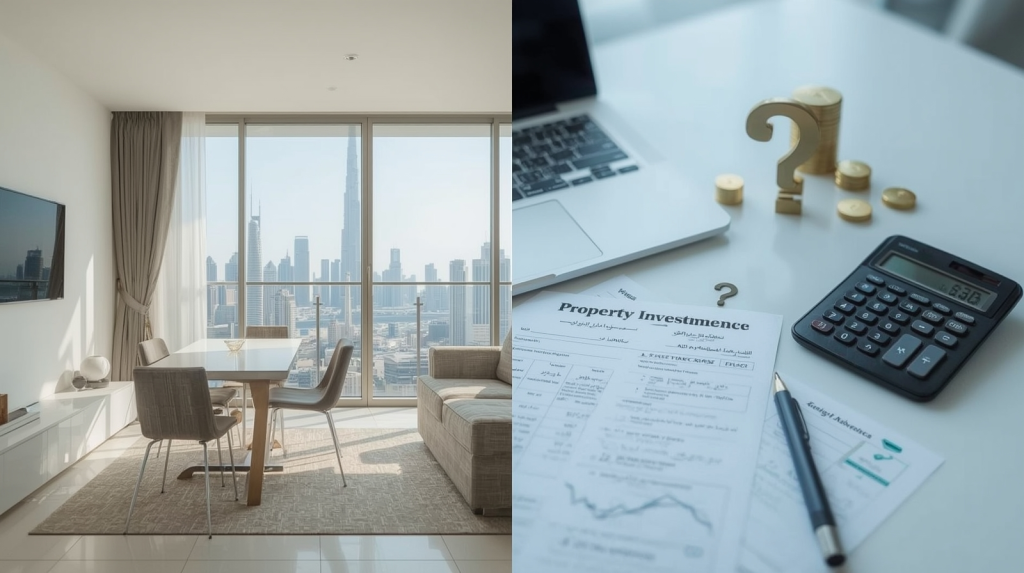
Advantages and disadvantages of buying property in Dubai is a decisive topic for anyone looking for dollar-denominated investment and life in one of the region’s most dynamic cities. On the one hand, the absence of annual property tax, the possibility of receiving rent in dirhams, the relative stability of the UAE economy and the diversity of projects make buying property in Dubai an attractive option; on the other hand, ancillary costs, the complexity of the laws and the risks of the luxury property market can become challenging if they are not managed consciously. A proper understanding of the advantages and disadvantages of buying property in Dubai helps the decision-maker act not merely under the influence of advertising, but on the basis of data, logic and a realistic picture of this market. In this article on the Hamed Ghelichkhani website, we examine the advantages of buying property in Dubai as well as its disadvantages in detail.
Table reviewing the advantages and disadvantages of buying property in Dubai
In the table below, the most important advantages and disadvantages of buying property in Dubai are presented in summary and comparative form so that a faster overall view of this decision can be obtained.
| Aspect | Advantage / disadvantage | Explanation | Suitable for whom? |
| Property tax | Advantage | The absence of annual property tax and the absence of capital gains tax for individuals reduce the long-term financial burden. (Municipality fees / service charge do exist.) | Mid- and long-term investors, especially those who buy multiple units. |
| Rental income | Advantage | The possibility of receiving rent in dirhams in a market with high demand for living and renting, especially in high-traffic tourist and commercial neighbourhoods. | People looking for monthly cash flow and for covering part of their living costs or instalments. |
| Economy and inflation | Advantage | A diversified economy, a stable currency and a controlled inflation rate compared with many countries in the region help preserve the real value of capital better. | Investors escaping high domestic inflation and seeking to preserve the purchasing power of their capital. |
| Quality of life | Advantage | Modern urban infrastructure, high security, international schools and universities, and lifestyle facilities raise the quality of life for families. | Families and people who value lifestyle as well as investment. |
| Possibility of buying on a payment plan | Advantage | In many off-plan projects, staged and flexible payments make entry possible with less initial capital. | Those who do not want to pay the full amount in cash and have long-term financial planning. |
| Golden Visa and residency | Advantage | If the minimum property value is reached (AED 2 million), the buyer and family may be eligible for a Golden Visa or long-term residency (subject to the latest rules). | Serious investors looking to combine investment and residency. |
| Project diversity | Advantage | From small studios to luxury beachfront villas, there are varied options for different budgets and investment strategies. | Buyers with different budgets and goals (living, renting, holidays, pure investment) |
| Ancillary costs | Disadvantage | DLD transfer charge, advisor commission, annual service charge, registration costs and, in some cases, bank financing costs increase the final investment amount. | Those who decide only by the “price per square metre” and do not have a budget buffer. |
| Oversupply in parts of the market | Disadvantage | At certain times and in certain areas, a high volume of new projects can put downward pressure on prices or rent. | Investors who choose projects purely on the basis of advertising without analysing supply and demand. |
| Complexity of laws and processes | Disadvantage | Not being familiar with local laws, the difference between freehold and leasehold, and DLD regulations may lead to mistakes or delays in transactions. | Buyers without a professional advisor or those buying abroad for the first time. |
| Risk of market fluctuation | Disadvantage | Like any dynamic property market, periodic price fluctuations, changes in banks’ credit policies and global conditions can affect price and demand. | Those looking for very fast, short-term profit without tolerating volatility. |
Advantages of buying property in Dubai
The advantages of buying property in Dubai are not limited to the postcard image of towers and the beach; behind that image lies a financial, legal and economic structure that allows the buyer to make an investment in dirhams while also benefiting from the advantages of living in or renting out property in an international city.
Many investors, when they first go into the details of the advantages of buying property in Dubai, realise that the advantages of buying property in the UAE are not limited to price growth, but instead make sense in the combination of “rental income, relative currency stability, the absence of annual tax and the possibility of obtaining residency”. Let us not forget that other costs such as Housing Fee equivalent to 5% of the rental value / annual rent (through DEWA) and Service Charge (for properties with shared management) also apply.
Below, the most important advantages of buying property in Dubai are examined in more detail so that a clearer picture of the experience of buying a home in Dubai, whether for buying an apartment or buying a villa in Dubai, can be formed.

Tax advantages and property tax status in Dubai
One of the most important advantages of buying a home in Dubai is its simple and attractive tax structure. At present, there is no annual tax on property value for individuals, and no separate tax is imposed on capital gains (Capital Gain); that is, if a person buys a property and sells it after a few years at a profit, they do not pay direct tax on the sale profit at the individual level.
In contrast, the costs are mainly defined as fees and one-off charges; such as DLD transfer charge = 4%, title deed issuance fee = AED 250 (in many transfer scenarios), and in the secondary market the broker commission is usually around 2% (and brokerage services are subject to VAT).
This structure allows the buyer to plan with a longer-term view, because they do not face sudden shocks from a new annual property tax being imposed. On the other hand, service costs and building service charge, as well as the initial fees, should be included in the budget from the outset so that a more realistic picture of the return on investment can be obtained.
For many investors, especially those coming from countries with high property taxes, this tax advantage alone is one of the main reasons for choosing Dubai for property investment.
Learn more: Tax in the UAE
Rental income and earning dollar-denominated profit from property
Dubai is a high-demand market for renting, whether for professional migrants, the workforce, or tourists and business travellers. For this reason, renting out property and earning regular dollar-denominated profit is one of the most attractive advantages of buying an apartment in Dubai as well as residential villas.
In high-demand areas such as Downtown, Dubai Marina, Jumeirah Beach Residence (JBR), Business Bay and some villa communities, the ratio of rent to purchase price is usually at a noticeable level, and if rental management is handled professionally, it can cover a significant part of the property’s costs (such as service charge, maintenance and even part of mortgage instalments).
The buyer can choose between long-term letting and short-term letting (Holiday Home); long-term letting usually provides greater income stability, while short-term letting may in some seasons provide higher returns, although its management is more complex and more expensive. The important point is that for many investors, the experience of buying a home in Dubai has been successful when their approach to “rental income” has been realistic and based on data and professional advice, rather than merely on the figures mentioned in brochures.
Bear in mind that short-term letting (Holiday Home) in Dubai requires registration and a permit, and the unit must be registered and approved in the relevant system.
Learn more: Renting a House in Dubai
The UAE economy and the impact of inflation on property investment
The advantages and disadvantages of buying property in Dubai cannot be analysed without considering the UAE economy and the behaviour of the inflation rate. Over recent years, the UAE, relying on a relatively diversified economy (oil, logistics, tourism, finance, trade, technology and more) and taking into account the dirham’s peg to the US dollar and the alignment of interest rate policy with the Federal Reserve’s policy, has been able to keep inflation within a controlled range and avoid the severe inflation shocks experienced by many regional economies.
According to a report by the Central Bank of the UAE, annual inflation in the second quarter of 2025 was reported at around 0.6%, and the inflation forecast for 2025 was announced at around 1.5% and for 2026 at around 1.8%.
This matters greatly for a property investor, because when a person lives in a country with high inflation, the real value of their capital declines quickly. But when capital is transferred into a property in an economy with controlled inflation, sharp fluctuations in the real value of the investment are lower, and medium- and long-term planning becomes more rational.
On the other hand, it should not be forgotten that Dubai is also a global market and is sensitive to the global economy, international interest rates and the condition of financial markets. Therefore, the relative stability of the economy and inflation rate in the UAE is an important advantage for buying property, but it does not mean there is no risk; rather, the risks take a different form and are more dependent on real estate market cycles, banks’ credit policies and global trends.
Educational conditions and access to schools and universities
One of the less visible advantages of buying property in Dubai is access to a diverse and high-quality education system. Dubai has 227 active private schools with different curricula such as British, American, IB, Indian and more, and the quality of many of these schools is regularly assessed and ranked under KHDA supervision.
For families planning migration or long-term residency, this has two direct effects:
- The ability to choose a suitable school based on budget, language of instruction and educational style
- Greater appeal of neighbourhoods that are closer to good schools, and therefore more stable demand for buying and renting property in these areas
In practice, many family-oriented buyers first identify their preferred schools and then look for neighbourhoods with reasonable access to those schools. Villa communities and low-density areas such as Dubai Hills, Arabian Ranches, Jumeirah and some parts of Al Barsha generally have stable demand and lower vacancy rates because of the combination of quality schools and family living.
On the other hand, for those whose children will study at international universities in Dubai, owning property in the city is a practical advantage; accommodation costs are better managed, and the educational experience is accompanied by greater peace of mind. This combination of “quality education + owned property” is an important factor in the buying decision for many Iranian families.
The job market and employment opportunities in Dubai
The advantages and disadvantages of buying property in Dubai cannot be analysed without considering the city’s job market. Over recent years, Dubai and the UAE have reduced their dependence on oil through formal development programmes, and non-oil sectors (such as trade, tourism, logistics/aviation, technology and financial services) have taken on a more prominent role; financial services, tourism, logistics, trade, technology, start-ups and even creative industries all have a serious share in the city’s economy.
For buyers who intend to live and work in Dubai, this diversity carries several important messages:
- The likelihood of finding work in different industries is higher, especially for skilled professionals
- Stable employment and income reduce the risk of being unable to pay the mortgage or ongoing living costs
- Demand for property rentals near work hubs (such as Business Bay, DIFC, Media City, Internet City, Dubai South) is generally high and stable
From an investor’s perspective, the more dynamic the job market is, the more new professionals, managers and specialists continue to enter the city, and that means:
- Continued demand for apartment rentals in central areas and close to the metro
- An active resale market in good projects
- The ability to target specific occupational groups (for example, financial employees in DIFC or technology specialists in Internet City) in a rental strategy
For this reason, a significant part of the advantages of buying property in Dubai is, in practice, tied to the “health and dynamism of the job market”.

The option of instalment purchases and off-plan buying in Dubai projects
One of the most attractive advantages of buying property in Dubai for many investors is the option of buying property in Dubai on instalments and off-plan purchasing. In a considerable number of projects under construction, developers offer flexible payment plans; for example, a combination of:
- An initial down payment at the time of contract
- Several instalments during construction
- Payment of the final portion at handover or even after handover (Post-handover plans in some projects)
This payment model brings several important results for the buyer:
- The need for initial liquidity is much lower than when buying a completed unit for cash
- Financial planning based on current or future income becomes possible
- For those who want to invest in several different projects, splitting capital between multiple projects becomes easier
Of course, the buyer should take several points seriously:
- The legal status of the project, registration with RERA and the status of the escrow account
- The developer’s record in delivering on time
- The exact contract terms in the event of delay or withdrawal
If these matters are properly reviewed, instalment purchases and off-plan buying can be an important strength in the set of advantages of buying property in Dubai; especially for those who want to enter the market with limited capital and rely on price growth during the construction years.
The possibility of obtaining the UAE Golden Visa through property purchase
One of the strategic advantages of buying property in the UAE is its connection to long-term residency, or the Golden Visa. In most up-to-date scenarios, if the value of a property or a portfolio of properties owned by an investor reaches a specified minimum (for example, a minimum of AED 2 million for a 10-year residency application with renewal eligibility), it is possible to apply for a Golden Visa for oneself and family members.
The implications of this advantage for the buyer are:
- Access to long-term residency based on property investment (rather than being tied to an employment contract), subject to the maintenance of current conditions and regulations
- The ability to live, work and study in the UAE with greater stability
- The ability to plan long term for the family (children’s education, financial planning, business)
In recent years, Golden Visa conditions have been eased several times, and some of the previous restrictions – such as the requirement to pay the full value of the property without a mortgage – have been adjusted in some cases. But residency and immigration laws can always change; therefore, for a final decision, it is better for the buyer to check the current conditions at the time of taking action through a reputable legal or immigration adviser.
In any case, the combination of “property investment + Golden Visa eligibility” is one of Dubai’s most important strengths compared with many other cities in the region and plays a key role in the decisions of many Iranian buyers.
Dubai’s luxury and high-demand neighbourhoods
A major part of the advantages of buying property in Dubai comes from the city’s diversity. Dubai is not just a busy commercial centre; it is a network of different neighbourhoods, each with its own character and function. In the luxury segment, neighbourhoods such as:
- Palm Jumeirah
- Downtown Dubai
- Dubai Marina
- Emirates Hills
- Jumeirah Bay Island
- Dubai Hills Estate
Are recognised in international property market reports as high-demand and prime areas.
Buying property in these neighbourhoods has several clear advantages:
- Strong area branding and ease of resale
- Sustained rental demand, particularly from executives, senior employees and foreign investors
- High-quality infrastructure, views, accessibility and amenities (shopping centre, beach, school, hospital, public transport)
For investors looking for “luxury living experience + capital preservation + potential price growth”, focusing on these neighbourhoods – or branded projects in other Dubai areas – is usually a more logical choice. By contrast, those seeking higher rental yields with a lower budget may look at emerging or semi-luxury areas, and this is where specialist advice becomes important.



Mortgage borrowing and using bank finance in Dubai
The ability for foreign buyers to obtain a mortgage is one of the important advantages of buying property in Dubai, because it does not require the investor to pay the full amount in cash. Updated Central Bank of the UAE regulations have set specific limits for the loan-to-value ratio (LTV); for resident buyers (especially salaried buyers with a suitable credit profile), some banks finance up to 80% of the property value (the exact cap can vary depending on the property value, property type, bank and credit policy). For non-resident buyers, a financing cap of up to 50% (based on the bank’s valuation) is common at many banks; however, the exact figure is entirely bank-specific and can vary depending on the financial file.
Some key points about mortgages in Dubai:
- Minimum monthly income, work history and credit profile play a direct role in obtaining a mortgage.
- For foreign buyers, documents such as an employment certificate, several months’ bank statements, and proof of stable income are almost always required.
- For off-plan properties, the loan cap is usually lower than for completed properties, and part of the payment must come from cash contribution.
On the benefits side:
- The investor can enter the market with part of their capital and manage the rest through instalments.
- If the project and interest rate are chosen correctly, part of the instalment can be covered by rental income from the property.
And on the risk side:
- Changes in interest rates in future years
- From 1 February 2025, banks were informed that DLD registration fees and broker commission must not be financed as part of the finance/mortgage; therefore, the buyer must factor these items separately into the initial budget in cash.
In summary, if a mortgage in Dubai is chosen with careful calculation and on the basis of genuine repayment capacity, it can be one of the most important advantages of buying property in Dubai and can make it possible for many investors – especially Iranians who do not want to bring all their capital in cash – to enter the market.

A variety of homes; from apartments to villas
One of the important advantages of buying property in Dubai is the very wide variety of unit types; from small, affordable studios to luxury penthouses and beachfront villas. This diversity means that there is almost a suitable option for every budget and every lifestyle, and the advantages of buying an apartment in Dubai are not limited to just one specific property type.
In general, the main types can be categorised as follows:
- Studios and small apartments; suitable for starting investment and letting
- Mid-sized 1 to 3-bedroom apartments; suitable for families and long-term letting
- Penthouses and luxury tower units; suitable for discerning investors
- Townhouses and villas in family communities; suitable for family living and long-term maintenance
For someone who wants to start the experience of buying a home in Dubai with a limited budget, a studio or a small apartment in a growing neighbourhood can be a logical choice. By contrast, a family looking for a high quality of life, a private garden and green space is usually drawn towards townhouses and villas in communities such as Dubai Hills, Arabian Ranches or DAMAC Hills.
This diversity carries an important message: the buyer does not have to limit themselves to one model (for example, only towers in the city centre); instead, they can choose the property type and neighbourhood intelligently based on their strategy – letting, living, or pure investment.
Buying property in Dubai as a long-term investment
When discussing the advantages and disadvantages of buying property in Dubai, it is important that a property is not seen only as a “home”; in practice, for many buyers, buying property in Dubai is a form of investment that offers a combination of potential price growth in the long term and rental income in the short term.
The Dubai property market has experienced various periods of growth and correction over the past two decades; however, over longer periods, especially in prime areas and quality projects, the overall price trend has been upward. This means that if a purchase is made with a multi-year view and in the right project, the likelihood of house prices in Dubai rising over the long term is significant; although no property market in the world offers a 100% guarantee of growth.
In short:
- In the short term, rental income can cover part of the property’s costs.
- In the medium and long term, capital appreciation can form the main part of the investment return.
- The combination of these two makes the advantages of buying property in the UAE, especially for those looking to gradually move away from assets held solely in rials, more pronounced.
The key point is that the purchase must be based on data, the right area selection, developer review and supply-demand analysis; not merely on emotional advertising. In that case, the likelihood of buying property in Dubai turning into a successful investment is much higher.
Advanced transport infrastructure and its impact on property value
Another of the advantages of buying property in Dubai is the advanced transport infrastructure and coherent urban planning. With the metro, tram, bus, taxi, Palm Monorail and an extensive road network, Dubai has one of the most organised public transport systems in the region.
This benefits the buyer from two angles:
- Everyday quality of life
If the residential unit is located near a metro station, tram line or one of the main road corridors, daily travel to work, school, shopping centres and leisure areas becomes easier and faster. For families and employees, this is one of the main criteria for satisfaction with a home. - Sustained demand for renting and buying
Market experience shows that units with better access to public transport usually:- let more easily,
- have shorter vacancy periods,
- and attract more buyers when resold.
For this reason, when assessing the advantages and disadvantages of buying property in Dubai, transport infrastructure is not just an amenity; it is also a serious factor in investment value analysis.
Disadvantages of Buying Property in Dubai
Alongside all the advantages, the disadvantages of buying property in Dubai should also be viewed clearly so that the decision is not one-sided or based on an idealised picture. The most important disadvantages and risks can be summarised as follows:
- Additional transaction and property maintenance costs
- In addition to the price of the property itself, costs such as the DLD transfer charge, the agent’s commission, title deed issuance fees, legal costs and, in many towers and residential communities, the annual service charge must be paid.
- If these costs are not included in the budget from the outset, in practice the final investment figure may be much higher than initially expected, reducing the actual return.
- Risk of oversupply in the housing market
- Dubai is a dynamic and developing market; new projects are constantly being introduced and launched. In some periods and in certain areas, the high volume of new projects means that:
- the pace of price growth may slow,
- or competition to attract tenants in that area may increase.
- If a project or neighbourhood is chosen only because of glossy advertising, and the actual supply-and-demand situation in that area is not assessed, the investor may face a lower-than-expected return in the first few years.
- Dubai is a dynamic and developing market; new projects are constantly being introduced and launched. In some periods and in certain areas, the high volume of new projects means that:
- Lack of awareness of the laws and legal structure of buying property
- Dubai’s property laws differ significantly from those in some countries; concepts such as Freehold and Leasehold, off-plan sale regulations, the role of RERA and DLD, and the details of purchase contracts can lead to mistakes or legal risk if they are unfamiliar to the buyer.
- Unfamiliarity with the rights and obligations of the buyer and the property developer in off-plan contracts, termination conditions, handover delays and the method of Oqood registration are all matters that should be reviewed carefully before signing.
- If the buyer proceeds without a professional advisor, without a lawyer or without sufficient research, even in a regulated market the experience of buying a home in Dubai may involve tension and uncertainty for them.
Alongside these points, factors such as exchange-rate volatility for Iranian buyers, possible changes to residency or tax regulations, and differences in contract culture should also be considered within the overall picture of disadvantages. Ultimately, buying property in Dubai can be a logical and profitable decision, provided that both the advantages and disadvantages are assessed together and against the realities of the market.
Final Thoughts
The advantages and disadvantages of buying property in Dubai show that this decision is not simply a housing purchase, but a strategic choice at the level of dollar-based investment and lifestyle. On the one hand, advantages of buying property in Dubai, such as the absence of annual property tax, the possibility of receiving rental income in dollars, a relatively stable economy, a wide variety of apartments and villas, advanced transport infrastructure and, in some cases, the possibility of obtaining a Golden Visa, have made this market attractive to many Iranians. On the other hand, additional transaction and maintenance costs, the risk of oversupply in some areas and the complexity of property laws for those who are not sufficiently familiar with them are among the disadvantages of buying property in Dubai.
For someone who looks at the advantages of buying property in the UAE with a long-term, data-based view, and is prepared to review the project, neighbourhood, property developer and contract carefully before signing, buying property in Dubai can provide a combination of capital value preservation, rental income and improved quality of life. By contrast, if there is an expectation of quick profit without accepting volatility, or if the budget is tightly set with no safety margin, the likelihood that the experience of buying property in Dubai will involve financial pressure and stress will be higher.
Ultimately, the best decision is made when the full picture of the advantages and disadvantages is on the table, the budget and risk tolerance are properly assessed, and before any action is taken, the buyer’s documents, obligations and rights are reviewed with the help of a professional real estate agent and, if needed, a local lawyer. In such circumstances, buying an apartment or villa in Dubai can become not just a “foreign real estate dream”, but a considered and defensible investment within the person’s asset portfolio.
Frequently Asked Questions
Is buying property in Dubai possible for Iranians without having residency?
Yes, in many projects and freehold areas, buying property is possible for Iranians even without having prior residency; however, banking conditions, mortgages and the type of residency after purchase should be reviewed separately.
Which is more important: the neighbourhood or the tower and project itself?
In professional decision-making, the neighbourhood and its quality (access, rental demand, schools, transport, amenities) matter first, followed by the project and the tower itself; a good project in the wrong neighbourhood can have a lower return than an average project in the right neighbourhood.
What is the rental yield of a property in Dubai, and will it always be profitable?
The rental yield rate varies depending on the neighbourhood, unit type, purchase price and rental management, and there is no fixed figure for all cases; yields are attractive in many areas, but there is no guaranteed profit, and detailed analysis before buying is essential.
Where is most of the risk in Dubai’s real estate market seen?
A large part of the risk is seen in lower-credibility projects, areas with oversupply, off-plan contracts without legal review, and purchases made solely on the basis of advertising; choosing a reputable property developer and neighbourhood reduces a significant part of the risk.
Is buying only in Dubai’s luxury neighbourhoods logical?
Luxury neighbourhoods such as Downtown and Palm Jumeirah have their own advantages, but there are also suitable investment opportunities in many mid-market and growing areas; the choice should be made based on budget, objective (living or renting) and expected return.
For a first property purchase in Dubai, is an apartment or a villa better?
To start with, most investors choose apartments in high-traffic areas with strong rental demand; villas and townhouses are more suitable for families who intend to live there or hold the property long term and have set a higher budget.
What do the additional costs of buying property in Dubai usually include?
In addition to the price of the property itself, costs such as the DLD fee, the advisor’s commission, title deed issuance fee, possibly a lawyer’s fee, and, after purchase, the annual service charge for the building or residential community should be included in the calculations.
If residency or Golden Visa rules change, what happens to the property investment?
The property remains a physical asset belonging to the buyer, but residency conditions and the visa duration may change; therefore, the decision should be made on the basis that the property investment itself is also logical and defensible for the buyer on its own.
Is buying property in Dubai a suitable option for those who are only looking to preserve the value of their money?
For those who want to move part of their assets away from inflation risk and domestic volatility, buying property in Dubai can be a suitable option, provided they take into account a multi-year time horizon, choosing the right neighbourhood and accepting periodic market fluctuations.
What challenges does the experience of buying property in Dubai for the first time usually involve?
The most important challenges include unfamiliarity with administrative procedures, differences between contracts and those in Iran, a misunderstanding of additional costs, and reliance on incomplete information or advertising; using a reputable advisor and studying the matter carefully before taking action reduce these challenges to a large extent.
