
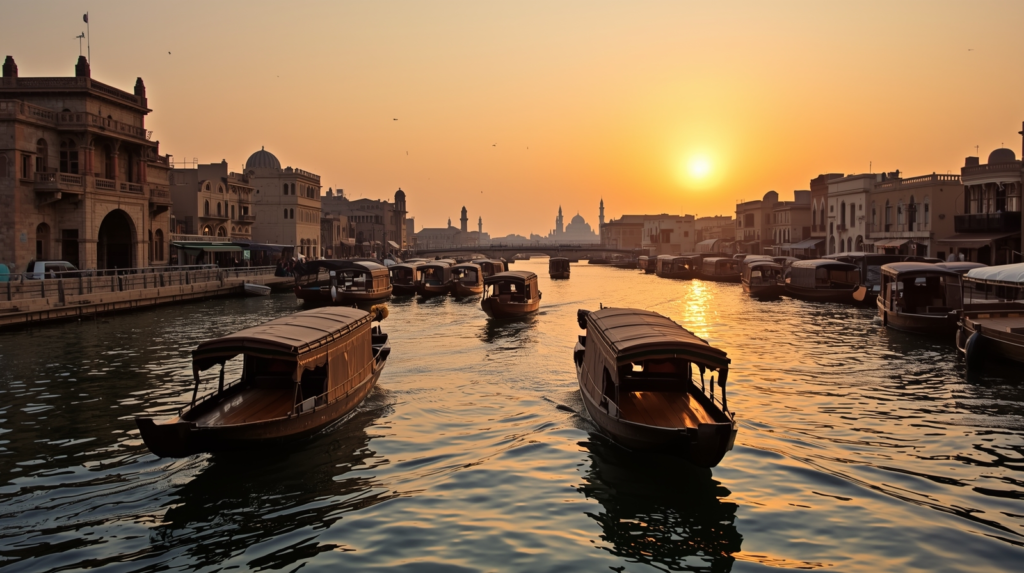
Bur Dubai is one of the city’s two historic halves on either side of Dubai Creek; it is the western side of the creek, opposite Deira, and includes a mix of old fabric, urban centres, busy streets and residential neighbourhoods. For many people, Bur Dubai is both the “gateway to old Dubai” (Al Fahidi, the creekside routes) and a practical area for urban living and daily commuting. In this article on Hamed Ghelichkhani’s website, we review the Bur Dubai area.
Where is Bur Dubai? An introduction to its geographic location
If the question is where is Bur Dubai, the precise answer is this: Bur Dubai is located on the western side of Dubai Creek, and Dubai Creek forms its natural/historic boundary with Deira on the eastern side.
For quick orientation on the city map, these relationships help:
- Eastern edge of Bur Dubai: the Dubai Creek shoreline and the pedestrian routes along the creek (such as the axes near Al Seef and the crossing piers).
- Opposite Bur Dubai (across the creek): Deira and the areas of traditional markets and old commercial streets.
- Important urban connection: in terms of accessibility, Bur Dubai has busy routes to the city’s central cores through the metro network and urban arteries. (Bur Dubai has access to both the Red and Green lines, and BurJuman is one of the most important interchange points in this area.)

What does the name Bur Dubai mean?
“Bur Dubai” is usually interpreted as meaning “the land side/main shore of Dubai”; that is, the part of the city that historically lay opposite Deira and on the other side of the creek, with the creek itself forming the mental and urban boundary between the two halves.
The conceptual difference from Deira in the city’s historic fabric:
- Bur Dubai: the western side/main bank of the creek; a place where the story of urban heritage is intertwined with historic neighbourhoods and contemporary city life.
- Deira: the eastern side of the creek; the historic core of traditional trade and markets, with a more market-oriented and commercial urban feel.
The historic and urban structure of Bur Dubai
Bur Dubai is one of the oldest parts of Dubai’s formation, and in the city’s historical narrative it is one of the first places where urban life developed around the creek before modern expansion. This background means that today, alongside streets and urban buildings, there are still prominent “heritage islands” and cultural spaces.
From the perspective of today’s urban structure, Bur Dubai is not a uniform area; it has several layers side by side:
- Heritage and cultural layer: historic neighbourhoods and cultural spaces near the creek (such as the historic axes and traditional markets on the Bur Dubai side).
- Urban-residential layer: neighbourhoods with active residential use and day-to-day services (supermarkets, clinics, schools and more) that keep Bur Dubai practical for city living.
- Commercial and commuting layer: streets and access nodes that, because of their connection to the metro and main routes, have heavy movement.
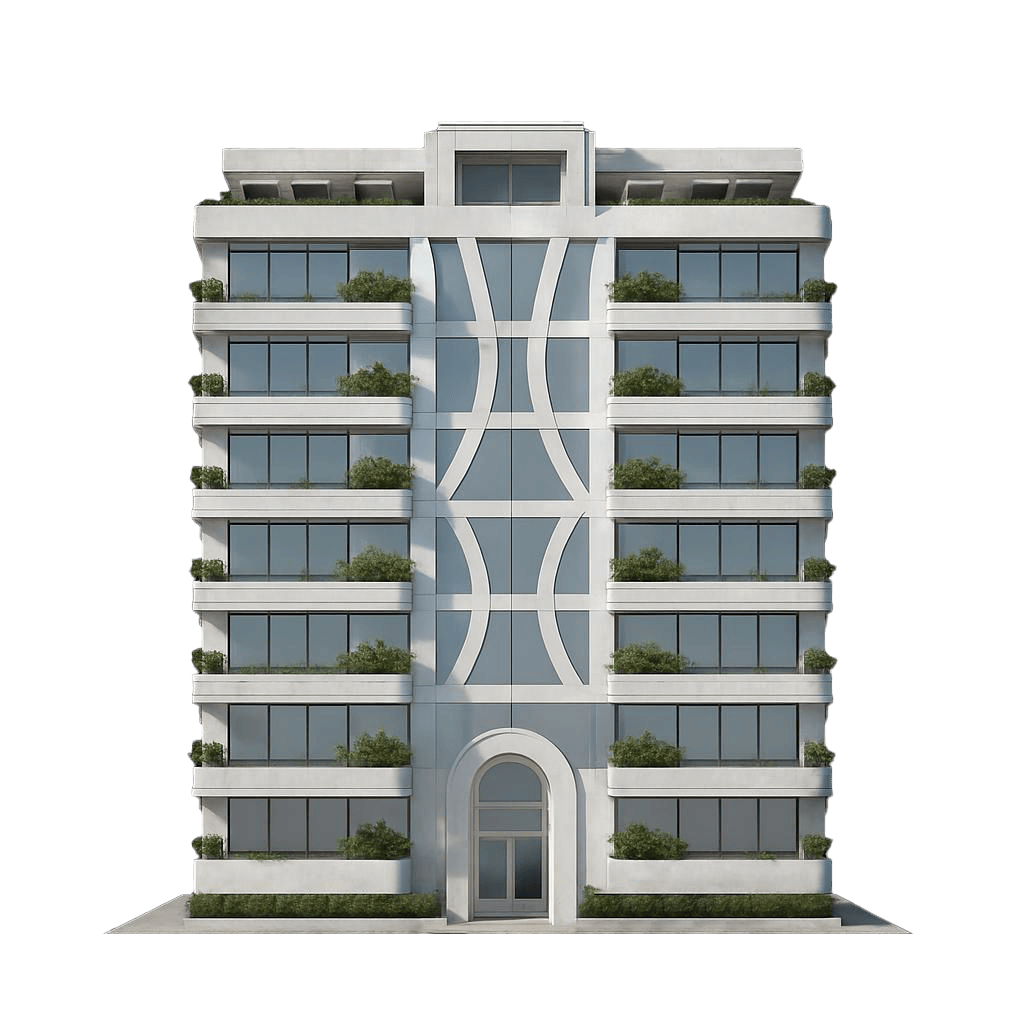
Bur Dubai or Deira? A comparison of Dubai’s two older districts
Bur Dubai and Deira are rooted in the same historical identity, but the day-to-day experience in each is different: Bur Dubai is more of a combination of heritage + service-oriented urban living, whereas Deira usually conveys the feel of traditional markets and daily commerce more strongly.
Bur Dubai and Deira compared in terms of lifestyle
| Aspect | Bur Dubai | Deira |
| Atmosphere | Heritage by the creek + liveable urban neighbourhoods | More market-oriented, more commercial, heavier daily movement |
| Everyday experience | Better suited to someone who needs urban access and is also drawn to an older atmosphere | Better suited to someone who wants proximity to markets and traditional commercial centres |
| Tourism | Focus on the old fabric on the creek side and pedestrian-friendly routes | Focus on markets and the traditional shopping experience |
Bur Dubai and Deira compared in terms of accessibility and amenities
- Metro and line connections: movement between the two sides is usually possible via the Green and Red lines, and the main interchange points are Union and BurJuman.
- Quick local link: on Dubai Creek, crossing by traditional boats (Abra) creates a very short and direct link between the two sides.
How far is Deira from Bur Dubai?
Geographically, Deira and Bur Dubai are on opposite sides of the same creek; therefore, in many routes the “distance” is more a question of the “method of crossing” than a fixed number. Three common scenarios:
| Mode of travel | More practical when… | Important fact |
| Abra on Dubai Creek | The destination is near the creek piers (old markets/creekside routes) | The crossing usually takes about 5 minutes and is the most direct link between the two sides. |
| Metro | The origin/destination is close to stations or a multi-station urban route is intended | It is usually done with a change at Union or BurJuman; the exact time depends on the origin/destination. |
| Car/taxi | The destination is inside the neighbourhoods or luggage/items are being carried | Journey time depends on traffic and the bridge/route chosen (during peak hours it is usually longer than the water crossing). |
For a tangible picture of metro time on common routes: on some frequently used routes such as “City Centre Deira to the Bur Dubai pier area”, travel time by metro with a change is usually reported as a short urban journey (about 20 minutes).

Amenities in the Bur Dubai area
Bur Dubai area, in terms of amenities, is considered a “complete urban” area: everyday services (supermarkets and local shops), transport access, clinics and healthcare centres, as well as a variety of dining options along the creekside axes and around shopping centres. Bur Dubai’s strength is that it covers everyday living needs while also reaching the heritage and cultural atmosphere of Dubai Creek within a few minutes’ travel.
Shopping centres in Bur Dubai
In Bur Dubai, shopping generally falls into two types: traditional/local markets and urban shopping centres. For quick decision-making, this classification helps:
| Type of shopping | Key examples | What needs is it suitable for? |
| Local and traditional markets | Meena Bazaar (fashion, handicrafts and local shopping axis) | Everyday shopping, traditional-style shopping, bargaining and a local experience |
| Urban shopping centres | BurJuman | Brand/fashion shopping, food, entertainment and easy metro access |
| Shopping and creekside walking | Al Seef | Lifestyle shopping + café/restaurant experiences with a heritage atmosphere |
Hotels and accommodation in the Bur Dubai area
The accommodation type in Bur Dubai is usually “urban and practical”: from budget and mid-range hotels near busy routes and shopping centres, to accommodation that, thanks to its quick access to Dubai Creek and the historic fabric, suits cultural/business trips. In this area the focus is usually on accessibility (the metro and central city routes) and urban functionality, rather than resort-style stays.
- Budget to mid-range: around BurJuman and the streets connected to the metro network, it is more suitable for daily commuting.
- Stay with the feel of old Dubai: proximity to Al Seef and Dubai Creek is more appealing for those who want evening walks and a heritage atmosphere.
Tourist attractions and sights in Bur Dubai
Bur Dubai’s tourism identity is more “cultural and historical”: old alleyways, traditional architecture, creekside routes, and buildings connected to the story of Dubai’s formation. If the aim is to see “old Dubai”, Bur Dubai is usually one of the best starting points.
Al Fahidi Historical Neighbourhood
Al Fahidi is the heritage core of Bur Dubai; it offers the fabric of the alleys, cultural spaces and the experience of walking through old Dubai, and in practice many “Heritage Walk” routes start from around here.
Dubai Museum
The “Al Fahidi Fort / Dubai Museum” space is recognised as a symbol of historical heritage, but in March 2026, Al Fahidi Fort / Dubai Museum is still closed for internal visits and can currently only be viewed from the outside; however, in February 2026 it was announced that the project was in the final stage of renovation for reopening in the first half of the year.
Dubai Grand Mosque
The Grand Mosque in Bur Dubai is one of the landmark points of this area and offers a cultural visit experience (within defined frameworks). Its location along the same historic corridors near the Creek means it can be easily combined with a walking route through the old district.

Old and Traditional Markets of Bur Dubai
The markets on the Bur Dubai side are usually known for “buying traditional fabrics/clothing, local souvenirs and experiencing old alleyways”, and with a short crossing of the Creek, the experience of Deira’s markets can also be added to the itinerary. For example, the abra crossing routes connect the two historic sides directly.
Traditional Transport Experience in Bur Dubai
Abra Boats in Dubai Creek
The abra is a practical and quick way to cross between Bur Dubai and Deira, especially when the destination is near the Creek and the old markets. There are well-known routes that connect the Bur Dubai stations to Deira, and for short urban planning, they are usually simpler than the metro or a car.
Accessibility and Transport in Bur Dubai
In terms of public transport, Bur Dubai is one of the more accessible points in Dubai, as it is covered by the metro (the Green Line and connection points to the Red Line) as well as city buses and taxis. For precise daily routes (especially during busy hours), the best approach is to check the exact origin/destination in the official RTA trip-planning tool.
Getting to Bur Dubai by Metro
For many journeys, the stations near the BurJuman and Al Fahidi axis are the usual starting/ending points, from which walking or taxi access to nearby neighbourhoods is possible. For routes along the Creek and Al Seef, using the metro to BurJuman or Al Fahidi has been suggested as a recommended option.
Bus and Taxi in the Bur Dubai Area
- Bus: Hubs such as Al Ghubaiba in this area play a transit role and are used to connect inner neighbourhoods and city routes. (For exact timings, the official RTA planner is more practical.)
- Taxi/city transport services: For destinations within neighbourhoods (old alleys, hotels, medical centres), taxis are usually a complement to the metro and can replace a long walk between stops during peak hours.
What is Life Like in Bur Dubai?
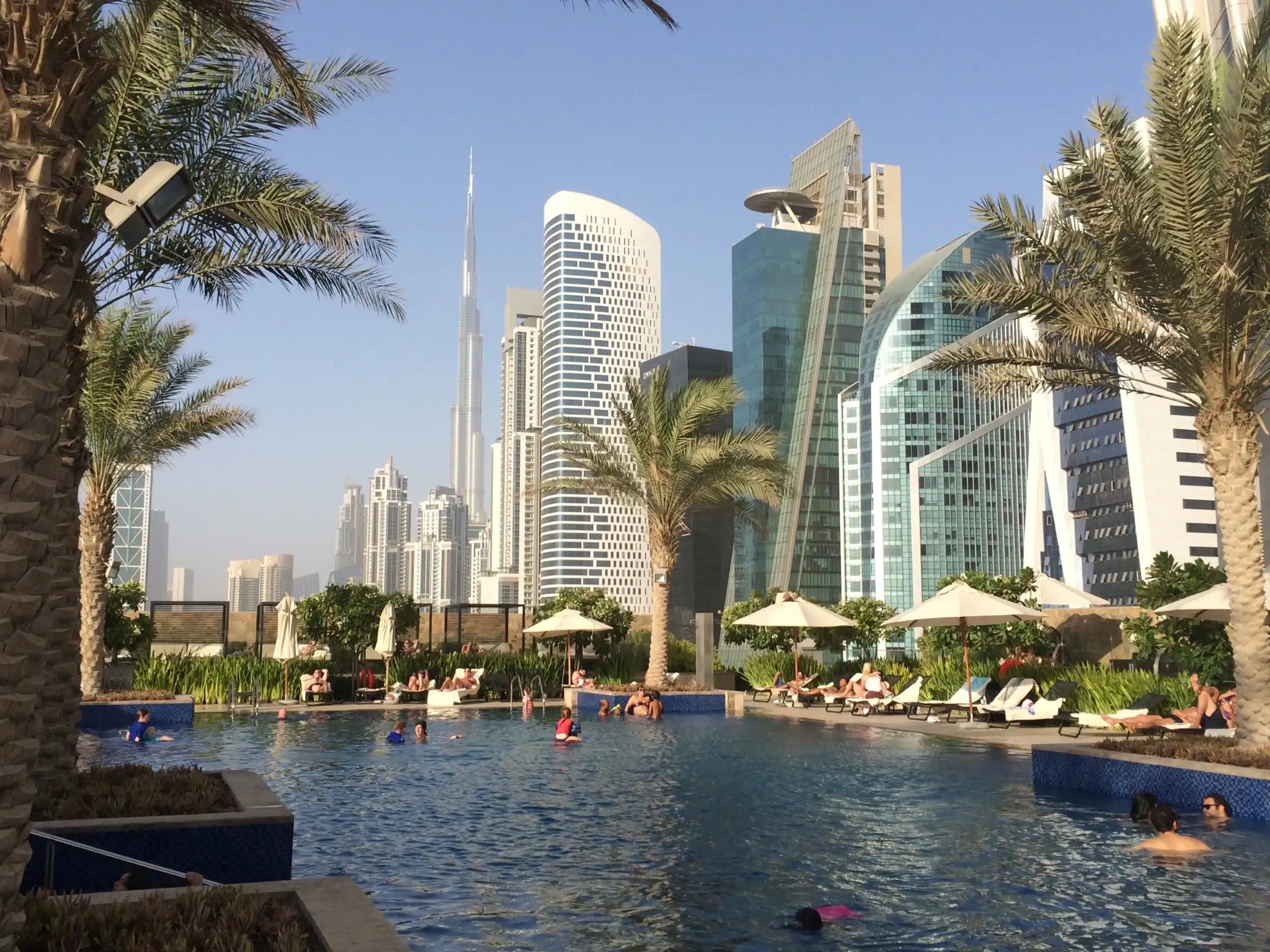
Life in Bur Dubai area is more “urban and busy” than luxurious and quiet. Its main advantage is quick access to Dubai Creek, the metro, shopping centres and everyday services; therefore, for those with work commutes or who want to stay close to the city centre and main routes, Bur Dubai is a more practical choice than many more distant neighbourhoods. On the other hand, in some streets, congestion, lack of parking and differences in building quality (older/newer) can make the living experience uneven.



Who is it more suitable for?
- Families: if access to city services and a more reasonable rental budget are priorities, but choosing the exact building and street matters greatly (parking, lift, building management).
- Singles and working couples: they are usually more suited to smaller units and proximity to the metro, and “benefit” in terms of commute time.
- Those who want absolute peace: they usually need to choose the “micro-location” more carefully or move towards less busy streets within the same area.
Rental Market in Bur Dubai
Renting in Bur Dubai is a “active and high-turnover” market, and rather than a single fixed number, it should be viewed through two criteria: registered actual rent and advertised rents in listings. In the registered rental transaction data for apartments in Bur Dubai, the annual rent mean is reported at around AED 70,000 (overall mean, regardless of unit type).
For a more accurate decision, it is better to review rent by unit type and building quality, as the difference between older buildings and newer projects can be noticeable. One practical sign is that in active listings, the mean of the “asking prices” is seen above the mean of registered transactions; in other words, negotiation and comparison of several nearby buildings usually pays off.
Short checklist before renting in Bur Dubai
- Parking status (dedicated/shared/none)
- Building management and maintenance quality (lifts, lobby, cooling systems)
- Actual proximity to the metro/bus (walkable, not just “close on the map”)
- Street noise and traffic during peak hours
Buying Property in Bur Dubai; Is It Logical?
Buying property in Bur Dubai becomes more logical when the aim is “urban property with rental demand” or “holding an asset in a central area”, rather than merely chasing rapid price growth. Because of its older fabric and limited land in central parts, this market is not full of newly launched projects like newer development-led areas; therefore, building quality, title conditions and liquidity in the secondary market matter more than the excitement of new launches.
Based on apartment sales transaction data in Bur Dubai, the mean transaction price is reported at around AED 2.84 million and the mean price at around AED 2,200 per square foot (mean figures and dependent on the transaction mix).
When is it a more logical choice?
- When the property is in a building with good management, suitable parking and metro access (lower vacancy risk)
- When the building’s age and maintenance costs have been included in the budget (thinking about costs in a hotel-like way, not just the purchase price)
- When the exit plan (sale) is realistic and does not rely on quick liquidity
Common risks in Bur Dubai
- Differences in building quality (in terms of maintenance, lifts, parking, sound insulation)
- Limited new-build options compared with some development-led areas
- In some listings, ambiguity or ownership/transfer restrictions (requiring review of the title deed and sale conditions)
Areas Near Bur Dubai
In terms of location, Bur Dubai is an “access hub” and with just a few minutes’ travel, several important areas can be reached; this has value both for living and for property decisions.
| Nearby area | Why is it important? | Usual type of access |
| Deira | Shopping hub and traditional markets; quick crossing over the Creek | Abra/metro/car (depending on destination) |
| Karama | A city setting with more services and better value for everyday shopping | Car/bus/taxi (short route) |
| Al Jafiliya / Al Kifaf | Better access to central corridors and some newer projects around Zabeel | Metro/car |
| Downtown | Access to the commercial-tourism core and events | Metro with a change or by car (depending on the time) |
Who is Bur Dubai Suitable For?
For quick decision-making, Bur Dubai usually fits these groups best:
- People for whom accessibility and commute time are priorities (employees, managers, freelancers with city meetings)
- Those with a medium budget who want to live more “centrally” and can live with urban bustle
- Investors thinking about urban lettability and willing to spend time finding the right building (not buying based on the area name alone)
By contrast, if the priority is “peace, quiet at night and Resort Style Living”, Bur Dubai usually requires a very careful choice of street/building, or else one should consider quieter neighbourhoods with lower density.
Frequently Asked Questions
Where is Bur Dubai and what is its location like?
Bur Dubai is located on the western side of Dubai Creek, and Dubai Creek is its natural boundary with Deira to the east. This area is opposite Deira and has accessibility to different parts of the city through water routes, the metro and the urban network.
What is the main difference between Bur Dubai and Deira?
Bur Dubai is a combination of historical fabric, residential neighbourhoods and urban services, and conveys a sense of “functional city life”; whereas Deira has more of the atmosphere of traditional markets and daily commercial activity, and is more market-oriented.
How far is Deira from Bur Dubai and how can one travel between them?
These two areas are on opposite sides of Dubai Creek, so the distance depends more on the crossing method. By traditional abra boats it takes about 5 minutes; by metro it is usually about a short city route (for example, around 20 minutes on some routes); and by car the time varies depending on traffic.
Is Bur Dubai suitable for living?
Yes, Bur Dubai is a complete urban area with good accessibility to the metro, daily services, shopping centres and Dubai Creek. This area is more suitable for people who commute for work or want to be close to the city centre, but there may be congestion and a lack of parking on some streets.
What is the mean rent and property price in Bur Dubai?
The mean annual rent for apartments is reported at about AED 70,000. The mean apartment purchase price is also about AED 2.84 million and about AED 2.2 thousand per square foot, which can vary depending on the building type and location.
