

Types of Property Ownership in Dubai is not just a legal term; it directly determines what “right” a buyer has over the property, how durable that right is, whether sale/letting/mortgage is possible or not, and exactly what document is received in off-plan purchases. For foreign buyers, the issue is even more important because full ownership (Freehold) is only possible in “designated areas”, and outside them the usual models are usufruct or long-term letting. In this article on Hamed Ghelichkhani’s website, we take a detailed look at the types of property ownership in Dubai.
Why do the types of ownership matter?
In Buying property in Dubai, the real value of the transaction is not only the “price”; the ownership structure determines how defensible the asset is and where legal/operational risks enter the picture. In practice, the difference between Freehold and Leasehold can affect the ability to transfer the property to heirs, negotiating power when selling, whether the property is accepted for a loan/mortgage, and even restrictions on alterations and building management.
- Transferable rights: Is the ownership right “without a time limit” or “for a specified period”?
- Contract and management risk: In jointly owned projects, common areas and maintenance costs are regulated under the framework of common property laws, and the buyer should know what obligations they have.
- Off-plan risk: In Off-plan, the final title deed is not issued from the outset, and initial registration is carried out through the Oqood system and the “provisional register”.

Types of property ownership in Dubai for foreign buyers
For foreign buyers, ownership in Dubai usually falls under several main models: Freehold (full ownership), Leasehold (leasehold interest), Usufruct (long-term usufruct), ownership in Off-plan projects (temporary registration until handover), ownership within Jointly Owned Property (a private unit + a share of common areas), and ownership in the name of a company. The general rule is that in “designated areas”, a non-UAE national can hold Freehold, while in other cases usufruct/long-term leasehold models of up to 99 years are available.
Note: Usufruct and Leasehold are two different rights that, for non-UAE nationals in designated areas or within the prescribed frameworks, can be granted for up to 99 years.
| Type of ownership | Nature of the right | Common place of use | Key point for a foreign buyer |
| Freehold | Ownership without a time limit | Designated areas | It must be confirmed that the property is registered in a Designated Area |
| Leasehold/Usufruct | Right of use/usufruct for up to 99 years | Within the framework of areas and rights defined under official regulations | Renewal/restrictions are determined by the contract |
| Jointly Owned Property (ownership in common property) | Private unit + share of Common Parts | Towers and communities | JOP rules, charges and management are important |
| Off-plan | Temporary registration (Oqood) until Title Deed | Off-plan projects | Risk of delay/changes and accuracy of registration in Oqood |
| Corporate | Ownership in the name of a company | Investment / multiple partners | Area restrictions + corporate governance requirements |
Freehold ownership
Freehold means ownership “without a time limit” and is only available to non-UAE buyers in Designated Areas; this rule is defined within the regulations governing non-UAE ownership in designated areas.
- Key rights: Long-term holding, sale, letting and transfer within the framework of property registration laws and project/community regulations.
- Operational point: Whether the area is open for Freehold must be clear in the official documents/registration (not merely in project advertising).
Long-term leasehold ownership
Leasehold in Dubai means the right to use a property for a specified period, which can be defined for up to 99 years. This model for non-UAE buyers is included, within the same regulations, as one of the rights that may be granted (alongside Freehold), but the “nature of the right” is different from full ownership.
- Term and renewal: The exact term, renewal conditions and transfer/mortgage restrictions are usually set out in the contract.
- Registration of long-term rights: Long-term contracts (within specified periods) are, in principle, registrable, and official registration helps reduce the risk of disputes.
Commonhold ownership
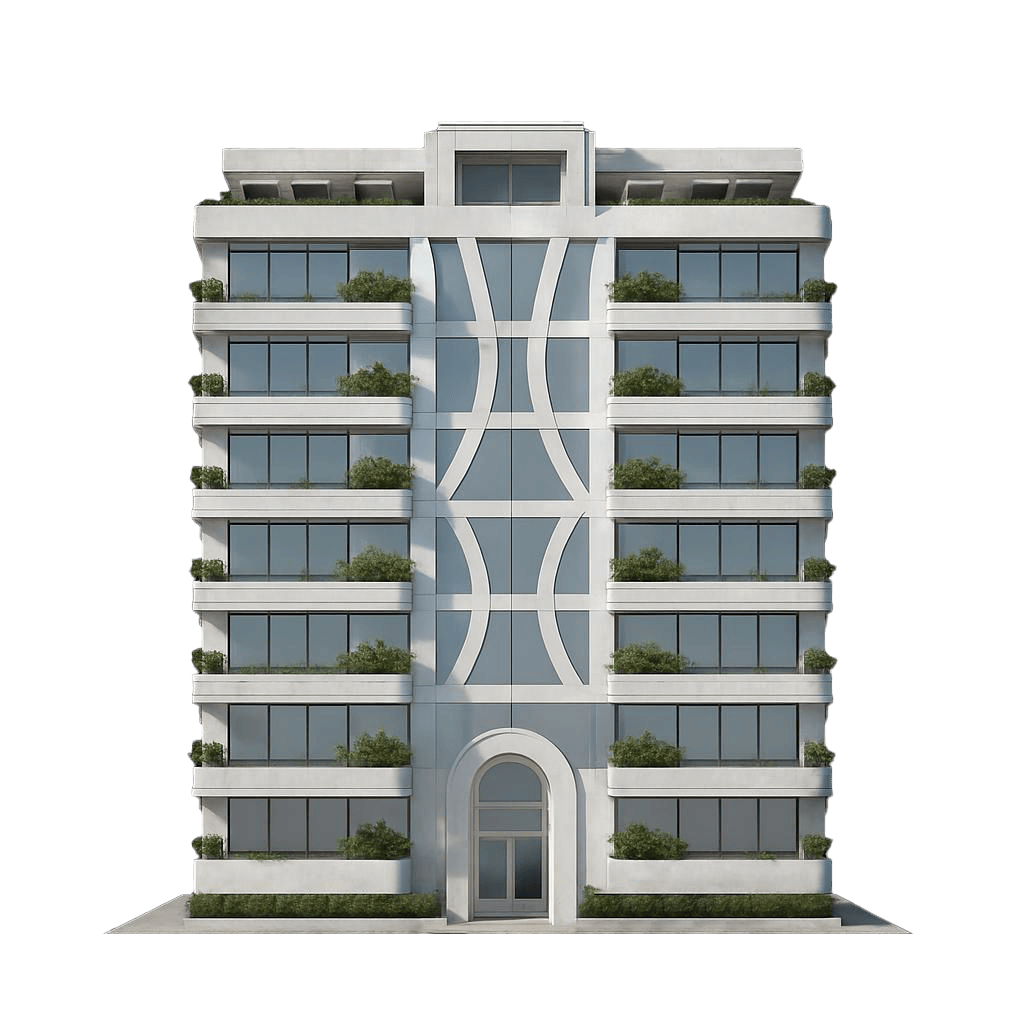
In many of Dubai’s towers and communities, buying a unit means “ownership of a private unit” together with a “share of common parts”; this area is managed within the framework of Dubai’s common property law and the related implementing regulations.
- Things that directly affect the owner’s cost and experience:
- In common property, the management structure, approved service charges and project management status should be checked through the official DLD/RERA channels.
- There should be registered management companies overseeing the management of common property.
Ownership of off-plan projects
Off-plan means buying a unit “before construction is completed”; in this model, the initial sale is registered in the provisional register and the developer proceeds through DLD systems (including initial sale registration services). Until project completion and the issuance of the final title deed, the ownership status is supported by temporary registration and contractual documents.
- Key risk/control point: Correct registration of the sale in official systems and consistency of the unit information, payments and contract (SPA) with the temporary registration.
- Practical point: Buying Off-plan is subject to a specific legal framework and initial sale registration in the provisional register is mandatory; otherwise, the legal effects of the transaction are compromised.
Corporate ownership
Corporate ownership means that the property is registered in the name of a company (not an individual). The core restriction for foreigners is that the right of non-UAE ownership is available in “designated areas”. In corporate ownership, in addition to the location of the property, the company structure and registration in the DLD system, as well as the company’s legal representation documents, must be checked.
- When is it more logical? Multiple partners, structuring an asset, planning the transfer of a share/ownership at company level, or managing multiple assets under one structure.
- What should be clear from the outset? The type of company, shareholders, property location (Designated Area), and the possibility of mortgage/bankability in the corporate model (subject to the bank’s conditions and company documents).
Read more: Migration to Dubai
Ownership in new areas, off-plan projects / sales off plan (Off-plan)
The growth of new areas and off-plan projects has caused a significant share of foreign transactions to move towards Off-plan and new communities. In this context, the main difference between a “ready project” and a “pre-built project” is that in a ready project, the final title deed and the occupancy status are clearer; however, in Off-plan, the focus of assessment should be on temporary registration, the project’s official mechanisms and the timing/delivery risk.
Advantages and risks of ownership in off-plan projects
In Off-plan, the advantages are usually seen in the initial price, the payment plan and the variety of choice; by contrast, the risks are more about “handover”, “changes” and “registration alignment”. In official project registration processes, matters such as escrow accounts and project registration and review procedures are also raised.
- Advantages
- Stage-by-stage payment and the ability to manage cash resources
- Better unit selection (orientation, view, floor, layout) at the start of the project
- Risks
- Delay in handover or changes to specifications/layout
- Disputes in the SPA terms, payment plan and temporary registration status
- Greater dependence on the developer’s performance and the project’s official processes
Conditions for the certificate/initial sale registration in Oqood
In off-plan purchases, the initial sale must be registered in the provisional register and the developer proceeds through the relevant Oqood services and initial sale registration. The outcome of this route is an official temporary registration and the ability to track the transaction status within the defined frameworks.
- Role of Oqood: Registration of the sale of Off-plan units in the provisional register and creation of an official record of the transaction.
- Role of the developer: Initial sale registration through official routes (the buyer should follow up to ensure completion of the registration).



What is a Title Deed in Dubai and what information does it contain?
A Title Deed in Dubai is the official property ownership registration document, and its authenticity can be checked through DLD online services. In the official enquiry, key information such as the Title Deed No, year of issue and property type are used as verification inputs, and it is possible to “verify the owner and the property”.
Introducing the Title Deed and the issuing authority (Dubai Land Department)
The Title Deed is issued and registered by Dubai Land Department, and the property registration framework is also defined in Dubai property registration laws. In practice, the final ownership document is what legal transfer, mortgage and many legal matters are based on.
- Main functions of the deed: proof of ownership, the ability to transfer officially, and the ability to enquire through DLD services.
- Official enquiry: the Verify Title Deed service is available for property/owner verification.
The difference between a digital deed and a paper copy
In Dubai, United Arab Emirates, it is possible to view an “Electronic Title Deed” through the Dubai REST app: log in to the app, select the property, enter the services menu and choose Electronic Title Deed for the result to be displayed.
- Digital version: for quick viewing/access in Dubai REST and following up property information.
- Paper version: in some banking/legal processes or for some transaction parties, a printed/physical copy may still be requested (depending on the other party’s procedure).
Oqood and its role in off-plan purchases
In off-plan purchases, Oqood plays the role of “temporary transaction registration” until the project is completed and the final deed is issued. The services for registering the initial off-plan sale and completing the initial stages are carried out through the defined portals and services.
- What does it cover? Registration of the off-plan unit/land sale in temporary registration.
- What does it not replace? The final Title Deed (which is usually issued after completion/handover and final registration).

What is the practical difference between Freehold and Leasehold?
The practical difference between Freehold and Leasehold is more than just the name: one is ownership without a time limit, while the other is the right to use/enjoy or lease for a specified period (up to 99 years). This difference affects long-term value, inheritance transfer, selling power and even contractual restrictions.
The ownership period and restrictions of each model
Under the legal frameworks and designated area regulations, non-UAE nationals can hold Freehold in specified areas (without time limit), and within the same framework, Leasehold/Usufruct rights can also be granted for up to 99 years.
- Freehold: ownership rights “without an expiry date” (in designated areas).
- Leasehold/Usufruct: a “time-limited” right to use/enjoy, up to 99 years; the main sensitivity is the contract terms, renewal and transfer restrictions.
- Registration of long-term contracts: long-term contracts can be registered within the property registration framework, and official registration reduces the risk of disputes.
Which areas of Dubai allow Freehold ownership?
Freehold ownership for foreign nationals is defined in “Designated Areas”, and these areas are specified in the regulations and supplementary resolutions (with annexed maps/official plans). In recent years, resolutions have also been announced to add or convert some plots to Freehold.
- Definitive rule: the criterion is whether the property is a “Designated Area” according to the regulations/resolutions, not the popularity of the project.
- Common market examples (non-exhaustive): Dubai Marina, Palm Jumeirah, Downtown Dubai, Business Bay, JVC, Arabian Ranches, Dubai Hills Estate (these are known as frequently traded examples, but the final criterion is the official registration/Designated Area).
- Examples of recent changes: the possibility of converting some plots on Sheikh Zayed Road and in Al Jaddaf to Freehold has been announced.
Read more: Cities of the UAE
The advantages and disadvantages of each ownership type for foreign investors
For a foreign investor, the choice between Freehold and Leasehold is usually related to the investment time horizon and exit strategy: if the goal is long-term ownership and easier transfer/sale, Freehold is usually clearer; if the goal is time-limited use with a different entry cost, Leasehold may be considered (with high sensitivity to the contract).
| Investment criterion | Freehold | Leasehold |
| Time horizon | Long-term, without expiry date | Time-limited up to 99 years |
| Transfer/sale | Usually simpler and more marketable (in Designated Areas) | Dependent on contract terms/consents |
| Legal risk | Lower (if the Title Deed is clear) | Higher (if the contract is unclear/renewal is uncertain) |
| Key point for foreign nationals | Only in Designated Areas | The term, renewal and official registration must be checked carefully |
Joint ownership or common areas (Commonhold/Shared Ownership)
In many towers and communities in Dubai, ownership is not “only the unit”; in addition to the exclusive unit, the owner has a share of the common areas (lobby, lifts, shared parking, facilities, corridors, etc.), and this share is managed under the “jointly owned property” regulations. The practical result of this model is that maintenance costs and the rules for using common areas are part of the investment reality and should be made clear before purchase.
Definition and difference from the rest
In practice, Commonhold means “ownership of the unit + related obligations and rights over the Common Parts”. The main difference from other models is that in Freehold/Leasehold the focus is on the nature of the right, whereas in Commonhold there is an additional focus on building management and shared costs.
- What is “common”? Shared spaces and facilities that all owners benefit from collectively.
- What is “exclusive”? The unit (Apartment/Villa/Office) that is registered in the deed in the owner’s name.
- Outcome for the investor:
- The quality of management and the service fee budget can affect the living experience and even marketability.
Read more: Buying an apartment in Dubai
Contract examples and legal points
In secondary purchases (resale) and many transactions, standard contracts and sale contracts are used in the official processes, and in brokerage there are also smart contracts (A/B/F) and dispute-resolution mechanisms defined.
Checklist of clauses that usually need careful reading in Commonhold transactions:
- The exact definition of the unit and common areas and which items are considered “exclusive use” (for example, allocated parking or storage room).
- The service charges framework and how the annual budget/fee collection mechanism is determined.
- Rules on repairs and internal changes (what requires management approval and what does not).
- Operating restrictions (short-term letting, pets, commercial use in residential buildings, etc.).
- Dispute mechanism: in some disputes, conciliation/administrative routes are provided before court.
Corporate ownership / foreign company ownership in Dubai
Corporate ownership means the property is registered in the name of a company, not an individual. This model is attractive to some investors because it structures asset management, share transfer or multi-party participation more clearly. At the same time, a transaction as a “company” has one key requirement: the company must be registered and identified within DLD frameworks in order to carry out the transaction.
How to register the company and property ownership
At the transaction level, the most important point is that the company has a legal identity acceptable for deed transfer and that its legal representative is identified.
- Common prerequisites for a corporate buyer (in practice):
- Company registration documents and authorised signatory authority
- Internal company resolution/authority letter for the purchase (if required)
- Company registration for carrying out the property transaction (if not previously registered)
- Sensitive point: if the company has not already been registered in the relevant systems, the company registration process for carrying out the transaction usually needs to be completed first.
Advantages and limitations
| Subject | Common advantages | Common limitations/risks |
| Asset management | Separating the asset from the individual owner, possibility of several partners | Need for legal discipline and company maintenance costs |
| Transfer/exit | Possibility of transfer through changes in shares in some scenarios | Banking/mortgage complexity for some corporate structures |
| Regulatory compliance | Structural transparency for partnerships | Greater sensitivity around documents, signatures and official registrations |
The importance of checking the deed when buying property in Dubai
When buying property, the deed is not just a piece of paper; it is the point where money connects to legal ownership. Checking the deed and the property’s status before signing prevents several common risks: dealing with the wrong owner, the existence of registered restrictions/mortgages/obligations, or a discrepancy between the contract specifications and the official registration status. For the final transfer, in Freehold areas, a developer e-NOC is also usually regarded as one of the key documents.
Minimum checklist before making substantial payments:
- Match the owner/seller name with the official registration status
- Check the type of deed (Title Deed for ready / Oqood for off-plan)
- Obtain the e-NOC in Freehold areas through the designated channels
- Check that the broker/real estate professional has a valid permit and card
Ways to verify deed authenticity through DLD
There are 2 direct and official routes for deed credit assessment: the DLD website and the Dubai REST app. The “Verify Title Deed” service makes it possible to check the validity of an issued Title Deed, and basic data such as the deed number and deed year are used as inputs.
- Verify Title Deed (web/app): credit assessment of the Title Deed; the service delivery time is listed as “Immediate”.
- Dubai REST App: one of the official channels for providing property services and verification checks.
- Common inputs in the verification form: Title Deed No + Title Deed Year + property type (Land/Unit/Villa) and, in the owner verification mode, the owner’s name.
Read more: Buying a house in Dubai on instalments
The role of a licensed real estate agent (RERA) in assuring a legal deed
In practice, RERA’s role is that the “individual/company active in the transaction” must be capable of being verified, and the related marketing activities and contracts must be carried out through defined channels. There are 2 very practical checks for the buyer: 1) the list of licensed brokers, 2) professional card (e-card) verification and 3) verification of licences and permits in Trakheesi.
- RERA card (e-card) verification: by selecting the card type and entering the card number in Dubai REST, the result is displayed immediately.
- Verify License and Permits: checking the e-copy of licences/permits issued for real estate professionals through Trakheesi.
- Official brokerage contracts and processes: the use of smart contracts (A/B/F) and the registration of transactions through official registration offices (Trustee) are defined as market practice.
Use of the deed for obtaining residency and a property visa
For property visas, the “Title deed” or e-Certificate of Title/Title Deed is one of the key documents and, without it, in practice the file does not reach the review stage. In Dubai’s official services for the 2-year investor visa and the 10-year investor Golden Visa, the existence of a Title Deed is mentioned as one of the required documents.
The effect of ownership on obtaining residency or a visa
The type of ownership and the “registered purchase value” determine which residency route can be pursued. In Dubai, 2 common property-based routes are clearly defined: 2-year investor residency (Taskeen) with a minimum value of AED 750,000 and the 10-year investor Golden Visa with a minimum value of AED 2 million. Both routes have specific conditions regarding mortgaged property and documents.
Minimum investment amount and visa conditions
| Type of property residency in Dubai | Minimum property value | Key points on conditions |
| Investor Residence (2-year) | AED 750,000 | Being mortgaged: payment of at least 50% of the value or the equivalent of 750k and a bank no-objection letter + mortgage statement |
| Golden Visa Investor (10-year) | AED 2,000,000 | The property can be mortgaged, but the bank letter must confirm “at least 2 million paid”; possibility of sponsoring spouse/children/parents |
Practical points that make a difference in practice:
- For the 2-year visa, in some cases joint ownership by spouses in one property and acceptance of the combined value are mentioned.
- For the Golden Visa, the condition that “the applicant is inside the UAE” is stated in the service (although this condition needs to be rechecked with the official service).
New policies related to ownership
Ownership policies in Dubai are not fixed, and in recent years specific examples of “expanding Freehold eligibility” have been seen. One important example is the possibility of converting the ownership status to Freehold for specific plots along Sheikh Zayed Road and Al Jaddaf, which was announced for all nationalities, and the number of eligible plots was also specified. In the same announcement, the eligibility confirmation mechanism in Dubai REST and the conversion fee rate (30% of the property valuation based on GFA) were also mentioned.
- According to the official DLD announcement on 19 January 2025, conversion to Freehold for 128 plots on Sheikh Zayed Road and 329 plots in Al Jaddaf (457 plots in total).
- Eligibility confirmation through Dubai REST and then a valuation/appraisal request.
- Conversion fee: 30% of the property valuation (according to the service description).
Additional costs and taxes when buying property in Dubai
When buying property in Dubai, additional costs usually consist of 3 groups: 1) transfer and registration costs (DLD/Trustee), 2) project/developer costs (such as NOC and similar items), 3) maintenance costs and annual charges in jointly owned properties. A significant part of the transfer costs is listed with numerical details in the official “Property Sale Registration” service.
Title deed registration, property and maintenance costs
In a property transfer (resale/ready), the key reliable costs are these:
- Sale transfer/registration fee (Sale value):
- Seller: 2% + Buyer: 2% (4% of the sale value in total)
- Fixed/administrative fees (examples listed in the service):
- Title Deed Certificate Issuance: AED 250
- Knowledge fee: AED 10 + Innovation fee: AED 10
- Service Partner (Trustee) fees: AED 4,000 + VAT if the sale value is ≥ 500,000 and AED 2,000 + VAT if it is lower
- Developer e-NOC (in Freehold areas): mentioned as one of the required documents in the transfer and obtainable in Dubai REST.
- Maintenance (Service Charges) in jointly owned properties: managed through annual budgets and mechanisms for determining/collecting service charges and the relevant regulations.
Read more: Buying commercial property in Dubai
Ongoing costs, commission and financial risks of delayed projects
In practice, “annual and recurring” costs are more in the nature of service charges/maintenance than transfer costs. For off-plan projects, in addition to staged payments, costs arising from delays (such as temporary accommodation costs, cash-flow pressure, or changes to the financial plan) should be considered in the scenario from the outset.
- Service charges and service fees: the framework of annual budgets and regulations relating to service fees can be seen in the documents and circulars section related to jointly owned properties.
- Brokerage commission/fee: should be transparent and in writing, and included in the standard/smart contracts related to marketing and buying/selling.
- Delayed projects (off-plan): one important check is that the project is genuinely registered and permitted, and that the project escrow account and the payment route are correctly followed; the brokerage guide also emphasises depositing funds only into the project escrow account.
Conditions and step-by-step transfer of a title deed in Dubai
Title transfer (for a Completed property) is usually carried out through Real Estate Registration Trustee offices; the documents are checked and uploaded to the “digital vault”, the fees are paid, and at the end an Electronic Title Deed is issued. In Freehold areas, the availability of an e-NOC from the property developer is one of the key documents.
- The standard route in secondary transactions: initial contract → MoU (Form F) → e-NOC → transfer at the Trustee/DLD → receipt of Title Deed
- The standard service time for “Property Sale Registration” is stated as 20 minutes (subject to all documents and checks being complete).
Setting up the initial contract with the seller
The initial contract must lock in the “exact framework of the transaction”: the property details, price, transfer timeline, mortgage/obligations status, and how and at which stage the payments will be made. If this section is unclear, disputes usually surface at the NOC stage or on transfer day itself.
Checklist of essential clauses:
- Exact property details as per the registration (Unit/Land/Villa) and the identity documents of the parties (Emirates ID/Passport)
- The status of the mortgage/loan and the settlement scenario (if there is a mortgage, the process and the manager cheques become different)
- The transfer timeline and the conditions for termination/default, and the fact that the transfer reference is the Trustee Centre
Signing the Memorandum of Understanding (MOU)
In Resale transactions, the “memorandum of understanding” is in practice the Form F (standard sale contract), which is used within RERA/DLD smart contracts. Form F must state exactly when money changes hands, under what conditions, and what is required before transfer.
Items that must not remain unclear in Form F:
- The final price, transfer date, and the conditions for completion of the transaction (such as receipt of the NOC and, where applicable, mortgage settlement)
- Responsibility for costs (Transfer fee, Trustee fees, and other official incidental charges)
- The payment instrument (Manager Cheque) and whose names the cheques are issued in (especially for mortgaged property)
Obtaining the No Objection Certificate (NOC)
For transfers in Freehold areas, the developer’s e-NOC is listed as a mandatory document and is obtained through Dubai REST. This is usually the stage where outstanding service charges or contractual disputes can slow down the transaction.
- e-NOC is included in the list of documents required for Property Sale Registration.
- If the property is mortgaged, in addition to the NOC, the “Mortgage release letter” mechanism and the sale registration of mortgaged property must be followed.
Read more: Buy an apartment in Dubai
Final transfer of ownership at Dubai Land Department (DLD)
The final transfer is usually carried out at the Trustee Centre: the documents are checked and registered, the fees are paid, and the output is the Electronic Title Deed. According to the official service, the transfer fee is 2% seller + 2% buyer (4% of the sale value in total), plus several fixed/shared fees.
- Operational steps for the service: attendance at the Trustee → document review → data entry and audit → payment → request registration and email receipt of the output
- Cost components in the official service: 2% + 2%, title deed issuance fee, Knowledge/Innovation fee, and Trustee fees (AED 4,000 or AED 2,000 + VAT depending on the sale value).
- For mortgaged property: sale registration of the mortgaged property and issuance of the manager cheques are carried out according to a separate process.
How to assess and secure property investment in Dubai
Proper assessment means separating the “number on the brochure” from the “quality of the asset”. A good asset in Dubai usually has three pillars: clear registration and title deed (DLD), project/building governance (common areas, service charge, management), and sustained demand (residential/rental/use). To reduce risk, official tools such as Verify Title Deed, checks of market participants’ licences, project status enquiries and the service charge index should be part of the checklist.
Indicators of a suitable investment location
The right location is not just the “area name”; it is the combination of access, the type of demand, and hidden maintenance costs that creates the real ROI. For that reason, the location should be measured against a few fixed indicators rather than market excitement.
- Rental/residential demand: What type of tenant/user is the property attractive to, and is that demand sustained?
- Maintenance and service costs: Review the Service Charge Index and the building management status, as this has a direct effect on net return.
- Title/registration risk: The ability to verify the title deed with Verify Title Deed and check the status of the property/project.
- Credibility of transaction participants: Verify active e-cards and licences through official channels.
- Realistic valuation: Reliance on valuation principles and the legal/registration logic; the DLD valuation guide emphasises “transparency, integrity and standard methods”.
Reviewing the risks at the end of the leasehold term or in delayed projects
The risk in Leasehold is usually not seen at the “moment of purchase”; however, at the end of the term or at the point of sale, the renewal terms/restrictions become decisive. In Off-plan as well, the main risk is “delay/incorrect registration”; therefore legal controls (project registration, Oqood, escrow) should be checked from the outset.
- Leasehold:
- The term, renewal, and transfer/mortgage restrictions must be clear in the contract and the official registration.
- If the exit strategy is based on sale, the sale scenario in the final years of the Leasehold should be assessed from the outset.
- Off-plan / delayed projects:
- The escrow account is defined to regulate construction and protect the investor’s rights, and it applies to all developers selling off-plan.
- If the developer refuses or delays registration of the sale contract with DLD, the possibility of submitting a request to the relevant DLD unit (according to the official FAQ) has been stated.
Read more: The most luxurious homes in Dubai
Frequently asked questions about title deeds and ownership in Dubai
Can Iranians become 100% owners of a property?
For non-UAE nationals, ownership in Dubai is defined within the framework of Designated Areas, and within these areas it is possible to register ownership in the foreign buyer’s name. The criterion is the “type of ownership and place of registration”, not nationality alone.
Key point: before paying, it should be ensured that the property is located in an area that can be owned/registered by non-UAE nationals.
Is it possible to transfer ownership?
Yes. The official transfer is carried out through the Property Sale Registration service (for full or partial transfer), and the output is the Electronic Title Deed.
For Freehold areas, the developer’s e-NOC is listed among the required documents.
For mortgaged property, the process, cheques and the “Mortgage release letter” come into the cycle.
In a joint purchase, in whose name is the title deed issued?
In a joint purchase, it is possible to register the transaction as “full or partial”, and the share/nature of the participation must be specified in the official registration. DLD also offers services such as Split Ownership (division according to share) for multi-owner scenarios.
Practical point: if there are multiple buyers, it is better from the outset to make the “shares” and rights of each partner clear so there are no problems in sale/inheritance/disputes.
What is the difference between Oqood and Title Deed?
In Off-plan, the initial sale registration takes place through temporary registration, and then at the final stage the Title Deed is issued. For completed property, the focus is on the Title Deed.
If an Off-plan purchase is made, the correct initial sale registration in DLD systems must be traceable.
What should be done if the developer delays registration of the Off-plan contract?
The official DLD FAQ states that if the developer refuses or delays registration of the sale contract, it is possible to submit a request to register the contract with the relevant DLD department along with supporting documents.
Preventive control: check the existence of the escrow account and the project status, because escrow is designed to protect the investor’s rights in off-plan sales.
If the property is mortgaged, how does the title transfer differ?
For mortgaged property, a separate service called “Registering the Sale of a Mortgaged Property” is defined, and the final transfer is completed after presenting the Mortgage release letter. In this process, three manager cheques (in the name of the bank/developer, the seller, and DLD) are mentioned.
Summary: Which type of ownership is more suitable for you?
The choice of ownership type in Dubai should begin with the “investment objective”: is the goal rapid capital turnover and a short-term exit, or long-term holding and stable ownership? The route should then be assessed in light of title deed risks, maintenance costs, and transfer/saleability.
| Objective | What is usually more sensible? | What should be checked? |
| Short-term investment / quick exit | Registration transparency and liquidity are more important than the “project title” | Transfer costs, sale period, title deed status and the licensed broker |
| Long-term ownership | Legal stability, building management and maintenance costs become important | Service Charge Index, management of common areas, and the ability to verify the title deed |
Choosing between short-term investment and long-term ownership
- If the exit plan is within 3–5 years: the priority is usually liquidity, transfer costs, and title deed transparency.
- If long-term holding is intended: the priority is building management, Service Charges, and the quality of sustained demand.
- If Off-plan is chosen: escrow and project registration status should be checked “before major payments” are made.
Dubai property market conditions in 2025 and the outlook ahead
Official data shows that the market recorded a historical milestone in 2025: more than 270,000 transactions with a value of AED 917 billion (20% annual growth). In addition to transaction volume, the “investor base” has also expanded, and the number of investors and new investors has grown significantly.
There are also signs of continued momentum in 2026: in Q1 2026, transaction value reached AED 252 billion (31% annual growth in value) and the number of transactions also increased; at the same time, foreign investment and the luxury segment also showed growth in the data from that quarterly report.
Legal trends and regional development
Legal trends in recent years have sent two clear messages: the expansion of Freehold options and the increasing digitisation of processes. A notable example is the ability to convert certain plots along Sheikh Zayed Road and Al Jaddaf to Freehold, with the number of eligible plots also officially announced.
- The development of digital tools and services (including faster transfer routes and electronic outputs) has made “official checks” such as Verify Title Deed and Verify License more practical.
Opportunities and challenges in the years ahead
The main opportunities usually come from “depth of demand” and “the stability of investment frameworks”; official documents also refer to the market moving towards maturity and sustainable value.
Challenges usually arise where the investor enters without official checks: buying Off-plan without reviewing escrow/registration, ignoring Service Charges, or relying on a broker/content that cannot be verified.
