
Introduction
Dubai’s office market in 2025 delivered a mixed performance. Office occupancy rates moved above 90 per cent, while vacant office stock reached its highest level in the past five years. The average price of office space in Downtown Dubai rose by 24 per cent, from AED 3,900 in 2024 to AED 4,800 per sq ft. Business Bay also recorded an increase of around 23 per cent, from AED 1,700 to AED 2,100 per sq ft. During this period, several large transactions were recorded at amounts such as AED 80 million, 90 million and even 100 million in Downtown Dubai and Business Bay. Among the new office projects, “Lumena” and “Lumena Alta” by OMNIYAT in Business Bay stood out most, with prices between AED 4,300 and 6,600 per sq ft. Alongside them, only a limited number of office projects were launched in other areas such as Meydan Horizon, Arjan, Motor City and Dubai Maritime City, and almost all of their units were sold within a short period of time.
Dubai’s office market in the first 10 months of 2025 has reached a point that can be described as a “stage of global consolidation”. If in the years 2021 to 2023 the market was driven more by post-Covid demand growth, companies returning to in-person workspaces and regional relocation, then in 2024 and especially 2025 the market’s jump was more the result of “attracting investors”, “the entry of new multinational companies”, “genuine demand for headquarters in Dubai” and “the gradual shortage of ready Grade A office space”. Dubai today is not just hosting companies; it has become part of their branding. When a financial institution, technology company or consultancy group says its regional office is in Dubai, that statement itself is a competitive advantage. This is also reflected in the data: high transaction volumes, price records, and demand shifting from ordinary buildings towards premium buildings.
Over this 10-month period, 3,545 office units worth approximately AED 10 billion were transacted. This is a significant figure for Dubai’s office market, especially when we see that a considerable share of transactions related to ready properties. This means the market is a market of “use and operation”, not merely a market for investment in projects under construction, with instalment payment terms or, in a sense, speculation on the layout. Of these 3,545 transactions, 1,089 were primary sales (direct from developers) and 2,456 were in the secondary market; 906 were under construction and 2,639 were ready. This ratio gives a clear picture: most buyers want to use the office space for their business immediately or lease it out.
Transaction geography and the market’s main hubs
In 2025, one truth was repeated again: “Business Bay is the beating heart of Dubai’s office market.” More than 1,100 transactions were completed in this area, and the total value of transactions exceeded AED 3.75 billion. An average price of AED 2,086 per sq ft in Business Bay shows that this area still creates a suitable balance between “acceptable pricing” and “commercial centrality”; in other words, an investor can enter at a reasonable figure, while still exiting from a well-known address. After Business Bay, Jumeirah Lakes Towers established itself as the largest hub for mid-market office space, with around 908 transactions and a value above AED 2.13 billion. JLT is a market on which many small and medium-sized companies, representative offices, trade offices and start-ups rely to control costs. The tower structure, flexible unit sizes, and good access to different parts of Dubai via Sheikh Zayed Road have kept this area on track in 2025 as well.
Next in the rankings are areas such as Motor City Business Park, Barsha Heights (Tecom), and Jumeirah Village Circle (JVC). These are more affordable office markets; places where office units change hands at an average of AED 1,500 to 1,700 per sq ft, and the main audience is companies whose priority is “having an office in Dubai” rather than “having an office next to Burj Khalifa”. This multi-layered nature of the market is one of Dubai’s structural advantages: in the same year and in the same city, we see both AED 9,500 transactions and AED 1,500 transactions per sq ft.
By contrast, Downtown Dubai and luxury office buildings such as Emaar Square, Boulevard Plaza and even the limited office space inside Burj Khalifa are more often the destination of “multinational companies”, “regional offices of global brands”, “high-capital family offices” and “institutional investors”. In Downtown Dubai, transaction numbers are lower, but their value is high; around 23 transactions in the first half of the year and close to AED 700 million in value. When average prices are close to AED 5,000 per sq ft, even that number of transactions is enough to set a record.
Records and headline transactions; why do these figures matter?
A market in which a 2,518 sq ft office in OMNIYAT’s Opus Tower in Business Bay is sold at AED 9,530 per sq ft has officially entered the global league. This figure is not just a “high price”; it sets a ceiling for the market, convinces investors that buying an office at AED 4,500 or 5,000 per sq ft is reasonable, and sends developers the message that if quality, location and branding are right, the market can support much higher figures too. The 3,374 sq ft transaction in Boulevard Plaza in Downtown Dubai at AED 7,262, and another 2,059 sq ft transaction in Opus at AED 7,261, reinforce that message. Then when we place AED 95 million transactions in Emaar Square and AED 87.5 million and AED 84 million transactions in Enara by OMNIYAT alongside them, we can see what kind of outlook and approach institutional investors and corporates have in Dubai.
The importance of these records is that they provide the Dubai office market with a “reference level”. If an agent wants to price a premium office in Business Bay or Downtown Dubai, they can refer to these transactions, and that means market maturity. Once a market develops pricing maturity, small fluctuations or even the entry of new projects do not depress prices; they only widen the range of choice.
The luxury layer of the market and the dominance of Emaar and OMNIYAT projects
In 2025, at the luxury end of the office market, two names were repeated more than the rest: Emaar and OMNIYAT. Emaar with Emaar Square and Boulevard Plaza in Downtown Dubai, and OMNIYAT with Enara, Lumena and Opus in Business Bay. This dominance is not without reason. Both developers have a strong grip on three sensitive elements of the luxury office market: location, design and brand identity. When your office is in Boulevard Plaza, in reality you are placing your office address next to Burj Khalifa; that itself is part of organisational prestige. Or when you buy an office in Opus, you are making use of Zaha Hadid’s design, the hotel–office–retail mixed-use configuration, and an address in the middle of Business Bay. It is natural that in such projects the average price reaches AED 4,600 to 5,400 per sq ft, and in some transactions rises above AED 9,000.
This luxury segment of the market, even if smaller in terms of transaction count, is very important in setting the tone of the market. Because these are the projects that show Dubai can sell office space as luxuriously as homes. This is an important distinction, because in many cities office space usually moves within a narrow price band, and its move into the luxury segment is limited. Dubai, however, has managed to bring office space into the luxury domain too.
Supply structure and development pipeline to 2030
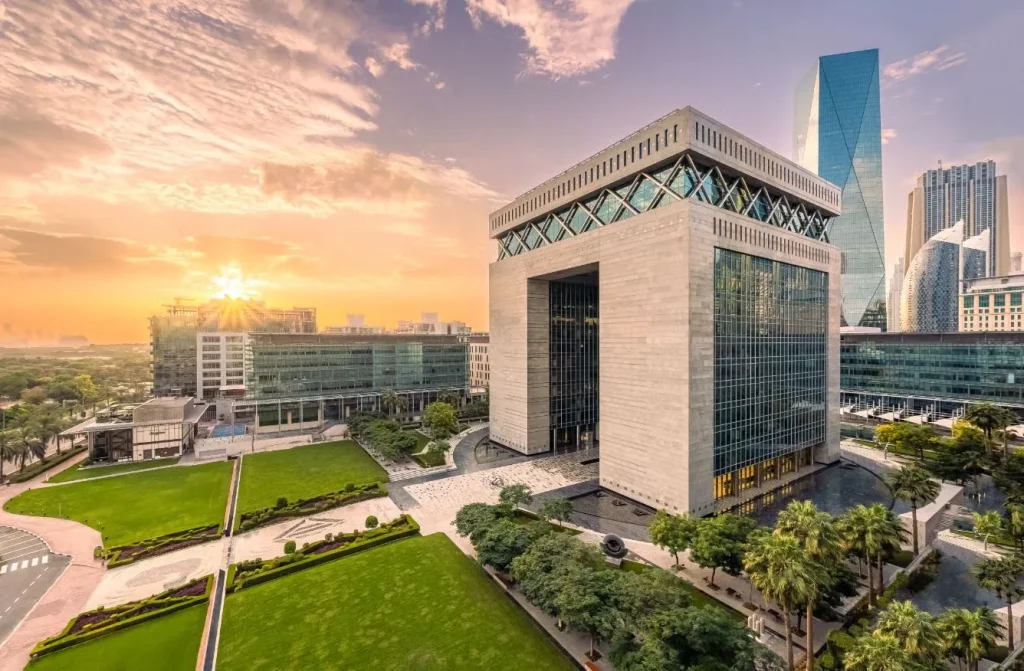
Estimates show that Dubai’s total office space will reach around 122 million square feet by the end of 2025, and if projects under construction are completed as planned, this figure could rise to 138 million square feet by 2030. This growth is not speculative; in other words, it will not suddenly flood the city with offices. A large share of new development in DIFC is being delivered as Build-to-Rent; that is, ownership remains with the property developer or investment fund and the space is leased to companies. This model helps keep the office rental market in the Dubai International Financial Centre consistently active and prevents a shortage of office space for financial firms.
By contrast, Business Bay is the centre of Build-to-Sell projects. That is understandable too, because Business Bay is attractive to both retail investors and institutional investors, as well as companies that want to own their own office. The fact that the two supply models are taking shape in two different poles of the city is itself a sign of market maturity; the market understands where to build for leasing and where to build for sale.
The rental market and demand for Class A
Dubai’s office leasing market in 2025 shows two realities at once: on the one hand, rates are rising, and on the other, there is a shortage of standard ready office space. DIFC leads with an average rent of AED 400 per square foot. For many markets, this is an implausible figure, but for a company that wants an office in the heart of the Middle East’s financial centre, it is not unreasonable. It is followed by Dubai Design District with an average annual rent of AED 280 per square foot, The Greens at AED 260, and Business Bay at around AED 251. Rental growth of 6 to 8 per cent in most submarkets, and a 90 per cent occupancy rate for office space in luxury areas, stem from this shortage of Class A space and the growing demand from new companies.
Buyer mix and investor behaviour
2025 transaction data shows one very important point: the share of institutional investors and buyers with large budgets is increasing. In the first half of 2025, the number of transactions above AED 10 million reached 83, compared with 27 in the same period last year. That means more than 200 per cent growth in large transactions. This group of buyers is usually not looking for short-term returns; they are seeking to secure assets in key Dubai locations and they also look at the building’s brand. That is why transactions of AED 95 million in Emaar Square, or transactions of AED 84 million to AED 87.5 million in Enara, are being seen.
At the lower end, meaning in the AED 1,500 to 2,500 range, most of the activity comes from retail investors, growing companies, commercial offices and those who want to lease out office space. The fact that 70 to 75 per cent of transactions were on ready units shows that this second group does not want to wait for a project to be completed and prefers to take delivery of the office quickly and start using it. The share of off-plan projects is smaller, but rising, and is taking shape mostly in areas such as Meydan, Dubai Hills, and Business Bay itself.
DIFC’s role as a company-attraction engine
DIFC set another record in 2025: 1,081 new companies registered in six months and more than 7,700 active companies in total. These figures send several messages. First, Dubai remains a destination for financial, insurance, investment and fintech companies. Second, these companies need offices and cannot be based outside premium zones. Third, 17 per cent growth in banking and investment and nearly 19 per cent in asset management means the amount of money being managed through Dubai is increasing; and wherever more money is managed, more office space is needed. The natural result of this trend is higher rents, lower vacancy and greater appeal for buying office space near DIFC, even if the office itself is not in DIFC but in Business Bay or Downtown Dubai.
Risks, realism and differences between projects
Although the overall market picture is very strong, consultants and investors should also pay attention to a few realistic points. First, the market is moving towards polarisation: new and premium buildings continue to grow, but older buildings may see slower price growth if they are not upgraded. Second, if supply rises from 122 to 138 million square feet by 2030 and all of it comes to market within a short period, it could create pressure in some submarkets, especially in buildings that are neither luxury nor very affordable. Third, companies are moving towards low-consumption, smart and sustainable offices; this means projects that are currently at the design stage will have to compete on price in later years to attract premium tenants if they do not meet ESG and green standards.
Another point is that the office market is closely tied to the health of Dubai’s business environment; as long as Dubai has transparent foreign ownership rules, a reasonable corporate tax, support for free zones, and attractive transport and work-visa infrastructure, this market will remain on a growth path. If there is a sudden change in any of these areas, some corporate demand may pause for a short time. For now, however, the evidence in 2025 does not show such a risk.
The 2026 outlook and beyond
Given that such a volume of transactions was recorded in the first 10 months of 2025 and a large share of office projects in central areas are pre-let, it can be estimated that mild price growth will continue in premium segments in 2026 as well. What is likely to become more prominent is competition on quality. Offices with precise design and layout, access to the metro, sufficient parking spaces, a professional lobby, in-building amenities and strong community management will lease faster and sell more easily. By contrast, offices with older layouts, limited parking and busy locations without advantages will have to make price their competitive edge.
Another trend next year will be growing demand for small offices in premium addresses. Many international companies want to establish their legal and locational presence in Dubai, but they are not bringing all operations here. Therefore, a 500 to 800 square foot office in a premium tower is enough for them. This means smaller floor areas in luxury projects will also have a guaranteed market.
Conclusion
Dubai’s office market in the first 10 months of 2025 is a mature, dynamic and multi-layered market. At the top end sits a highly luxury market with projects such as Boulevard Plaza, Burj Khalifa offices, Enara and The Opus, where prices have reached from AED 4,600 to AED 5,400, and in some transactions up to AED 9,500 per square foot. In the middle sits the high-volume, high-transaction Business Bay, Jumeirah Lake Towers, Barsha Heights (Tecom) and Motor City market, which with averages of AED 1,500 to AED 2,100 per square foot meets the needs of small and medium-sized companies and income investors. In terms of volume, the ready segment is the winner and has taken around three-quarters of transactions, but in terms of future growth, under-construction stock in central areas and branded projects is becoming increasingly attractive. The total value of AED 9.8 billion, 3,545 transactions, 1,089 primary transactions, 2,456 secondary transactions, 906 under-construction properties and 2,639 ready properties together send one clear message: in 2025, Dubai has turned office space into an asset that is as attractive, brandable and dependable as residential property.
Author: Hamed Ghelichkhani
