
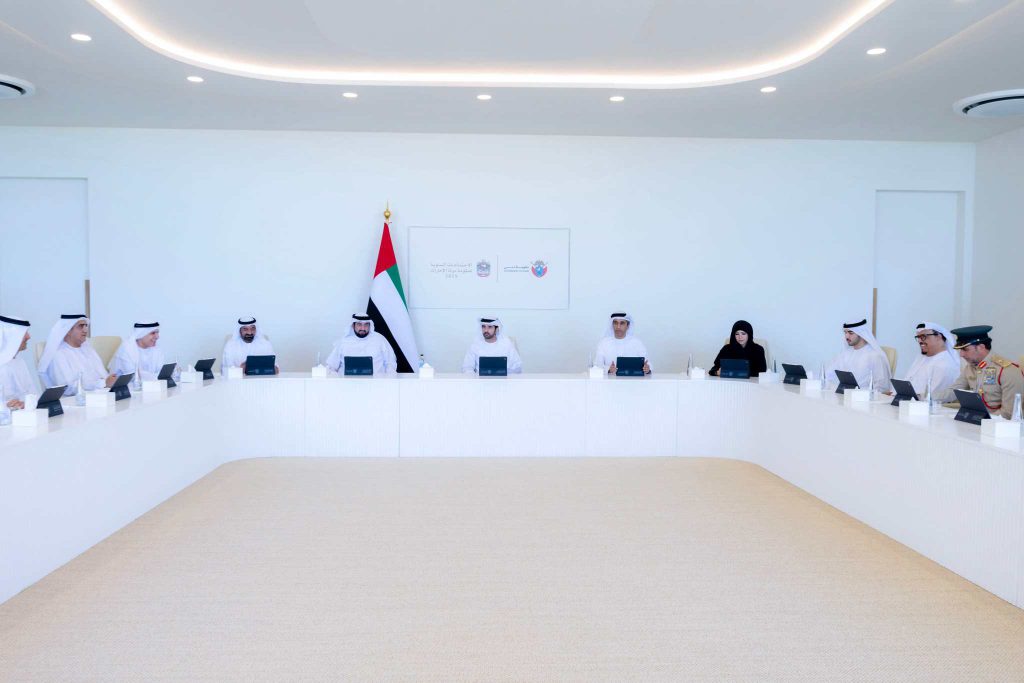
His Highness Sheikh Hamdan bin Mohammed bin Rashid Al Maktoum, Crown Prince of Dubai, Deputy Prime Minister, Minister of Defence and Chairman of the Dubai Executive Council, approved a set of strategic programmes and policies aimed at making Dubai one of the most beautiful, liveable and healthiest cities in the world.
These decisions were taken at a Dubai Executive Council meeting held as part of the UAE Government Annual Meetings 2025 and align with the vision of His Highness Sheikh Mohammed bin Rashid Al Maktoum, Vice President and Prime Minister of the UAE and Ruler of Dubai. The approved initiatives include the following:
The Parks and Public Green Spaces Strategy, the Aviation Talent 33 initiative, the policy for expanding quality and affordable schools, the strategic programme for the sports sector until 2033, the establishment of the Financial Restructuring and Bankruptcy Court, and the expansion of early disease detection services.
At the meeting, Sheikh Hamdan described the UAE Government Annual Meetings as an effective effort to strengthen integration between the federal and local governments and to shape the country’s future.
He said:
“Inspired by Sheikh Mohammed bin Rashid’s vision, we are building an integrated city that blends urban development with nature, enhances health and quality of life, improves efficiency and achievement, and empowers future generations. Preserving Dubai’s position as the best and most beautiful city in the world is a comprehensive process based on the Dubai 2033 plan and its economic and social agendas; agendas that integrate economic and social growth to ensure a happy and healthy life for individuals, families and communities.”
He added:
“Dubai is the best and most beautiful city in the world, and we want to make it the most advanced, attractive and sustainable city; a city that serves as a global benchmark for future cities and strikes a balance between human wellbeing and urban sustainability.”
Speaking about the aviation industry, he said:
“Dubai has one of the world’s largest aviation sectors and continues to strengthen its position as a competitive global centre in this industry.”
On the education sector, he emphasised:
“Developing human capital is one of Dubai’s priorities, and our goal is to place the city among the world’s top 10 cities in terms of education quality.”
In the field of sport, he also said:
“Sport in Dubai has become a fully developed industry and a promising area for investment. Our young people are motivated to represent the UAE in international events, and with them in mind, we are creating new sports opportunities for the next generation through Dubai’s strategic programme for the sports sector.”
He also stressed that Dubai has become an international financial centre, where regulatory flexibility and robust legal frameworks have strengthened its leading position.
He added:
“Protecting individual health is the key to maintaining community health and is a form of investment in the future. Approving the plan to expand early detection services strengthens Dubai’s global position in preventive healthcare.”
Sheikh Ahmed bin Mohammed bin Rashid Al Maktoum, Second Deputy Ruler of Dubai, was also present at the meeting.
Urban green space and parks
In line with the directives of Sheikh Mohammed bin Rashid Al Maktoum, the Dubai Executive Council approved the Parks and Public Green Spaces Strategy with a budget of AED 18.3 billion.
This strategy includes more than 800 projects, comprising the following:
310 new parks, the renovation and improvement of 322 existing parks, the creation of 120 new open spaces, the development of more than 70 urban green corridors and the implementation of 14 technology projects.
The plan aims to increase annual visits to Dubai’s parks to 95 million by 2040, triple the number of trees, create 187 square kilometres of green space (equivalent to 11 square metres per person), and use 100 per cent recycled water for irrigation.
The programme also focuses on promoting a healthy lifestyle so that 80 per cent of Dubai residents live within a five-minute walk of the nearest local park and within a ten-minute cycle ride of a regional park.
Aviation talent
The meeting also approved Aviation Talent 33, an initiative aimed at strengthening Dubai’s position as the global capital of the aviation industry.
This initiative ensures that Dubai remains globally leading in future readiness, skills and technological leadership, and is able to deliver world-class air operations at its airports, including Al Maktoum International Airport.
The key goals of this programme are:
- Emiratisation of managerial and operational roles,
- creating more than 15,000 jobs,
- providing more than 4,000 training and skills opportunities,
- and forming more than 30 strategic partnerships with international aviation companies under the Aviation Talent 33 network.
This programme is part of a broader vision to double Dubai’s economy, attract AED 650 billion in investment and add 65,000 Emirati citizens to the private sector.
A steering committee made up of aviation industry representatives will also oversee the strategic direction, policy-making and approval of related projects.
Affordable schools
The Executive Council also approved the policy for expanding and promoting quality and affordable schools to reinforce Dubai’s position among the world’s top 10 cities in education quality, in line with the Dubai Education Strategy 2033.
Under this policy, around 60 new affordable schools will be built by 2033, and around 120,000 new educational seats will be added to the city’s education capacity.
The plan also includes incentives to reduce government fees and land rents, encouraging investors to establish affordable private schools.
Dubai: a global sports hub
The Executive Council also approved the strategic programme for the sports sector until 2033, which was developed by the Dubai Sports Council.
This plan is designed to make Dubai a global sports capital and includes areas such as attracting international events, supporting sports clubs, developing talent and encouraging public participation in sport.
The programme comprises 19 programmes and 75 initiatives across 17 sports, covering all segments of society, especially young people and people of determination.
Financial Restructuring and Bankruptcy Court
The Executive Council also approved the establishment of the Financial Restructuring and Bankruptcy Court. The court will specialise in financial restructuring and bankruptcy cases and will operate with the aim of delivering swift justice, supporting traders and companies in repaying debts, preventing asset liquidation and protecting creditors’ rights.
This plan is designed to attract investment and enhance Dubai’s position as one of the world’s top three financial centres.
Early disease detection
The Executive Council also approved the plan to expand early disease detection services for Emirati citizens.
The aim of this plan is to improve Dubai’s ranking among the world’s top 10 cities in terms of healthy life expectancy and reduce the rate of chronic diseases, which currently account for 52 per cent of deaths.
The key objectives of this project are:
- An 40 per cent increase in the early detection of colorectal cancer,
- An 50 per cent increase in vaccination services,
- Achieving more than 90 per cent patient satisfaction with early detection services,
- and reducing the waiting time for appointments to less than seven days.
This plan is part of Dubai’s comprehensive approach to improving quality of life, enhancing public health and achieving one of the main pillars of the city’s sustainable development programme.
Source:mediaoffice
Buying Property in Dubai Is a Great Investment Opportunity. To Request a Consultation Call About Buying Property, Please Enter Your Name and Phone Number.
