

What Is a Townhouse? A townhouse is a type of attached or semi-detached home in residential projects that sits between an apartment and a standalone villa in terms of space and level of independence. If you are unsure between buying an apartment, a villa or an in-between option, a townhouse can be a balanced choice. In the rest of this article on the website of Hamed Ghelichkhani, we look at the differences between a townhouse and a villa, duplex and apartment, as well as the advantages, disadvantages, buying points and its use in investment.
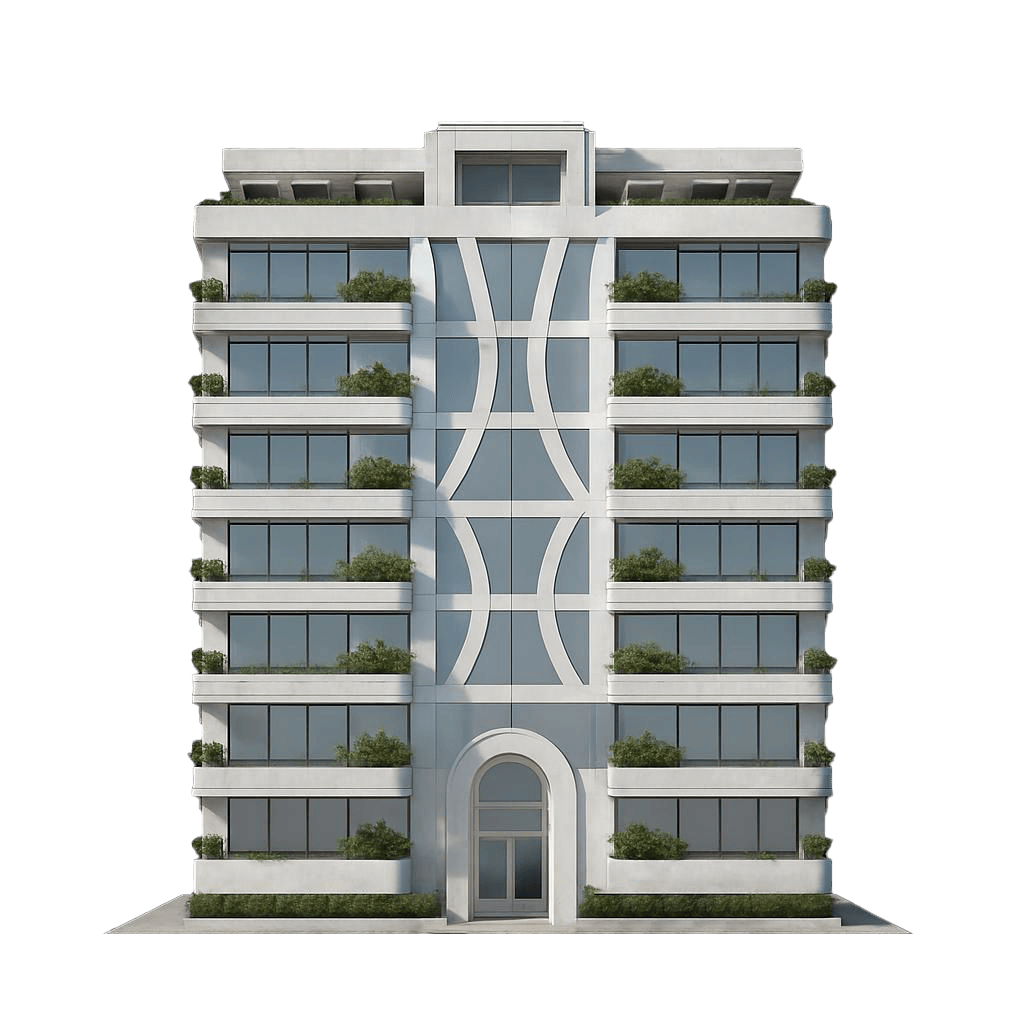
What Is a Townhouse and What Features Does It Have?
To make a more precise decision about buying a townhouse in Dubai or investing, you should first know exactly what kind of property a townhouse is and what features set it apart from other options. In appearance, this type of property may seem similar to a villa or terraced home, but in terms of structure and use, it has a clear place in the housing market.
Simple definition: A townhouse is a home that is usually built alongside several similar units, has a separate entrance, and in many examples also provides the owner with part of an open space or a small yard. This property is suitable for those who want more space than an apartment, but whose budget or needs do not extend to a standalone villa.
Technical definition: A townhouse is a residential property type with a row or semi-attached layout, usually designed as several multi-storey units with shared side walls. Each unit often has a separate entrance, and in many projects it provides a level of independence from an apartment in terms of positioning, parking and outdoor space. A townhouse is not necessarily a villa, nor is it simply a large apartment.
Townhouses are usually built in community-based projects, residential developments or integrated master-planned areas. In many examples, these units are two or three storeys, have a separate front door and may also include private parking, a terrace or a small yard. In some markets, the terms townhouse and terraced home come close to each other, but they are not always the same. A terraced home can be a general description of the way units are arranged, whereas a townhouse in the property market more often refers to a specific type of home with defined features.
If you want to understand this property type better, its most important features usually include the following:
- Multi-storey units in many projects (usually two or three storeys)
- A separate entrance for each unit, unlike many apartments
- A shared wall with one or two neighbours on either side
- A small private open space in many examples, such as a yard or patio
- Built in planned developments with integrated architectural order
- Providing more internal space than an apartment at a cost lower than a standalone villa in many projects
- Suitable for family living, especially for those who want a balance between space, budget and independence
Bear in mind that the design details, size, ownership type and level of facilities vary from one project to another. For that reason, it is better to assess each townhouse based on the specifications of that project, not just its name.

What Is the Difference Between a Townhouse, a Villa, an Apartment and a Duplex?
The reason many buyers get confused is that some of these properties look similar at first glance. But once you look into the details, important differences appear in the structure of the building, the level of independence, the type of ownership, the maintenance fee and the lifestyle. This section helps make the boundary between a townhouse, a villa, an apartment and a duplex clearer.
What Is the Difference Between a Townhouse and a Villa?
The main difference between a townhouse and a villa comes down to how independent the building is. A villa is usually a detached building on its own plot and does not share a wall with another unit on any side. In contrast, a townhouse usually shares a wall with one or two adjacent units. This difference affects privacy, how the open space is used and even the feeling of living there. In terms of purchase price, too, townhouses are in many projects cheaper than a standalone villa, because they have less land and a more compact structure. Maintenance is also usually more moderate than for a villa, although in some communities there may be a service charge or services fee.
Learn more: Buying a Villa in Dubai
- A villa offers more independence and is usually suitable for people for whom privacy is the top priority.
- A townhouse usually has a smaller yard and more limited open space than a villa.
- In a villa, common areas are fewer or even zero, whereas a townhouse may use part of the community services on a shared basis.
- The maintenance cost of a villa is often higher, because the owner is responsible for a larger part of the property and grounds.
- A townhouse is more suitable for those who want to balance budget, space and independence.
What Is the Difference Between a Townhouse and an Apartment?
If you are deciding between an apartment and a townhouse, you should pay more attention to lifestyle and day-to-day needs. A townhouse usually has fewer neighbours, offers a larger internal space and in many examples has a separate entrance and part of a private open area. In an apartment, there are more neighbours and the use of common areas forms an important part of the living experience. On the other hand, an apartment is usually more suitable for those who want a smaller size, easier access and lighter maintenance. A townhouse leans more towards family living with a greater sense of independence, although its monthly costs or service charge may be higher than some apartments.
In short, buyers for whom more space, separate floors and a homely feeling matter usually move more towards a townhouse than an apartment.
Learn more: Buying an Apartment in Dubai
What Is the Difference Between a Townhouse and a Duplex?
This is one of the most common misconceptions in the property market. A duplex essentially refers to the design style or the number of floors within one unit, not to the main type of property. In other words, when a unit is described as a duplex, it means the space is distributed across two internal floors. But a townhouse is a type of property with a specific layout, a particular arrangement pattern and usually shared side walls. So these two concepts are not on the same level.
The important point is that a townhouse can also be a duplex. That is, the property type can be a townhouse and its internal design can also be arranged over two floors. So if you see the word “duplex” somewhere, you should not assume it is automatically the same as a townhouse.
Comparison Table: Townhouse vs Villa vs Apartment
If you want to see these three options side by side very quickly, the table below gives you a more decision-oriented view:
| Property type | Level of independence | Relative price | Yard | Common areas | Suitable for whom |
|---|---|---|---|---|---|
| Townhouse | Medium | Medium | Usually small or medium | Present in many projects | Families, buyers between an apartment and a villa, mid-range options |
| Villa | High | Higher | Usually larger | Little or no common areas | People who want privacy and a detached plot |
| Apartment | Lower | Lower to medium | Usually absent or very limited | An important part of the property structure | Singles, couples, buyers with a more limited budget or a more urban lifestyle |
This table gives you an overall picture, not a definitive rule for every market. If your main priority is privacy and an independent plot of land, a villa is closer to what you want. If you want a more controlled budget and more space than an apartment, a townhouse is usually the more balanced choice.

What are the advantages and disadvantages of a townhouse?
A townhouse is not the ideal choice for everyone. In some situations, this type of property is very practical, while in others it can be restrictive. To make the right decision, it is better to look at both its real advantages and the limitations that become apparent after purchase.
What are the advantages of a townhouse?
A townhouse has become popular because it can create a balance between cost, space and quality of life. Of course, these advantages are not the same in every project, but in many markets and residential communities, the following are among its most important strengths:
- Lower price than a villa in many projects: for buyers who want a home-like space but do not have the budget for a standalone villa, a townhouse is usually a more accessible option.
- More space than an apartment: the number of floors, extra rooms and better separation of spaces make it more practical for families.
- Suitable for families: separate rooms, an independent entrance and a small outdoor area can improve a family’s day-to-day quality of life.
- Better security in community-based projects: many townhouses are built in developments with controlled access, maintained grounds and greater order.
- Balanced maintenance fee: this type of property is usually easier to manage than a standalone villa, while still giving a greater sense of independence than an apartment.
- Potential for investment in some markets: in suitable projects and high-demand areas, a townhouse can be an option worth considering both for living in and for renting out.
What are the disadvantages of a townhouse?
Alongside the advantages, there are also limitations that should be clear before purchase. Many disappointments arise when a buyer assumes a townhouse is simply a cheaper villa, whereas the two are not the same.
- Shared wall with a neighbour: this can affect the level of quiet, sound privacy and sense of independence.
- Less independence than a standalone villa: if having a separate plot and complete distance from neighbouring units is important to you, a townhouse may not fully satisfy you.
- Restrictions on renovation or changing the exterior in some projects: in certain communities, the owner cannot freely make every change and must follow the project rules.
- Maintenance fee in some communities: shared maintenance, green space or community services usually come with a monthly or periodic cost.
- Dependence on community rules: service hours, use of common areas, parking or visual changes may be subject to the project management’s regulations.
It is recommended that before buying, you do not judge the property by appearance alone. Sometimes a townhouse looks attractive in terms of layout and price, but the community rules or the maintenance fee have a more significant long-term impact on your satisfaction.
Learn more: Advantages and disadvantages of buying property in Dubai
Who is a townhouse suitable for?
This section helps you see whether a townhouse matches your real needs. A townhouse is neither an outright luxury choice nor a minimal budget option; it is more suitable for those looking for a sensible balance.
- Families who want more space than an apartment and prefer the space to be divided across multiple floors.
- Buyers who do not have the budget for a standalone villa but still like the idea of an independent entrance and a home-like feel.
- Investors looking for a mid-range option in the property market and not focusing only on the most luxurious or the smallest units.
- Those for whom security, order and the structure of a community are important, and who want to live in a more managed environment.
- People who are deciding between an apartment and a villa and want to enjoy some of the advantages of both.
- First-time buyers who want to balance size, family use and budget at the same time.
By contrast, if very high privacy, a large independent plot or complete freedom to change the façade and grounds is your main priority, it is better to go for a standalone villa. A townhouse is suitable for a balanced choice, not for those who only want the highest level of independence.
What should you consider when buying a townhouse?
When buying a townhouse, the appearance of the property is only part of the story. If you want to make a more secure choice, you need to pay attention both to the property’s physical characteristics and to legal details, running costs and the project’s conditions. This is especially important in international markets and community-based developments.
- Check the title deed and ownership structure: it is better to establish exactly how ownership of the unit, land, parking and outdoor area is defined. This differs from one market to another.
- Read the common areas and community rules: before buying, know which spaces are shared and what restrictions exist on use, visual changes or parking.
- Take the project location seriously: access, the quality of the neighbourhood, nearby services and the future of the area affect both end-use value and resale.
- Assess the build quality and internal layout: size alone is not important. How the space is divided, natural light, the location of the kitchen, rooms and storage all matter too.
- Clarify the maintenance fee and running costs: some projects offer more services, which increases ongoing costs.
- See the light, parking and outdoor area in person: these factors affect the real experience of daily life and cannot be judged from a brochure alone.
- Consider resale potential and liquidity: it is better to check what kind of buyer or tenant this property type attracts in that area and how much demand there is when it comes time to sell.
If you want to assess a townhouse for purchase or investment, request a consultation can help you evaluate options more accurately based on your budget, objective and project type.
What is townhouse investment and when does it make sense?
A townhouse is not only an end-user option and in some markets it can also be considered from an investment perspective. However, it should not automatically be assumed to be a profitable option. The investment performance of this type of property depends on the market, area, project type, purchase timing and the actual demand from buyers or tenants.
- Townhouse for end-user or investor: in many cases, a townhouse is first attractive for family living and only then considered for investment. If the area’s market is family-oriented and demand-driven, this can also work in the investor’s favour.
- More attractive markets for townhouses: areas where families value more space, an orderly environment and neighbourhood facilities are usually more suitable for townhouses.
- Comparing rental yield with villas and apartments: in some markets, apartments have broader rental demand because of their lower entry price. Villas also perform well in the luxury or specific family segment. A townhouse usually sits between the two and can be attractive to a specific group of tenants.
- Liquidity risk: in terms of liquidity, a townhouse is not always as fast-moving as some apartments, nor as slow as some special villas. If the project, area and pricing are chosen correctly, liquidity can be acceptable.
- When buying becomes more sensible: when the price gap between apartments and villas has widened, but demand for family-sized space remains active, a townhouse can be a noteworthy option.
Learn more: Investment consultation in Dubai
If your goal is property investment, it is better to compare a townhouse alongside an apartment and a villa, rather than separately from them. A choice becomes more logical when the purchase price, level of demand, maintenance fees and the investment exit scenario are considered together. If you are still not sure whether this option suits your objective, you can contact our advisory team for an initial analysis based on your budget and goal.

What does the price of a townhouse depend on?
The price of a townhouse is not a fixed figure and can vary greatly from one market to another, and even from one project to another. If you want to analyse the price of a townhouse more accurately, consider these factors:
- Location and the quality of the area
- Land area and the unit’s built-up area
- Age of the building and maintenance condition
- Project facilities and the level of community services
- Number of floors and the quality of interior design
- Build quality and the materials used
- The developer’s brand or the project’s reputation
- The overall property market condition at the time of purchase
It is better to always compare price within the context of the same area and the same type of project. Comparing a townhouse with a Luxury Villa or a small apartment in another area will not give you an accurate result.
Is a townhouse a better choice than a villa or an apartment?
The short answer is yes for some buyers, but not for everyone. If your budget is lower than a standalone villa, yet you want more space than an apartment, a townhouse can be a good balance point. This option becomes especially attractive when privacy matters to you, but not as an absolute priority on the same level as a villa.
In terms of maintenance fee as well, a townhouse usually sits between an apartment and a villa. That means it is neither as simple and low-cost as an apartment, nor as demanding as a standalone villa. If you are looking for Family living, a private entrance and the order of a community, a townhouse can be a better choice. But if you want the highest level of independence, a large plot or complete freedom in renovation, a villa is more suitable. By contrast, if access, ease of maintenance and lower initial cost matter more to you, an apartment will be more logical.
In summary, a townhouse is a good choice when you want to balance three main factors: budget, space and independence. If your decision is still between these three options, it is better to clearly identify your priority: privacy, cost, family lifestyle or investment goal. If you are still undecided between a townhouse, an apartment or a villa, you can contact our advisory team to book a property consultation session or review suitable options based on your budget and goal.



Frequently asked questions: what is a townhouse?
What is a townhouse and how is it different from a villa?
A townhouse is a connected or semi-detached home that usually shares a wall with the neighbouring unit, whereas a villa is often built as a fully standalone villa. For this reason, a villa usually offers more privacy and, in many projects, has a higher purchase and maintenance cost.
What is a townhouse and how is it different from an apartment?
A townhouse usually has more space than an apartment, is multi-storey in many examples, and has a private entrance. It also has fewer neighbours and creates a greater sense of independence, although its running costs may be higher than some apartments.
What is a townhouse and why is it different from a duplex?
A duplex refers to the interior design or the number of floors in a unit, whereas a townhouse is a property type. In simple terms, a townhouse can be a duplex, but not every duplex is a townhouse.
What is buying a townhouse and who is it suitable for?
Buying a townhouse is more suitable for families, buyers who are between an apartment and a villa, and those who want more space but do not have the budget for a standalone villa. This option is usually worth considering for Family living and mid-range budgets.
What is investing in a townhouse and is it profitable?
Investing in a townhouse can be logical in some markets, but the result depends on location, project type, purchase timing and real demand. It is better to assess this option without assuming guaranteed profit and by comparing it with an apartment and a villa.
What is the price of a townhouse and what does it depend on?
The price of a townhouse depends on factors such as location, size, build quality, project facilities and overall market conditions. For that reason, without knowing the market and the time of purchase, a fixed figure cannot be given.
What is a townhouse and is it suitable for Family living?
In many cases, yes. Because a townhouse offers more space than an apartment, better separation of spaces and a private entrance, it is a suitable option for families, especially if security and the order of the community are also important to them.
What is a townhouse and does it have a private garden?
In many projects, a townhouse has a garden or a small private outdoor space, but this feature is not the same in every example. It is better to review the layout and specifications of that specific project separately.
What is a townhouse and does it have a service charge?
In many communities, yes. Since townhouses are often built in community projects, a service charge may be collected for maintaining shared spaces, security or the surroundings.
What is a townhouse and does it have an independent title deed?
In many projects, a townhouse can have an independent title deed, but the title and ownership structure differs in every market and every project. It is better to review this with the official documents of that property before purchase.
What is a townhouse and is it worth buying?
Whether a townhouse is worth buying depends on your purchase goal, budget and lifestyle. For some buyers, this type of property creates a better balance between space, price and independence and is therefore a suitable choice.
What is a townhouse and is it cheaper than a villa?
In many projects, yes, but this is not always the case. Location, size, build quality and the level of facilities can make some townhouses more expensive than some villas.
What is a townhouse and in which projects is it built?
A townhouse is usually built in community-focused residential projects, townships and integrated urban or suburban developments. This type of placement helps create architectural order and makes better use of land.
What is a townhouse and is it better for living or investing?
In many cases, a townhouse is a suitable option for Family living. It can also be worth considering for investment, but in that case the market, area, level of demand and liquidity should be assessed separately.
What is a townhouse and what are its disadvantages?
The main disadvantages of a townhouse include a shared wall with neighbours, less privacy than a villa and the possibility of service charges or community rules. If complete independence is your absolute priority, take these limitations seriously.
