
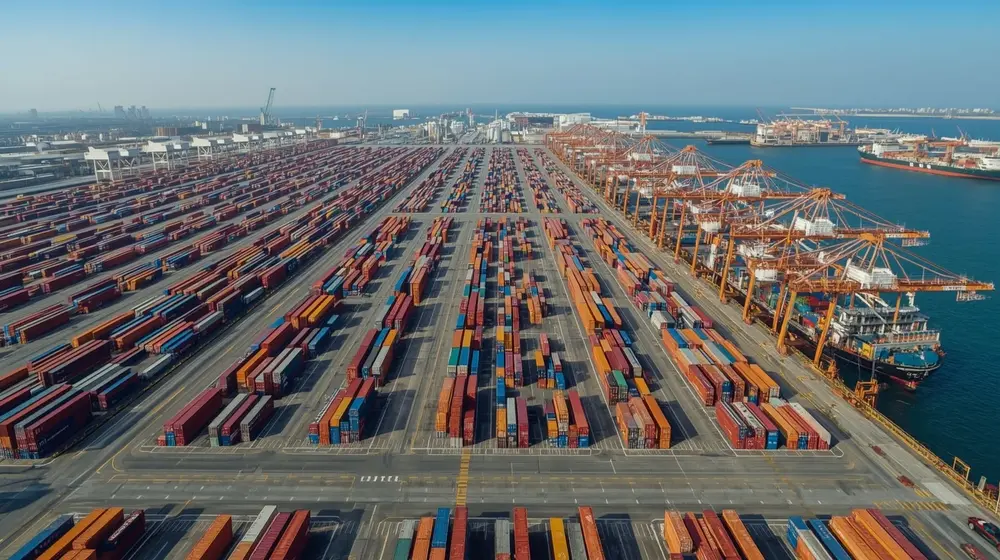
The ports of the UAE are among the main pillars of the maritime economy and one of the country’s most important competitive advantages in the region. From Jebel Ali Port in Dubai to Khalifa Port in Abu Dhabi and Fujairah Port on the UAE’s eastern coast (the Gulf/Gulf of Oman), a network of modern ports has taken shape that, by relying on geographic location and infrastructure investment, has made the UAE an important hub for maritime trade between the routes of Europe, Asia and Africa. The aim of this article from the website of Hamed Ghelichkhani is to provide a structured and up-to-date picture (up to 2026) of the UAE’s most important ports, with a particular focus on Dubai’s ports; a focus that includes introducing each port’s geographic location, economic role, type of use and notable features.

The importance of the UAE’s ports in the regional economy and trade
The ports of the UAE have, over recent decades, evolved from local ports on the Gulf fringe into strategic centres in the global maritime trade network. Several key factors explain their importance:
- Strategic geographic location
The UAE lies at the intersection of maritime corridors between Asia, Europe and East Africa; the UAE is neighbouring the Strait of Hormuz; and some eastern coast ports (such as Fujairah Port) are about 70 nautical miles from the Strait of Hormuz, meaning they sit on the route of one of the world’s busiest shipping lanes. This location has made the UAE’s ports an important link between East and West. - Advanced port and logistics infrastructure
Over recent years, billions of dollars have been invested in the development of berths, container terminals, multi-purpose terminals and post-port logistics zones. Ports such as Jebel Ali and Khalifa rank among the world’s leading ports in international container port performance indices. - Role in diversifying the UAE economy
Ports are not only for moving goods; around many of them industrial estates, free zones, logistics parks and industrial clusters have taken shape, creating thousands of jobs and making a significant contribution to the UAE economy. - Connection to the global supply chain
Many international companies use the UAE’s ports as regional bases for distributing goods across the Middle East, North Africa and South Asia. This has cemented the UAE’s position in the global supply chain, especially with the presence of operators such as DP World in Jebel Ali and AD Ports Group in Abu Dhabi.
Overall, without taking ports into account, understanding the economy of the cities of the UAE and its position in regional trade is almost impossible.
A general overview of the UAE’s port structure
The United Arab Emirates has a network of ports across its seven emirates, each playing a distinct role in the country’s maritime map:
- Dubai
With important ports such as Jebel Ali (Jebel Ali Port), Port Rashid and Mina Al Hamriya (Mina Al Hamriya – Dubai), it is recognised as one of the region’s most important maritime hubs. Dubai is best known for its high container capacity, regional transshipment and role in maritime tourism (especially cruise ships). - Abu Dhabi
It has ports such as Khalifa Port, Zayed Port and Mussafah Port. Khalifa, as Abu Dhabi’s flagship port, is known for its highly modern infrastructure and connection to the industrial city of KIZAD. - Sharjah
The ports of Khor Fakkan (Khor Fakkan Port) and Khalid (Port Khalid) are among Sharjah’s key assets. Khor Fakkan is located on the coast of the Gulf of Oman and has an important position on the east-to-west route. - Fujairah
Fujairah Port (Port of Fujairah) is the UAE’s only major port on the coast of the Gulf of Oman and plays a strategic role in maritime services and ship refuelling. - Ras Al Khaimah
With ports that mainly serve the industrial and mining activities of this emirate and help trade in the northern UAE. - Umm Al Quwain and Ajman
The ports of these emirates mostly operate in regional activities and at a smaller scale, and their infrastructure is being developed.
This structure has given the UAE a balanced combination of ports on the Gulf and on the Gulf of Oman; a combination that, both geographically and functionally, distributes risks and opportunities across several points.

Important ports in Dubai
Dubai city is the beating heart of the UAE’s port network. In Dubai there are several key ports/terminals; including Jebel Ali, Mina Rashid, Mina Al Hamriya, as well as Dubai Creek and “Deira Wharfage”, which DP World lists among Dubai’s ports and terminals.
Jebel Ali Port
Jebel Ali Port is the largest port in the Middle East and one of the busiest container/general cargo/ro-ro ports in the world. Operated by DP World, this port is located in the west of Dubai city and near Jebel Ali Free Zone, and it has been continuously developed since the 1980s.
Key features of Jebel Ali Port:
- Large scale and high capacity
Jebel Ali has been ranked among the world’s leading ports in the international container port performance index, and its capacity is designed to handle millions of TEUs of containers per year. This level of capacity has made it the main container hub of the Middle East. - Connection to free zones and industrial centres
The port’s proximity to Jebel Ali Free Zone (JAFZA) and the surrounding industrial clusters has enabled the formation of a chain of industrial, service and commercial activities. Many international companies are based in this area to benefit from the combination of the port, free zone and land transport infrastructure. - Modern infrastructure and sustainable development
Multiple terminals, advanced cranes, digital operational management systems and sustainable development programmes have made Jebel Ali Port, UAE an example of the new generation of smart ports in the region.
Strategic role in the global network
Because of its suitable water depth, the ability to berth next-generation vessels and its geographic location, Jebel Ali is an important base for global shipping companies and part of DP World’s network of ports worldwide.
In practice, any serious analysis of Dubai’s ports, and even the UAE’s ports, would be incomplete without taking Jebel Ali’s role into account.
Port Rashid
Port Rashid, which is near the centre of Dubai and adjacent to Dubai Creek, is one of the emirate’s oldest ports and has played an important historical role in Dubai’s growth as a cruise and maritime tourism port.
Important points about Port Rashid:
- Historical role
Before Jebel Ali was developed, Port Rashid was Dubai’s main maritime hub and a variety of vessels called there. With the development of new ports, Port Rashid’s function has changed, but its historical importance remains. - Focus on maritime tourism and cruises
Today, a significant part of Port Rashid’s capacity is dedicated to cruise terminals. This port is one of the main entry points for maritime tourists to Dubai, and during peak travel seasons, large cruise ships berth at its quays. - Change of use and urban development
In recent years, part of the land around Port Rashid has been allocated to urban and waterfront projects; projects that include a mix of hotels, residences, leisure spaces and tourism and are linked to the port’s identity.
In this way, Port Rashid has evolved from a purely commercial port into a node linking maritime tourism, Dubai’s maritime history and modern urban development.

Al Hamriya Port
Al Hamriya Port, Dubai (Al Hamriya Port, Dubai) is one of this emirate’s specialised ports and is located on Dubai’s northern coastline, adjacent to industrial and workshop areas. In comparison with Jebel Ali and Rashid, it is smaller in scale, but it plays an important complementary role in Dubai’s port structure.
Main features and roles of Al Hamriya Port:
- Focus on small and medium-sized vessels
It is mainly active for traditional wooden boats/dhows and medium-sized vessels, while also being able to serve a diverse range of vessels from dhow to RoRo and breakbulk (and even some container ships). - Connection with industrial and workshop areas
Al Hamriya Port’s proximity to some of Dubai’s industrial and workshop areas has meant that the port serves the needs of these sectors and strengthens the link between land-based and maritime activities at a regional level. It is also one of Dubai’s most efficient ports for bulk and breakbulk cargo and, because of its proximity to Dubai’s used-car markets, has also become a leading destination for the used-car trade. - Completing Dubai’s port network
Alongside Jebel Ali and Rashid, Al Hamriya Port helps distribute maritime cargo across different parts of the city and makes it possible to separate types of activity and specialise the function of each port.
Al Hamriya Port can be seen as an intermediate link between the large ports and Dubai’s more local activity networks; a link that helps balance activity across the city and shapes part of Dubai’s port network’s flexibility.
Other major ports in the United Arab Emirates
In addition to Dubai’s ports, the United Arab Emirates has an extensive network of commercial, industrial and multi-purpose ports in other emirates, each of which plays a specific role in the country’s maritime economy. This section covers the most important of these ports in Abu Dhabi, Sharjah, Fujairah, Ras Al Khaimah and Umm Al Quwain; the focus is on their current position, geographical location and economic role, rather than the operational details of cargo handling.



Khalifa Port – Abu Dhabi (Khalifa Port)
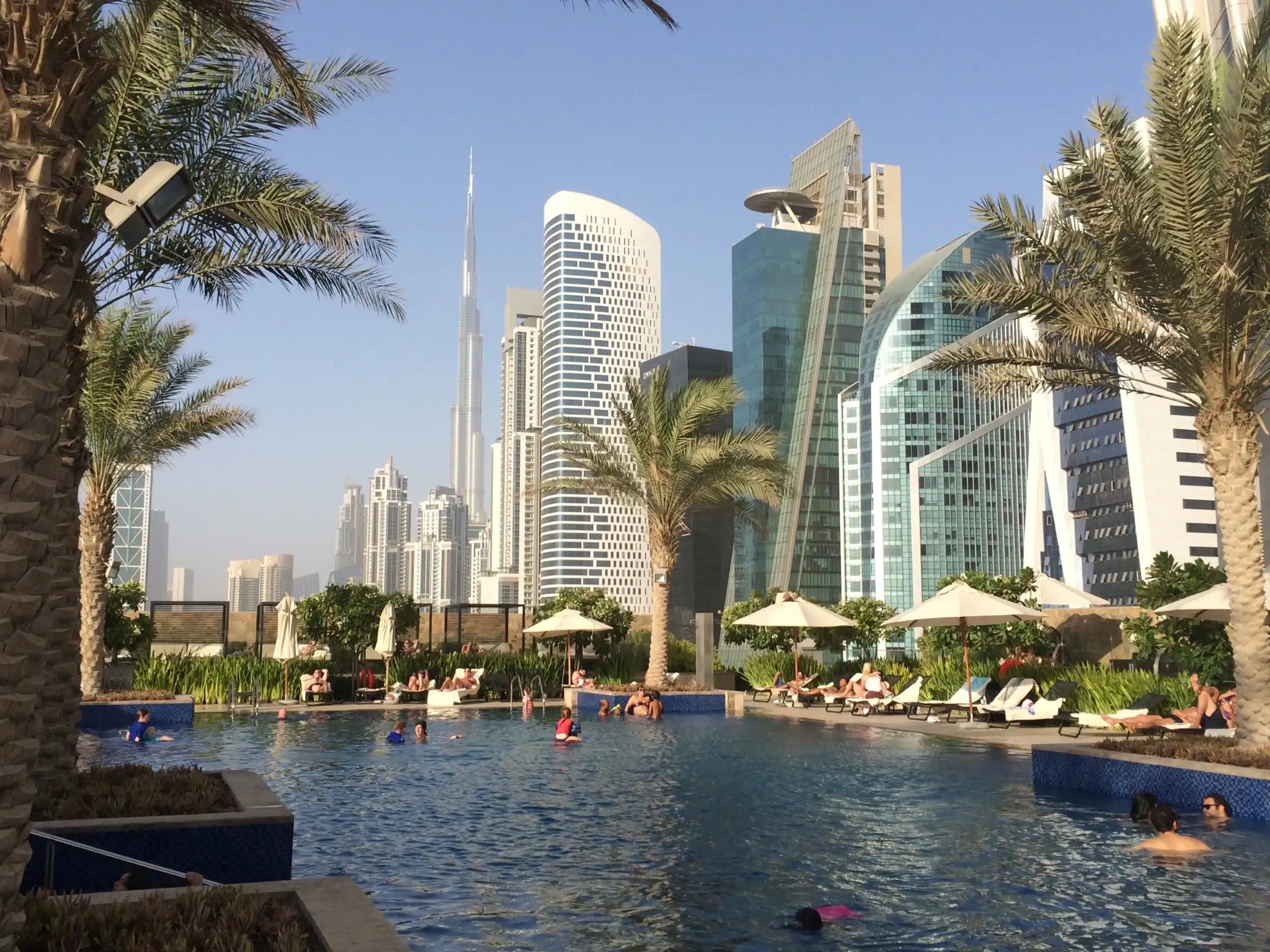
Khalifa Port is one of the region’s most advanced ports. It is located between Dubai and Abu Dhabi, adjacent to KEZAD (Khalifa Economic Zones Abu Dhabi), formerly known as KIZAD. This deep-water port has been developed as Abu Dhabi’s main container transit hub and, with its modern and semi-automated terminals, is considered an important gateway connecting the UAE to maritime networks in Asia, Europe and Africa. In recent years, new development phases have significantly increased Khalifa Port’s transit capacity and logistics infrastructure, turning the port into one of the key elements of Abu Dhabi’s economic diversification strategy.
Zayed Port – Abu Dhabi (Mina Zayed)
Zayed Port (Mina Zayed) is Abu Dhabi’s old port, which for decades served as the emirate’s traditional maritime gateway. With the development of Khalifa Port, the main operational focus has shifted there, but Zayed Port is gradually being transformed into a multi-purpose coastal area; a place where a combination of cruise terminals, light commercial activities and urban development and coastal tourism projects are taking shape. Today, this port is regarded as part of Abu Dhabi’s new coastal identity more than merely a transport node.
Musaffah Port – Abu Dhabi (Musaffah Port)
Musaffah Port is located at the heart of the Musaffah industrial area and plays a more specialised role than Khalifa Port and Zayed Port. The port was built along the Musaffah Canal and mainly serves heavy industry, construction projects and industrial and manufacturing activities. Its proximity to industrial and workshop clusters has made Musaffah Port an important node for supporting the logistics needs of Abu Dhabi’s industrial businesses.
Port of Fujairah
Port of Fujairah is one of the most important ports on the eastern coast/Gulf of Oman and is considered “the only multi-purpose port on the eastern coast of the UAE”; in other words, it lies outside the Strait of Hormuz, and this gives it a special strategic location. In recent years, the port has become one of the most important bunkering and maritime support service centres for ships on international east-west routes. The presence of storage facilities and a wide range of maritime services has meant that Fujairah plays a role beyond that of a local port and is recognised at regional and global level.
Port of Khorfakkan – Sharjah (Port of Khorfakkan)
Port of Khorfakkan is on the coast of the Gulf of Oman and is part of Sharjah Ports. Its naturally deep-water location and position close to the main shipping routes between Asia and Europe have made it an important transit point in the east of the UAE. For ships wishing to access port services without entering the Gulf, this port is considered a strategic option, and this location has increased its importance in the UAE’s port network.
Port Khalid – Sharjah (Port Khalid)
Port Khalid is located in the heart of Sharjah city and on the coast of the Gulf. From the 1970s, it became known as one of the first modern multi-purpose ports in the region and, today, it continues to maintain the role of an urban port with diverse uses (from commercial activities and maritime support to city connectivity). Port Khalid’s proximity to Sharjah’s administrative and industrial centres makes it an important node on the Gulf coast / western coast of the Gulf.
Ras Al Khaimah Port
Ras Al Khaimah Port is located in the centre of Ras Al Khaimah city and on the Gulf coast. With direct access to the free zone and warehousing and support facilities, it functions as a maritime hub for small and medium-sized businesses, manufacturing industries and also this emirate’s maritime tourism. The presence of a cruise terminal and an urban location means that Ras Al Khaimah Port, in addition to its commercial role, also has a share in attracting maritime tourists.
Umm Al Quwain Port (Ahmed Bin Rashid Port – UAQ)
In the emirate of Umm Al Quwain, Ahmed Bin Rashid Port and the adjacent free zone are considered the main centre of port and commercial activity. The port is located on the Gulf coast and forms part of this emirate’s strategy to expand its commercial and investment base. The combination of geographical location, access to main roads and the presence of a free zone has made Umm Al Quwain Port a developing port with a regional role; especially for businesses seeking a less dense option than the larger ports of the UAE.
Read more: Dubai Artificial Islands
Comparing the geographical location of the UAE’s ports
If you place the geographical locations of the UAE’s ports side by side on a map, two main bands become visible: ports located on the Gulf coast and ports facing the Gulf of Oman. This division is not merely geographical; it has important strategic and economic implications for each port and for the UAE’s maritime network as a whole.
- Ports on the Gulf Coast
Ports such as Jebel Ali, Port Rashid, Khalifa Port, Port Khalid, Ras Al Khaimah and Umm Al Quwain are located on the Gulf coast. This port cluster is close to major cities such as Dubai, Abu Dhabi and Sharjah, and is adjacent to the country’s industrial, financial and population centres. The direct access of these ports to the highway network and urban developments means they play a stronger role in the domestic supply chain, the distribution of goods within the UAE itself and overland links to other Gulf Cooperation Council countries. - Ports on the Gulf of Oman coast
On the other side, Fujairah and Khorfakkan ports are located on the Gulf of Oman coast. Fujairah is specifically a major anchorage and bunkering/fuelling hub; Khorfakkan, however, is better known as a container terminal/hub and transshipment gateway (Gateway/Transshipment). This location creates high strategic value, especially for activities such as fuelling, technical services and short-term stops on international routes. - The combination of two coastal fronts
The combination of ports on the Gulf coast and the Gulf of Oman coast has turned the UAE into a multi-faceted node in the region’s maritime network. Gulf ports are more closely connected to population and industrial centres and the land network, while Gulf of Oman ports are connected to major ocean routes. The result of this structure is that the UAE can have greater flexibility against certain geopolitical risks while at the same time playing a prominent role in the supply chain at both regional and international levels.
In short, from a geographical perspective, the UAE’s ports have been arranged in a way that serves both domestic and regional needs and, on global routes, acts as a strategic stopping and connection point between Asia, Europe and Africa.
The role of the UAE’s ports in the global supply chain
By 2025–2026, the UAE’s ports had become one of the main nodes of the global supply chain linking Asia, Europe and Africa. The country’s geographical position at the mouth of the Gulf and alongside major shipping routes has enabled the UAE to play the role of a regional and international hub in the maritime transport and logistics network. Jebel Ali Port in Dubai, as one of the world’s largest container ports and the largest port in the region, handles several million TEU annually (in 2024, about 15.5 million TEU) within the extensive network of DP World, and is the connection point between ocean shipping lines and the UAE’s land and air network.
Alongside it, Khalifa Port in Abu Dhabi, with advanced and semi-automated terminals, has become another important hub for container traffic and heavy and manufacturing industries. This port, together with its adjacent industrial city (KIZAD), has been designed in such a way that it covers part of the supply chain from production to final distribution.
To better understand the UAE’s position in the global supply chain, a few key roles can be noted:
- Transshipment hub between East and West: Ships moving between East Asia, Europe and East Africa choose the ports of Jebel Ali, Khalifa, Fujairah and Khorfakkan as intermediate and consolidation points.
- Regional Distribution Center: Many international brands and companies have located their warehouses and distribution centres for the Middle East, Africa and parts of Central Asia adjacent to these same ports.
- Coastal and route diversity: Ports such as Fujairah Port as one of the UAE’s important ports, as well as Khorfakkan Port, are located on the Gulf of Oman coast and are connected to open waters without passing through the Strait of Hormuz; this feature increases the resilience and flexibility of the supply chain in sensitive conditions.
- Role in fuelling and maritime support: Fujairah is considered one of the region’s important maritime fuelling centres, and this encourages ships to use the UAE’s ports on long routes.
Overall, the UAE’s ports have gained a special place in the global supply chain not only as points of unloading and loading, but also as an integrated part of the global logistics network, industrial centres, warehousing and distribution.

Technology and innovation in the UAE’s ports
One of the distinctive features of the UAE’s ports in recent years has been digitalisation and the use of new technologies in managing port/document processes and data exchange between stakeholders (Port Community System) and port operations. In Abu Dhabi, the digital arm of AD Ports Group (Maqta Technologies Group / Maqta Gateway) has created an integrated system (Port Community System) through “Maqta Gateway” that carries out information exchange between shipping lines, logistics companies and government bodies on a standardised and secure digital platform.
In Dubai as well, DP World at Jebel Ali Port has moved towards broader use of autonomous technologies, artificial intelligence and robotics. Projects to equip terminals with internal autonomous vehicles, smart guidance systems and the use of the Internet of Things (IoT) for real-time monitoring of operations are examples of this trend.
Innovation in the UAE’s ports can be summarised in several areas:
- Integrated digital systems:
- Use of one-stop platforms for document registration, issuing permits and coordination between port stakeholders
- Reducing in-person attendance and increasing transparency and speed in processes
- Automation and smart equipment:
- Use of remotely controlled cranes and smart container yard management systems
- Development of fleets of autonomous vehicles inside terminals to increase safety and operational order
- Data analysis and artificial intelligence:
- Using real-time data to forecast congestion, improve berthing schedules and reduce vessel turnaround time in port
- Using optimisation algorithms to manage the capacity of the quay, warehouse and land network connected to the port
- Sustainability and the environment:
- Gradual movement towards lower-consumption equipment, smart energy management and programmes to reduce environmental impact in new terminals
The combination of these technologies has enabled some UAE ports to achieve notable rankings in international container port performance rankings — including the World Bank’s Container Port Performance Index (CPPI) and S&P Global — (for example, in CPPI 2023: Jebel Ali 49).
Read more: Migration to Dubai


Conclusion
By 2025–2026, the UAE’s ports had become the main pillars of the country’s economy and one of the focal points of the region’s maritime economy. Dubai’s ports — especially Jebel Ali Port (the main trade and container hub), Port Rashid (mainly a cruise terminal) and Al Hamriya Port — together with important ports such as Khalifa Port, Fujairah Port and Khorfakkan Port, have created a network that connects the north and south of the Gulf to the Gulf of Oman, the Indian Ocean and the main east-west routes.
The combination of strategic geographical location, heavy investment in infrastructure and new technologies, and the development of industrial and logistics communities adjacent to the ports has meant these ports play a role beyond a simple quay and are positioned at the heart of the global supply chain.
The special position of Dubai’s ports in this mix, particularly because of their scale, diversity of use (commercial, cruise, industrial) and high level of innovation, has placed the city’s name alongside the world’s most important maritime hubs. Given the long-term plans the UAE is pursuing for economic diversification, the development of new energy and the expansion of regional and extra-regional trade, the role of the country’s ports is expected to become more prominent in the coming years and their connectivity to other maritime centres around the world to deepen.
Frequently Asked Questions about the UAE’s Ports
What are Dubai’s most important ports and what role does each play?
Dubai’s most important ports include Jebel Ali Port, Port Rashid and Al Hamriya Port. Jebel Ali is the main container and transshipment hub, Port Rashid plays a larger role in cruises and leisure sea travel, and Al Hamriya is used for industrial activities and small and medium-sized vessels.
What is the difference between Dubai’s ports and other ports in the UAE?
Dubai’s ports, especially Jebel Ali, are more focused on international transshipment, the global shipping network and free trade zones, while Abu Dhabi, with Khalifa Port, Zayed Port and Port of Musaffah, has stronger links to heavy and manufacturing industries, and Fujairah and Khor Fakkan play a complementary role on the coasts of the Gulf of Oman and on routes outside the Gulf.
Why is Jebel Ali Port so important globally?
Jebel Ali Port is one of the world’s largest container ports and is regarded as the largest man-made port. With very high capacity, direct links to more than 150 other ports, and proximity to Jebel Ali Free Zone (JAFZA), it is one of the main nodes in the global logistics network and plays an important role in transshipment between Asia, Europe and Africa.
What position does Fujairah Port hold among the UAE’s ports?
Fujairah Port is located on the coast of the Gulf of Oman and is considered a major UAE port situated outside the Gulf. This location has enabled it to connect to the open sea without passing through the Strait of Hormuz, making it one of the important centres for refuelling and ship stopovers on long ocean routes.
How advanced are the UAE’s ports in terms of technology and digitalisation?
In recent years, the UAE’s ports have been among the region’s most advanced in the use of digital systems, one-stop platforms, automated equipment, data analysis and artificial intelligence. Examples include the Maqta Gateway platform in Abu Dhabi and the automation projects at Jebel Ali Port, which help increase speed, transparency and coordination among stakeholders.
Why is the geographic location of the UAE’s ports important for the global supply chain?
The UAE’s location at the intersection of sea routes between East Asia, the Indian subcontinent, East Africa and Europe has led ships to choose the country for stopovers, refuelling, cargo transshipment and connection to the region’s land and air networks. The presence of ports on both the Gulf and the Gulf of Oman also increases the network’s flexibility and resilience.
Is there a plan to further expand the UAE’s ports in the future?
There are several development plans under way to increase terminal capacity, improve berth depth, expand industrial areas adjacent to ports and upgrade digital systems. These plans are being pursued within the framework of the UAE’s broader strategies to strengthen the country’s position as a regional trade and logistics hub towards 2030 and beyond.
