
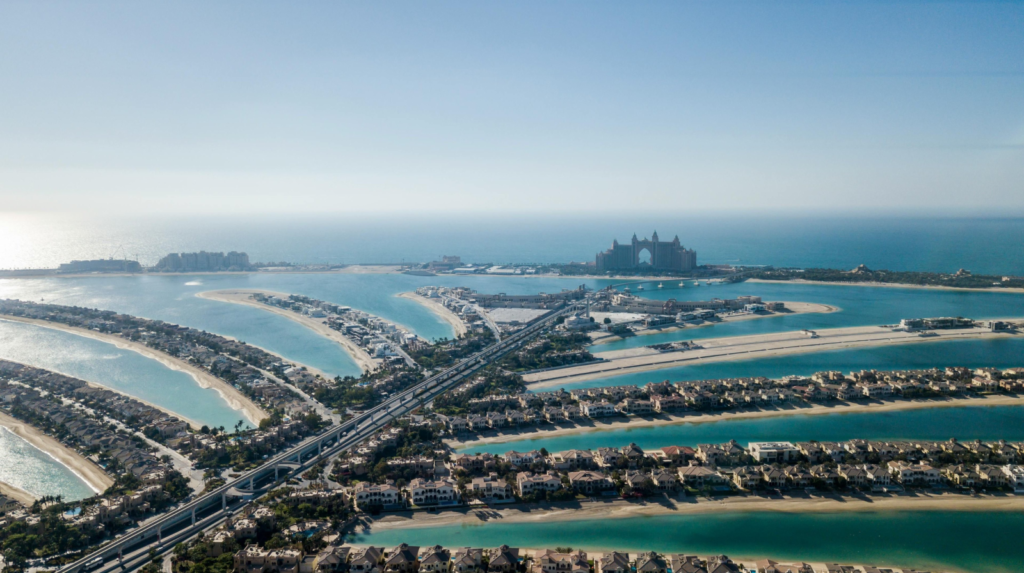
Dubai Palm Islands are a group of palm-shaped artificial islands created with the aim of coastal expansion, the creation of residential-tourism destinations, and the building of a global urban brand. In public conversation, “Dubai Palm” refers to these palm-shaped projects (especially Palm Jumeirah and Palm Jebel Ali), which have been turned into a real environment for living and investment through a combination of land reclamation engineering at sea, massive breakwaters, and an urban infrastructure network. In this article from Hamed Ghelichkhani, Dubai Palm Islands are examined from the perspective of construction engineering, project status, lifestyle facilities, and an assessment of the advantages and disadvantages for living or investment.

What challenges and engineering work were involved in building the Palm Islands?
Building Dubai Palm Islands was a large-scale urban land reclamation project; that is, rather than building on existing land, new land first had to be created from the sea, stabilised, and then roads, water, electricity, sewerage and urban access networks formed on it. The main challenge of this development model usually lies in three points: the stability of the reclaimed land and settlement, protection against waves and erosion, and bringing urban infrastructure to a newly created island.
- Land engineering (Land Reclamation) and sediment management
- Creating the palm shape through land reclamation and then compacting and stabilising the soil to reduce settlement and increase bearing capacity (methods such as Vibro Compaction were used in Palm Jumeirah as a soil stabilisation solution).
- Quality control of the seabed and management of soil grading/behaviour (to prevent uneven settlement in roads, utility networks and structures).
- Supporting structures, protective dams, breakwaters
- The role of the Crescent in Palm Jumeirah is not only design; this section acts as a breakwater/coastal protection barrier and protects the development against wave energy and erosion (in the Palm Jumeirah project, the length of the protective breakwater is specifically cited as an engineering feature).
- Coastal protection design at this scale usually includes layered materials, rock armouring and the control of surrounding currents so that the stability of the shoreline and the water channels between the fronds is maintained.
- Water, electricity, sewerage and utility networks
- An artificial island is practically uninhabitable without urban infrastructure; therefore, water, electricity and sewerage networks must be transferred from the mainland to the island and designed as a maintainable network. Part of the challenge here is that these networks must be resilient against the marine environment, corrosion and operational risks.
- In Palm Jumeirah, the engineering access itself (such as connections between sections) is also part of the infrastructure; for example, the existence of a tunnel route connecting the “trunk” to the “crescent” is mentioned as part of the access design.
Read more: Artificial Islands in Dubai



Which Palm Islands exist in Dubai, or are under development?
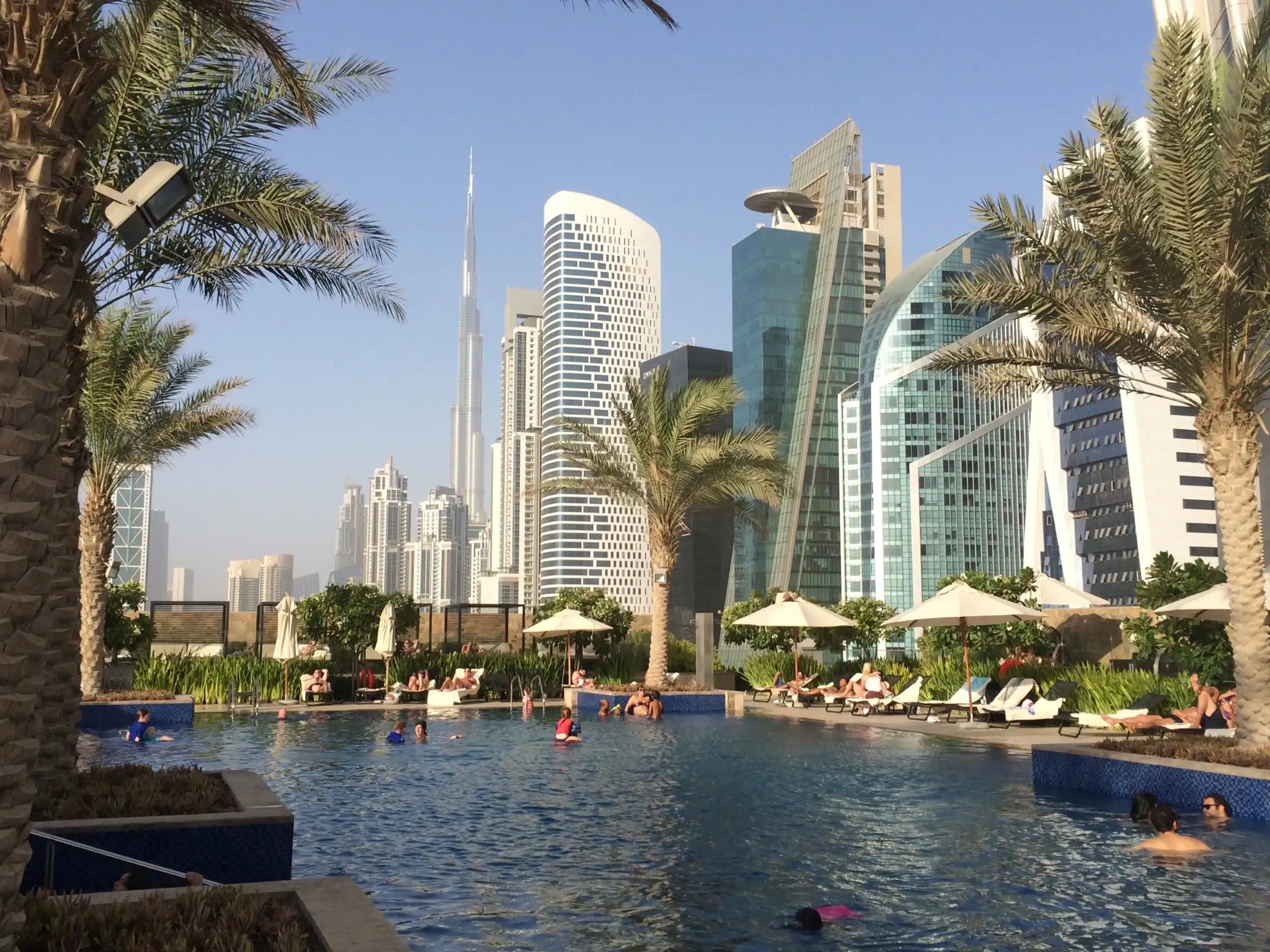
Within the “Dubai Palm family”, one project has fully become an active urban destination (Palm Jumeirah), one project has entered a more serious development phase with a new master plan (Palm Jebel Ali), and the third project, known as Palm Deira, followed a different path and was eventually continued under a different name.
- Palm Jumeirah (the first island) | Trunk, fronds, crescent
- Its physical structure has three main parts: Trunk, Fronds and Crescent.
- The trunk is more of a mix of urban uses (residential, hotel, retail and services); the fronds are mainly residential; and the crescent hosts the micro-city of hotels and coastal resorts.
- Palm Jebel Ali (the newer development) | current status, advantages and potential
- The new master plan for this project has been approved and is introduced as a “coastal growth corridor” in the south of Dubai in the United Arab Emirates, with a focus on coastal destinations, lifestyle facilities and large-scale development.
- From 2023 onwards, and especially with the approval of the new master plan on 31 May 2023, the launch of the first villas on 18 September 2023 and the introduction of new architectural phases on 2 May 2025, Palm Jebel Ali has entered a clearer implementation and launch phase.
- Palm Deira
- “Palm Deira” was part of the original palm concept, but its development path changed and the project continued in another form; in practice, this branch is now known under the “Dubai Islands” brand (previously “Deira Islands”), and its official master plan has been published as a separate island destination.
What is life like in the Palm Islands, and what facilities are there?
Life in Dubai Palm Islands—especially in Palm Jumeirah—is a combination of “urban coastal living” and “destination-led services”: that is, in addition to homes and apartments, a large volume of leisure, beach, hotel and marine services are concentrated in the same area. This model is usually attractive to those who value “water views + access to lifestyle experiences” more than a traditional neighbourhood setting.
- Leisure facilities, beaches, marinas and marine services
- The high concentration of hotels, beach resorts, private/semi-private beaches and marine services is part of the DNA of these projects.
- Shopping centres and urban infrastructure
- The presence of shopping centres and service hubs on the island itself, especially Nakheel Mall, means that … if the transport access is meant, the monorail station connected to this complex is called Palm Jumeirah Mall.
- Transport and access to the mainland
- The main connection of Palm Jumeirah to the mainland is through the Trunk road network, and the monorail covers only the Palm Gateway, Al Ittihad Park, Palm Jumeirah Mall and Atlantis Aquaventure route.
- In practice, because access “on the island” is heavily dependent on traffic flow and the operation of infrastructure, the possibility of temporary disruptions (for example, temporary closure of the service for maintenance) should be taken into account in travel planning.
- Safety, urban rules and compatibility with city living
- A significant part of living on the fronds and in some clusters is of a “gated community” nature; therefore, community management rules, service levels, access control and maintenance costs (Service Charges) play a direct role in the quality of the living experience.
Read more: Cities of the UAE
What are the advantages and disadvantages of living or investing in the Palm Islands?
An assessment of Dubai Palm Islands for living or investment is better approached through two questions: 1) Is the “coastal, luxury and destination-led” lifestyle compatible with daily needs? 2) Does the Expected return remain attractive after deducting maintenance costs and operational/environmental risks? In most cases, the answer differs “property by property” and “phase by phase”, because building quality, access type, project brand and the level of competing supply have a strong effect.
- Advantages
- Water views and location prestige: higher perceived and experiential value than many inland urban areas.
- Luxury lifestyle and destination services: hotels, restaurants, beaches and shopping centres at scale in the same area.
- Project symbolism and tourism demand: for some rental models (especially legal luxury/short-term ones), the location’s appeal can be an advantage.
- Disadvantages / challenges
- Maintenance and service costs: in coastal-luxury projects, service and maintenance costs are usually higher (the scale of facilities and the marine environment affect costs).
- Environmental risks and marine sensitivities: sea-based development is inherently accompanied by ecosystem risks and the management of water/sediment quality.
- Operational/infrastructure risk: access routes, internal transport operation and traffic management during peak hours can put pressure on the living experience.
- How suitable is it for a long-term investor?
- Usually for a long-term horizon, “palm projects” become more rational when the investor factors in maintenance costs, liquidity across different market cycles, and the risk of new coastal project supply into the financial model from the outset; in Palm Jebel Ali too, given its development phase, delivery timing and the maturity of local services have a decisive effect on risk/opportunity.
Read more: Jebel Ali Port, UAE

What has been the environmental impact of building the Palm Islands?
The construction of Dubai Palm Islands has a “two-sided” environmental impact: on one hand, land reclamation and reshaping of the coastline can change water currents, sediment deposition and water quality; on the other hand, some structures such as breakwaters can unintentionally become a form of “artificial habitat” (for certain species). On Palm Jumeirah itself, hydrodynamic studies have shown that the “residence time” of water in the inner areas/between the fronds is not the same, and this can create sensitivity in water quality at low-flow points.
- Impact on the seabed, water currents and water quality
- Land reclamation and dredging are usually accompanied by increased water turbidity and changes in sediment deposition patterns; these changes can affect water quality and water exchange in semi-enclosed spaces.
- In the semi-enclosed lagoons of Palm Jumeirah, modelling has pointed to spatial differences in “water flushing”; in other words, some areas are refreshed faster and some areas more slowly.
- Impact on marine ecosystems, coral and underwater life
- Coastal development and land reclamation can bury/displace benthic habitats and affect corals and sensitive marine life (especially through turbidity and sediment).
- At the same time, breakwaters and rock armour in some locations can act like an “artificial reef” and attract benthic communities/fish; this effect is not a complete substitute for a natural habitat, but it does explain part of the new ecological dynamic.
- Compensation measures and sustainability management
- Common solutions in such projects include designing for water circulation, monitoring water/sediment quality and using compensatory measures such as artificial reefs and habitat protection/improvement; the Gulf region also has extensive experience in artificial reefs and habitat rehabilitation.
Read more: Dubai villa communities
What will the future outlook for the Palm Islands development be?
The future of Dubai’s “Palm family” is more than anything tied to Palm Jebel Ali: its new master plan has been approved, it has been presented as part of an approach aligned with 2040 trends, and initial launches (such as villas) have already entered the market. On the other hand, Dubai’s wider urban policies to 2040 emphasise increasing the capacity and quality of coastal and public spaces; this means large coastal developments, if executed properly, will remain in the spotlight.
- Future projects and remaining phases
- Palm Jebel Ali has been introduced as a “new growth corridor”, and its master plan refers to a large scale, mixed uses and a wide range of lifestyle amenities.
- At Palm Jumeirah, coastline enhancement projects and new developments have also continued in recent years.
- Connection to Dubai’s 2040 plan
- Within the framework of Dubai 2040, increasing the length of public beaches and developing coastal spaces (on a multi-fold scale) is one of the most prominent priorities, and this gives major coastal projects strategic weight.
- Forecast for property price growth in the Palm areas
- Base-case scenario: maintaining the “waterfront premium” as a structural advantage, provided luxury demand remains stable and new supply is controlled.
- Upside scenario: completing the phases of Palm Jebel Ali alongside strong infrastructure and a destination experience (not just handing over units) could strengthen investment appeal.
- Cautious scenario: if new coastal supply increases in the city or maintenance/service costs rise, value growth could slow and choices could become more sensitive.
- Potential for rental or sales gains
- In luxury coastal projects, rent is usually sensitive to two factors: the quality of the living experience (access, services, building management) and the type of product (apartment, penthouse, villa). In practice, this market is more “quality-driven” than merely “location-driven”.
How do the Palm Islands fit into Dubai’s property market?
Dubai Palm Islands sit in the “coastal-luxury and brand-led” layer of the property market: in other words, their main advantage is the combination of man-made coastline + destination experience (hotel/marina/leisure) and symbolic identity. This position differs from villa areas within the city (which usually rely on green space, tranquillity and family-oriented living); on the Palm, the “water view and beachfront living” form a large part of perceived value and demand in the market.
| Quick comparison | Palm Islands | Villa areas within the city | Non-island coastal areas |
| Main advantage | Global brand + beach/water + leisure destination | Privacy + green space + family focus | Coastline/city access, usually with a more continuous urban fabric |
| Key risk | Maintenance costs, sensitivity of the marine environment, access traffic | Dependence on a car and distance from the beach/leisure | Competition from new projects and urban density |
| Demand profile | Luxury, international, experience-led | Family-oriented, long-term, tranquillity-led | Mixed (urban + coastal living) |
- Outlook for investment return and capital appreciation
- Value appreciation in the Palms usually comes from the “coastal premium” and “product scarcity”; however, it must be weighted against maintenance costs and operational sensitivities (community management, access, service quality).
- In Palm Jebel Ali, because the project is in development, the risk/opportunity is more dependent on the timing of destination maturity than on the unit construction alone.
- Who chooses the Palms for living?
- Families: if beach access, community safety and private space are the priority (especially in the villa areas/fronds).
- Investors: if they are interested in brand-led assets and scarce products, and factor maintenance costs into the financial model from the outset.
- Luxury / experience-led lifestyle: for people who see “access to leisure and high-end services within the same area” as a key advantage.
Frequently asked questions about Dubai Palm Islands
Which is more ready for living, Palm Jumeirah or Palm Jebel Ali?
Palm Jumeirah is a mature destination with established infrastructure and services; Palm Jebel Ali is moving forward with a new master plan and phased launches, and its nature is more developmental, so the timing risk and service-maturity risk are more pronounced there.
Can foreigners own property on the Palm Islands?
Palm Jumeirah is presented as a Freehold area, and purchase for non-citizens is possible within the framework of freehold ownership (details should always be checked property by property and deed by deed).
What is the biggest “hidden cost” when buying property on the Palm?
In many units, the main issue is not only the purchase price; maintenance and service charges and costs linked to beachfront living (maintenance, management, and sometimes parking/access) can have a serious effect on the real return.
For family life, is the “trunk” better or the “fronds”?
In general, the trunk offers more city access and day-to-day services, while the fronds are usually quieter and more private; the right choice depends on the family’s needs (schooling/commuting/quiet/privacy) and the type of property (apartment or villa).
Is concern about water quality and water stagnation inside the Palm real?
In semi-enclosed projects, “water circulation” is always a key issue; in Palm Jumeirah, studies have shown that water residence time is not the same in different areas and inner points can be more sensitive. This risk is managed through circulation design, monitoring and maintenance measures, but analytically it should be seen as one of the environmental risk variables.
Conclusion: are the Palm Islands a good option for living and investment?
Dubai Palm Islands can be an excellent option, but not for everyone and not with one single formula. The real value of the Palms is usually activated when the “coastal premium and destination lifestyle” are genuinely part of the need or the investment strategy; otherwise, maintenance costs, marine-environment sensitivities and access requirements may make the risk-to-benefit ratio unbalanced for some people.
- More suitable for
- Those who prioritise the beach/water and a luxury experience as their main focus, rather than as a mere added benefit.
- Long-term, quality-focused investors who factor maintenance costs and market cycles into their financial model from the outset.
- Families who value privacy, community and a coastal living environment, with a reasonable tolerance for car-based accessibility.
- Less suitable for
- Those whose budget is sensitive to “ongoing costs” and who want the maintenance fee to remain low.
- People for whom public transport is the main basis of getting around and who do not want to rely on a car/taxi.
- Investors looking for a quick exit and for whom volatility in the luxury market represents a high risk.
- Decision-making checklist before buying/letting
- The actual accessibility (commuting time during peak hours, entry/exit routes)
- The quality of building/community management and the level of services
- Service and maintenance costs (and the trend in those costs)
- Build quality and the age of the building (especially in a coastal environment)
- The type of demand for that product (villa/apartment/penthouse) in that same part of the Palm
- Operating rules (personal use, long-term/short-term letting in line with regulations)
- Assessment of environmental and beach/water maintenance risks (as a variable, not a slogan)
