
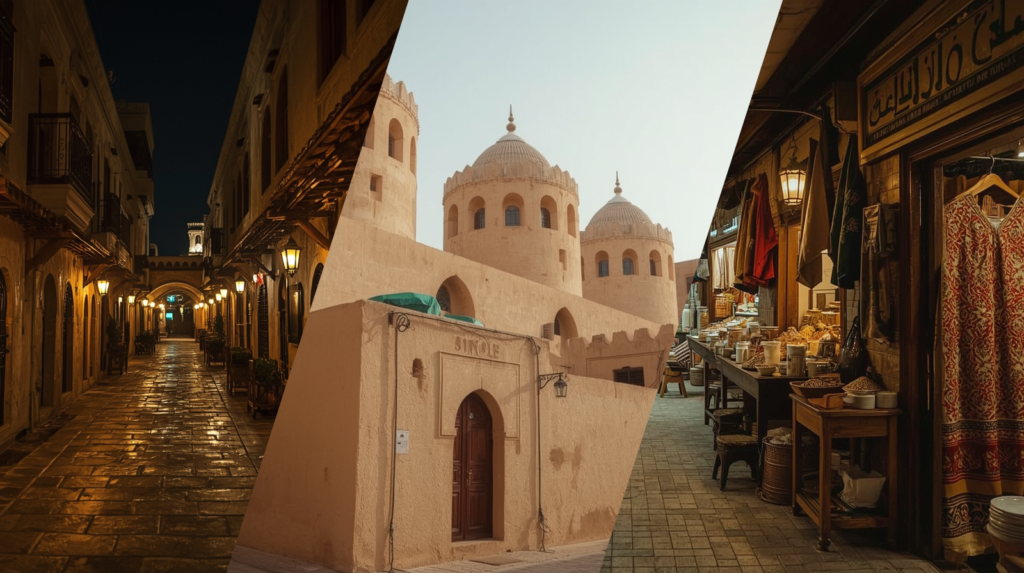
Dubai’s old neighbourhoods largely took shape around “Dubai Creek”; a place where maritime trade, local life and wind-tower architecture can still be felt. This historic fabric is not just one single point and includes several neighbourhoods and urban corridors; therefore, the “Old Dubai” experience is usually completed by walking through paved alleys, visiting restored houses, crossing the Creek by “Abra” and stopping by traditional souks. In this article from Hamed Ghelichkhani, the mental map of the historic fabric is introduced, and then Al Fahidi Dubai (Bastakiya Dubai) is explained as the most prominent point, with visiting details for 2026.

Where Is Old Dubai? An Introduction to the City’s Historic Fabric
“Old Dubai” is seen above all on the two sides of Dubai Creek; the Creek is the natural and historic boundary between Bur Dubai and Deira, and much of the historic fabric experience happens precisely along this axis: from the heritage neighbourhoods and wind-tower houses on the Bur Dubai side to the traditional souks and old commercial atmosphere on the Deira side. The walking routes, museums and galleries in this area are designed so that visitors can experience a condensed picture of historic life in the city of Dubai within a few hours.
Key points in the historic fabric (for building a practical visiting route):
- Dubai Creek as the main spine of the old fabric and the abra crossing route between Bur Dubai and Deira
- Al Fahidi Historical Neighbourhood (Bastakiya) as the heritage heart of the Bur Dubai side
- Deira as the axis of traditional souks (Spice Souk, Gold Souk and so on) on the other side of the Creek
- A short and inexpensive abra commute to connect the two sides of the fabric and complete the “old” experience
Al Fahidi Neighbourhood (Bastakiya); Dubai’s Most Famous Old Neighbourhood
Al Fahidi Neighbourhood (Bastakiya Dubai) is the best-known point in the historic fabric; a collection of narrow alleys, internal courtyards, restored houses and wind towers designed to adapt to the heat of the climate. This neighbourhood is located beside Dubai Creek and, because of the density of its cultural attractions—from small museums to galleries—is the best choice for anyone who wants to see “Old Dubai” in a condensed and tangible way within limited time.
Places to Visit in Al Fahidi Neighbourhood
In Al Fahidi, the value of a visit lies mostly in the “details”: the architectural fabric, renovated houses and small museums that cover specific subjects. For better planning, these points usually offer the greatest value for the time spent.
- Dubai Museum (Al Fahidi Fort / Dubai Museum)
- In the current situation in 2026, an internal visit to the museum/fort is not possible due to renovation, and it can only be viewed from outside; at the same time, official news has spoken of preparations for reopening in the first half of 2026. (As of the publication of this article, the public reopening has not yet been definitively announced)
- Coffee Museum
- It is located in Al Fahidi Neighbourhood and offers a compact experience of coffee culture, tools and traditional spaces; opening hours and contact information have been officially announced.
- Art galleries and cultural spaces
- Al Fahidi is officially introduced as a neighbourhood with “museums, art exhibitions and restaurants”, and this density of cultural activity makes the visit worthwhile.
- Restored historic houses and architectural alley-walking
- An important part of the neighbourhood’s appeal is the experience of walking among renovated houses and observing wind towers and courtyard-centred layouts (even without entering every interior space).
The Experience of Visiting Al Fahidi in 2026
In 2026, the best way to visit Al Fahidi is to build the plan around the “neighbourhood experience”, not only one specific point. Because, given the renovation status of Dubai Fort/Museum, Al Fahidi’s main appeal is concentrated more in cultural centres. If the visiting route is completed by crossing Dubai Creek by abra, the historic experience becomes more complete and, at the same time, access to the traditional souks on the Deira side is also provided.
Practical tips for a better visit (2026):
- Timing: schedule the visit in the morning or evening so that heat and crowds are lower.
- Suggested route: Al Fahidi → Coffee Museum/galleries → abra crossing → Deira traditional souks (if desired).
- Realistic expectations: for “Dubai Museum”, plan for an external visit for now, and build the programme around the neighbourhood and active museums.



Deira; One of Dubai’s Most Important Old Neighbourhoods
Deira Dubai area is one of Dubai’s oldest urban and commercial cores on the other side of the Creek, and is introduced as a neighbourhood “full of character and traditional souks”. The Deira experience is usually defined by classic souks, the atmosphere of everyday trade and the feeling of “Dubai before the towers”; especially if the visit starts with an abra crossing of the Creek, the historic continuity of Bur Dubai and Deira is better understood.
A short but effective checklist for visiting Deira:
- Spice Souk for experiencing the spice market and traditional fragrances
- Gold Souk as one of the oldest heritage souks in Dubai
- Abra Creek Crossing for a quick and low-cost connection between Bur Dubai and Deira (the classic option for entering Deira)
Bur Dubai; A Combination of History and Local Life
Bur Dubai area is located on the western side of Dubai Creek and is a logical starting point for anyone looking for “Dubai’s old neighbourhoods”; because it includes both heritage fabric (such as Al Fahidi Dubai / Bastakiya Dubai) and today’s local life. In this area, the historic experience is usually completed by walking through the alleys and then reaching the Creek waterfront and crossing by abra; that is, the very place where Dubai breathed before the towers and highways.
- Dubai Creek and crossing by Abra: the fastest way to connect Bur Dubai to Deira and complete the “Old Dubai” narrative.
- Al Fahidi Historical Neighbourhood: the heritage core of Bur Dubai and the point with the highest density of traditional architectural experience and cultural spaces.
- Al Seef: a contemporary area inspired by local heritage, with numerous restaurants/cafés and shops; suitable for evening visits and urban photography.
Al Shindagha; A Less Well-Known Historic District
Al Shindagha is located at the mouth of Dubai Creek (near where the Creek approaches the sea), and in terms of the historic narrative, it is considered one of the key points in the formation of modern Dubai; however, compared with Al Fahidi, it has less “tourist alley-walking” and is known more for “museum visits and structured historical narrative”. If the aim is to understand Dubai’s historical context (society, trade, lifestyle and traditions), Al Shindagha usually offers high value for the time spent.
- Al Shindagha Museum: a collection of pavilions and narratives about society, creativity/wellbeing, and marine/land life that opens up the historical picture of Dubai from different angles.
- Al Shindagha Historic District: in addition to heritage spaces, it hosts important cultural events; for example, the 14th edition of “Sikka Art & Design Festival” has been planned in this area from January to February 2026.
- Who is it more suitable for?
- For someone who wants a “museum-focused” and organised visit (not merely walking through alleys).
- For someone who wants to make the historical narrative “deeper” after Al Fahidi and gain a more complete picture.

Architecture in Dubai’s Old Neighbourhoods
The architecture of Dubai’s historic fabric is “climate-centred” architecture: houses were built in a way that managed temperature, light and privacy without modern technology. In neighbourhoods such as Al Fahidi and Al Shindagha, this architectural logic can still be observed; from wind towers and central courtyards to materials that were both available and helped with ventilation and reducing heat.
| Architectural element | Main function | Where it is most often seen |
| Wind tower (Barjeel) | Directing airflow and naturally cooling spaces | Heritage houses of Al Fahidi and historic areas along the Creek |
| Central courtyard | Creating shade, improving ventilation, controlling privacy | Restored traditional houses in the old fabric |
| Coral stone and plaster | Light, accessible, helping the thermal behaviour of walls | Registered examples in Al Shindagha heritage and museum narratives |
| Adaptation to a hot climate | Reducing direct sunlight, increasing shade and airflow | The overall logic of the lanes, walls and openings in the old fabric |
Wind towers (Barjeel)
Wind towers are the most recognisable architectural element of Old Dubai; they are the small towers that catch the wind and channel it into the interior spaces to create natural ventilation. On site visits, the differences in wind towers can be seen in their orientation, scale and construction details, and the best experience is when several wind-tower houses are compared one after another.
- It is better to see the wind towers during the cooler hours of the day so that the “logic of ventilation” feels more tangible.
- In narrow lanes, the combination of shade + wind towers creates a natural heat-control system.
Homes with central courtyards
The central courtyard is the heart of traditional homes in a hot climate: it controls light, creates shade and provides a semi-private family space. In restored houses, you can usually understand how the rooms were organised around the courtyard and why this layout made sense for a hot climate.
- The combination of a courtyard with controlled openings helped preserve privacy and also managed airflow more effectively.
Traditional materials such as coral stone and plaster
In many historic structures along the Creek, materials such as dried coral stone and beach stone were used for walls. Because of their porous nature, these materials played a role in the thermal logic of the buildings, and the texture of the walls became part of the visual language of the old neighbourhoods.
- When visiting, touching the wall texture (without causing damage) and paying attention to wall thickness gives a better understanding of the climatic logic.
Architectural adaptation to the region’s hot climate
Old Dubai is not just “homes”; the whole neighbourhood is designed like a climatic system: narrower lanes for shade, thicker walls, central courtyards for ventilation, and wind towers for air circulation. The result is that even today, walking through the lanes of these areas creates a different thermal feeling compared with open, modern streets.

How old neighbourhoods in Dubai differ from the city’s modern areas
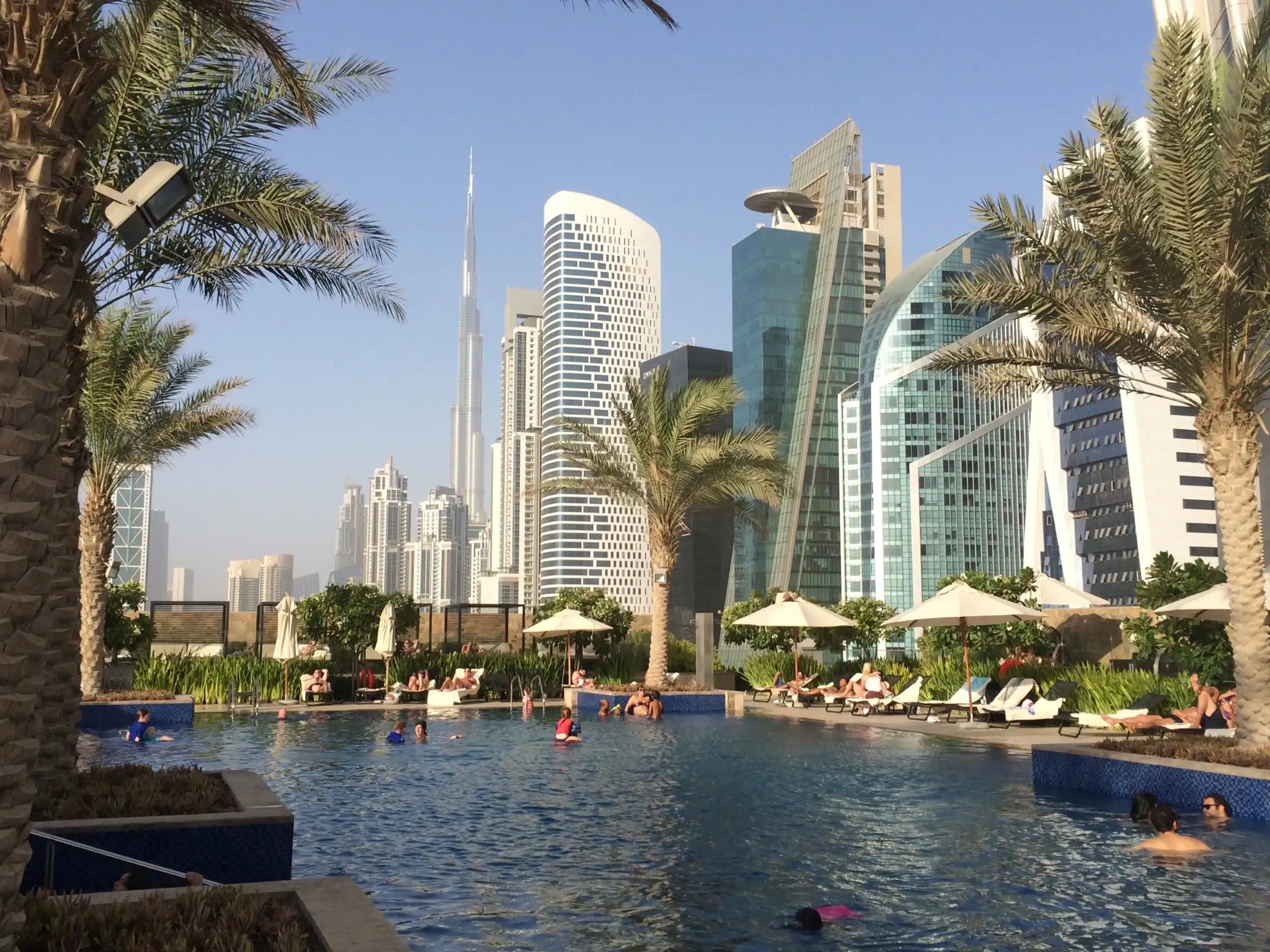
The difference between Dubai areas that are modern and the “old neighbourhoods of Dubai” is not only visual; it is a difference in the logic of how the city took shape. In the historic fabric around the Creek, neighbourhoods were designed for pedestrian living, privacy, shade and natural ventilation; by contrast, modern areas are usually shaped around tower construction, wider streets, cars/metro and large-scale uses. In neighbourhoods such as Al Fahidi Dubai (Bastakiya Dubai neighbourhood), you can still see this logic in the lanes, the more limited windows and the cultural activities inside restored houses.
| Comparison axis | Historic fabric (Old Dubai) | Modern areas |
| Urban form | Narrow, shaded, pedestrian-oriented lanes | Wider streets, car/metro access |
| Architecture | Privacy-led, fewer/narrower windows, wind towers and courtyards | Towers and glass/concrete buildings, modern layouts |
| Dominant use | Cultural/heritage + traditional trade (souqs) | Large-scale commercial/residential, shopping centres and new projects |
| Visitor experience | Calmer and detail-focused | Faster, image-led and based on major attractions |
Important tips when visiting Dubai’s historic fabric
Visiting Dubai’s historic fabric is usually an experience close to local life; therefore, “urban etiquette” and respect for privacy are more important than anything else. These simple points both improve the quality of the experience and reduce the likelihood of unpleasant encounters (warnings or legal issues).
- Dress appropriately
- Modest clothing is recommended in public spaces and especially in more conservative areas; very revealing or transparent clothes are not a low-risk choice.
- Respect local residents
- Loud voices, long stops in front of houses, or entering private spaces without permission spoil the experience; many buildings are still designed around privacy, and this is visible in the fabric.
- Photography rules
- Photographing people (especially families and children) without consent and publishing other people’s images online can amount to a privacy violation and carries serious penalties.
- Museum and cultural centre opening hours
- Hours are not fixed and may change; for example, “Al Shindagha Museum” stated in an official notice that visiting hours are 10 am to 8 pm and last entry is 7 pm.
Read more: Cities of the United Arab Emirates
Is it possible to live in Dubai’s old neighbourhoods?
Living in the “old neighbourhoods of Dubai” has two meanings: 1) living in old urban neighbourhoods such as Bur Dubai and Deira, which still have active residential fabrics, 2) living within heritage cores such as Al Fahidi, whose dominant use is cultural and tourism-related and whose buildings are more often home to galleries, specialist museums and cultural centres than to ordinary residence.
- Current residential situation
- Bur Dubai and Deira still have residential supply, and for those interested in “living close to the Creek and the souqs”, rental options can be found.
- Cultural and tourism use
- In Al Fahidi, the historic buildings are today mainly used for cultural/artistic activities, galleries and museums, and this identity shapes the visit.
Price difference compared with modern areas (rental index, annual)
The figures below are “platform averages” and vary by exact neighbourhood, building quality and accessibility, but they are useful for a quick comparison with modern areas:
| Area | Rental index / stated average | Practical reading |
| Bur Dubai | Mean apartment rent: AED 121,815/year | Cheaper than prime areas, but within an active urban area |
| Deira | Average examples by type: studio 29,654 / 1-bedroom 47,641 (annual) | A more economical option for urban living |
| Dubai Marina (modern example) | Mean apartment rent: AED 195,613/year | Higher cost in exchange for a modern/coastal lifestyle |
Frequently asked questions about Dubai’s old neighbourhoods
Where exactly is Old Dubai?
It is mainly formed around Dubai Creek and on both sides of it (the Bur Dubai side and the Deira side), and you can move between the two sides by abra.
Is Al Fahidi Dubai the same as Bastakiya?
In common usage, the “Al Fahidi neighbourhood” is the same area that many people know as “Bastakiya”, and today it is presented as a historic neighbourhood with cultural activities.
How much time do you need to see the old fabric?
For a compact visit (Al Fahidi + crossing by abra + one traditional souq), a few hours are usually enough; if museums are also included, more time is needed.
Is photography allowed in the old neighbourhoods?
Photography of spaces is usually not a problem, but photographing people and publishing it without consent can amount to a privacy violation.
What is the best time to visit Dubai’s old neighbourhoods?
Mornings and evenings usually offer a better experience (less heat and less crowding). For exact museum opening hours, the official page of that venue should be checked.
Can you live in Al Fahidi itself?
The dominant use of Al Fahidi’s buildings is cultural and tourism-related, and many buildings are home to galleries, museums and cultural centres; ordinary residence is seen more often in surrounding urban neighbourhoods (such as Bur Dubai and Deira).
If you only want one “old” experience, which part is most worthwhile?
The combination of “Al Fahidi + crossing the Creek by abra” usually creates the strongest sense of old Dubai in a limited amount of time.
