

Rental profit on properties in Dubai is the main decision-making metric for many investors, because it shows directly how much “real income” a residential unit generates each year. In recent years, Dubai has become one of the world’s most attractive rental markets; the combination of steady demand from expatriates, population growth, strong urban infrastructure and no income tax on rental income has meant that rental yield in many neighbourhoods is higher than in major cities in Europe and Asia. At the same time, if rental profit is calculated only on the basis of a few promotional figures and without taking account of costs, property type and area, it creates a misleading picture of reality. This article from the Hamed Ghelichkhani website is prepared on the basis of real data and up-to-date market trends up to the beginning of 2026, and aims to give you a clear and realistic view of the rental yield on Dubai properties.

What is meant by rental profit on properties in Dubai?
When speaking of “rental profit on properties in Dubai”, the usual meaning is annual rental yield / ROI; that is, the percentage of the property price received each year as rent.
Simple definition of rental ROI
In simple terms:
Rental profit (annual ROI) = annual net rental income ÷ total purchase cost × 100
- Annual net rental income: the rent received during the year, after deducting direct costs (such as service charge / building service and maintenance costs (Service Charges), property management, routine maintenance costs).
- Total purchase cost: not just the purchase price; it also includes registration-related costs, fees and other initial payments.
Read more: Renting a House in Dubai
The difference between nominal profit and net profit
Many advertisements focus only on nominal profit; that is:
- Nominal profit = annual rent ÷ purchase price (without taking account of costs)
- Net profit = annual rent after deducting costs ÷ total real purchase cost
In practice, the investor should focus on net profit; because:
- Annual service charge costs in towers and luxury communities can “eat into” part of the rent.
- Property management costs, finding a tenant, the contract and minor repairs have a noticeable effect on yield over the year.
- In some short-term letting models, income is higher, but management costs and periods when the property is vacant are also higher.
How ROI is calculated in simple terms
To make rental profit calculation in Dubai more tangible, it is enough to have three basic figures:
- Total purchase / initial investment cost (purchase price + transfer / registration costs and so on)
- The annual rent paid by the tenant (for example, AED 90,000)
- Total annual property costs (for example, AED 15,000 for service charge, management and maintenance)
In this example:
- Net rent = 90,000 − 15,000 = AED 75,000
- Net rental profit ≈ 75,000 ÷ 1,500,000 × 100 = 5%
This is the figure that should be used when comparing neighbourhoods, projects and property types, not just the nominal rent on the brochure.
Read more: Migration to Dubai
The average rental profit on properties in Dubai in 2026
Based on data published in market reports in 2024 and 2025, as well as data available up to the beginning of 2026, the average rental profit on properties in Dubai generally fluctuates in the range of about 6 to 7.5 per cent (in some economic areas, about 9 to 10 per cent); with the difference that:
- Middle-market and economic neighbourhoods such as JVC, International City, Al Furjan and parts of Dubailand are usually at the upper end of this range.
- Luxury and well-known neighbourhoods such as Downtown Dubai, Dubai Marina and Palm Jumeirah generally offer lower percentage yields, but in return they provide higher capital growth potential (Capital Appreciation).
Some important points in analysing averages:
- Rental profit is not a fixed or guaranteed figure; depending on the type of unit (studio, 1-bedroom, 3-bedroom, villa), the quality of the project, whether it is furnished or unfurnished and the type of contract, it can shift by several percentage points.
- Studios and smaller units usually have a higher percentage yield than larger units in the same area, but the risk of vacancy and tenant turnover is greater.
- The city average is only a “reference point”; what matters to the investor is the yield of the same project in the same location under the same contract conditions.
In general, it can be said that:
- For income-focused investments, mid-priced and family-oriented neighbourhoods with steady demand are the more logical choice.
- For capital growth-focused investments, luxury neighbourhoods and well-known projects, although they have lower rental yields, can be justified if the aim is to hold them for several years and benefit from price growth.
Comparison of rental profit in different areas of Dubai
In this section, the overall picture of rental profit on properties in Dubai is reviewed in a few key areas, descriptively and relatively. (Exact figures may change depending on the type of unit and the time of transaction; therefore the focus is on the range and the relative position of each area.)
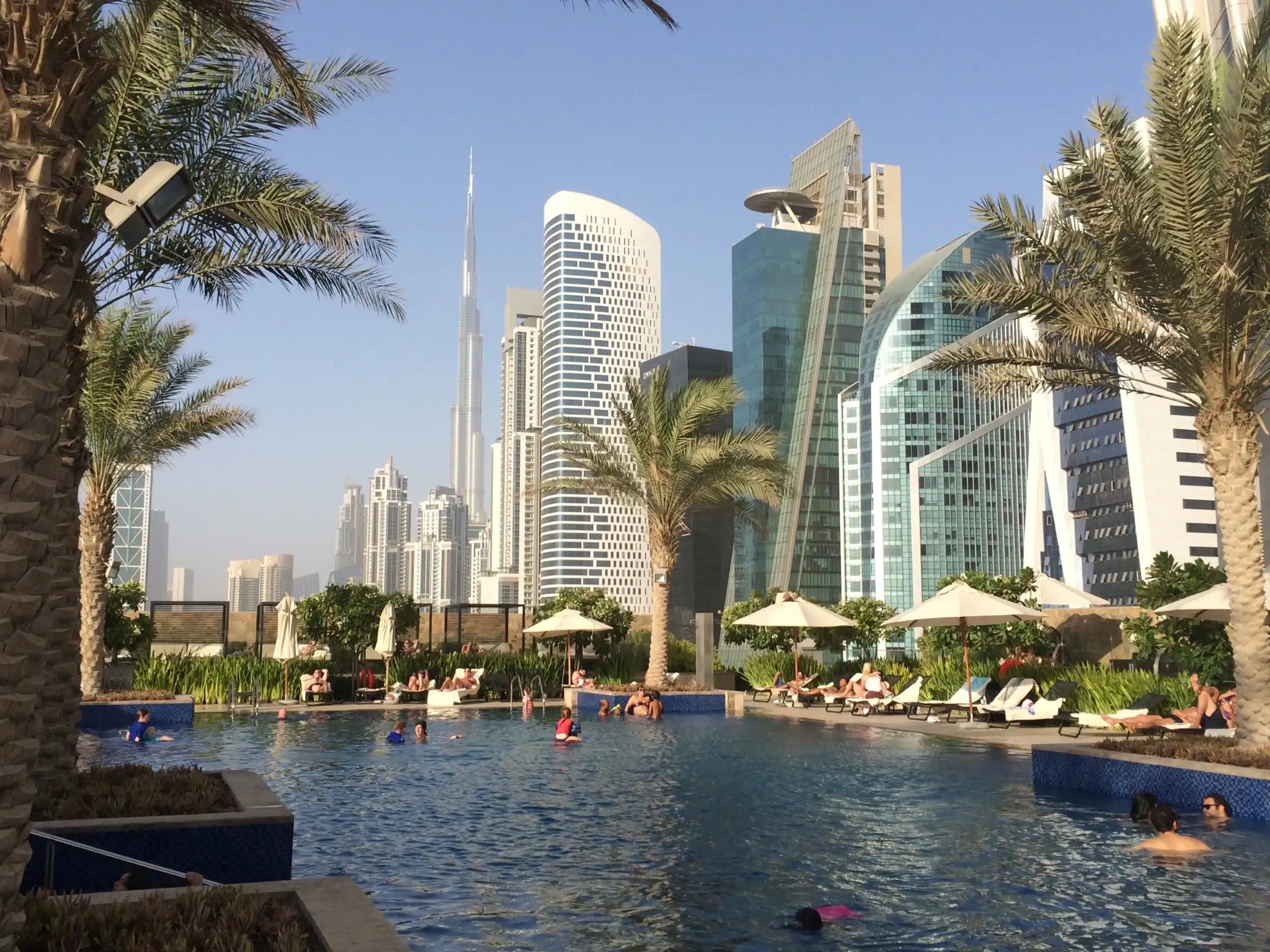
Downtown Dubai
- One of the most luxury and best-known neighbourhoods in the city; alongside Burj Khalifa and Dubai Mall.
- Rental profit is usually at a level “around the average to slightly below mid-priced neighbourhoods”, but the property price is higher and the capital growth potential is strong.
- Main audience: tenants with high incomes, managers and people who prioritise a prestigious address.
Dubai Marina
- A high-demand neighbourhood with a coastal lifestyle, access to the sea, restaurants and a promenade along the canal.
- Rental yield is usually in a range close to the city average; 1-bedroom units in many data sets perform relatively strongly.
- Because it is popular among professionals and people working near Sheikh Zayed, the risk of a unit remaining vacant is usually lower, but this depends on pricing, building quality and market conditions.
Business Bay
- An office and residential hub near Downtown Dubai; a mix of office towers and residential towers with strong demand from professionals and companies.
- Rental profit is often in the “moderately high” range; especially for studios and smaller units.
- Its proximity to major routes and commercial centres makes this area attractive for long-term and even short-term letting.
Palm Jumeirah
- A completely luxury and iconic project; a combination of beachfront villas and branded apartments.
- Percentage rental yield is often lower than in mid-priced neighbourhoods, because the purchase price is very high; on the other hand, the nominal rent and long-term capital growth potential are attractive.
- Main audience: luxury tenants, senior managers and families with a high budget.
Jumeirah Village Circle (JVC)
- One of Dubai’s most important middle-market areas, with a mix of apartments, townhouses and villas.
- In most reports, JVC rental yield is presented as higher than the city average and among the high-yield areas; especially for studios and 1-bedroom units.
- A family community, nearby schools and a suitable entry price have made this area popular for rental investment.
Jumeirah Lake Towers (JLT)
- A collection of residential and office towers beside artificial lakes, opposite Dubai Marina
- Rental profit in many data sets is among the city’s high-yield areas; especially for studios and smaller units.
- Good metro access, proximity to the Marina and the office–residential mix have made JLT a popular option for tenants working in the surrounding commercial areas.
Read more: Types of property in Dubai



Brief analysis of the advantages and disadvantages of each area in terms of letting potential
To summarise the comparison of areas, one can look at them briefly as follows:
- Downtown Dubai
- Advantages: a highly prestigious address, steady demand from high-end tenants, and capital growth potential in the long term.
- Challenges: high purchase price, high service charges, and lower rental yield percentage compared with mid-priced neighbourhoods.
- Dubai Marina
- Advantages: coastal lifestyle, strong rental demand, suitable for short-term and long-term letting.
- Challenges: high competition among owners, and tenants are sensitive to the quality of furnishings and the view.
- Business Bay
- Advantages: close to Downtown and business centres, suitable for professionals and companies, and offering acceptable rental yield.
- Challenges: project quality varies; choosing the tower and property developer is very important.
- Palm Jumeirah
- Advantages: global branding, specific tenants with high spending power, and the potential to preserve and grow capital.
- Challenges: lower percentage return, high maintenance fee, and a narrower audience.
- JVC (Jumeirah Village Circle)
- Advantages: suitable entry price, high rental yield, family-friendly community, and a variety of projects.
- Challenges: construction quality varies greatly across different projects; choosing the wrong one can lead to the unit remaining vacant.
- JLT (Jumeirah Lakes Towers)
- Advantages: excellent accessibility, competitive rental yield, and a combination of work and living in one area.
- Challenges: some of the older towers may need refurbishment and updating.
Ultimately, rental profit on properties in Dubai depends not only on the percentage number in each area, but also on the exact combination of: property type, project, management, and the investor’s strategy.
Learn more: Earning income from rental properties in Dubai (2026 guide)
Factors affecting rental profit on properties in Dubai
Even in one neighbourhood, rental profit on properties in Dubai can differ by several percentage points between two seemingly similar units. The main reason for this difference is a set of small and large factors that affect letting potential and the final rental ROI figure. The most important of these factors are:
Type of residential property
- Studios and one-bedroom apartments usually offer a higher rental yield percentage because:
- the purchase price is lower;
- the pool of potential tenants (students, single occupants, young couples and newcomers) is wider.
- Larger units and villas often have a higher nominal rent, but:
- they require more initial capital;
- the percentage return may be slightly lower, but tenant stability and contract lengths are usually greater.
The choice between an apartment, townhouse or villa should be made according to the investment strategy (focusing on return percentage or on asset quality and price growth).
Location
The property’s location on Dubai’s map is one of the most decisive factors in rental profit:
- Being close to the metro, major arteries and commercial centres increases rental demand and reduces the risk of vacancy.
- Well-known and branded neighbourhoods usually find tenants more easily, even in fluctuating market conditions.
- Units located in the city’s main hub are in a better position in terms of liquidity (both for sale and for letting).
Age of the building and quality of management
Two units with similar size and layout, if they are in two towers with different management quality, will have completely different rental performance:
- Newly built or well-maintained buildings:
- higher letting capacity;
- greater appeal for foreign tenants and families.
- Older buildings with poor management, maintenance defects, worn lifts or an unsuitable lobby can reduce ROI even in a good neighbourhood because:
- the rental level falls;
- the risk of vacancy and tenant turnover rises.
Read more: Cheapest home in Dubai
Unit size and layout
- Units with a logical layout, good light, a usable balcony and sufficient storage space let faster and leave less room for negotiation on reducing the rent.
- Very large sizes in the same neighbourhood, especially if there is not strong family demand, may sit at a lower level in terms of percentage return.
- In many neighbourhoods, the “sweet spot” size for rental investment is studios and one-bedroom apartments, unless the neighbourhood is inherently family-oriented and villa-based.
Supply and demand conditions in the area
The rental market is always a combination of the number of units offered and the volume of demand:
- In neighbourhoods where many new projects are handed over, there may be supply pressure for a while, and owners may have to offer discounts to attract tenants.
- Areas with complete infrastructure, schools, shopping centres and good accessibility tend to have more stable demand and a lower vacancy rate in the long term.
- Tracking future construction and large projects nearby is essential for analysing whether rental profit will remain sustainable over the next few years.
The effect of rental type on the level of profit
Rental profit on properties in Dubai depends not only on the purchase price and monthly rent; the letting model also has a serious effect on return, risk and the extent of the owner’s involvement. In general, three main models can be considered:
Long-term letting (Long-Term Rental)
In this model, the property is rented to one tenant for 1 year or more.
Advantages:
- relatively stable and predictable income;
- formal and transparent contract in the Ejari system;
- less day-to-day management involvement for the owner.
Risks and limitations:
- less flexibility to change the rent during the contract;
- if the contract is signed at a low rent, any adjustment can only be made at a limited pace;
- in some areas, if the unit is not well furnished or maintained, finding a replacement tenant after the contract ends takes time.
For many investors, long-term letting is suitable for a conservative, lower-risk approach.
Short-term letting (Short-Term / Holiday Home)
In this model, the property is let daily, weekly or monthly (usually with a Holiday Home permit).
Advantages:
- higher income potential during peak tourism months;
- the ability to adjust pricing dynamically according to demand;
- suited to units in tourist areas, near the beach or close to main attractions.
Risks and challenges:
- high fluctuations between peak and low-demand seasons;
- management, cleaning, check-in/check-out and platform costs are higher;
- the need for specific permits and compliance with Holiday Home rules.
This model is suitable for investors who can tolerate income fluctuations and usually use professional management companies.
Managed rental or rental pool / pooled rent (Rental Pool / Managed)
In some projects, the developer or hotel operator manages the units as part of a shared income pool:
- The total income of the community is collected and divided among the owners based on area or an agreed formula.
Advantages:
- fully professional management;
- no need for the owner to deal with tenants, daily maintenance or marketing;
- suitable for people who do not have the time or expertise to manage a property.
Risks and important points:
- the transparency of the contract and the income distribution formula is extremely important;
- in some years, actual income may be lower than in a free letting arrangement;
- the owner has less control over pricing and the type of guest/tenant.
Overall comparison of the models in terms of return and risk
- Long term:
- Return: medium to good (depending on the area)
- Risk: low
- Management: simpler
- Short term:
- Return: potentially high, but volatile
- Risk: medium to high (depending on season and demand)
- Management: more complex and more costly
- Rental pool / managed:
- Return: usually medium and more stable than what the owner would receive alone in the short term
- Risk: dependent on the operator and the contract
- Management: least involvement for the owner
The choice of the right letting model should be based on neighbourhood, property type, budget, risk tolerance and investment horizon.
Read more: Introducing Dubai

Costs Affecting Net Rental Profit in Dubai
To calculate the real rental profit of Dubai properties, it is essential to focus on net profit; that is, the rent remaining after costs are deducted. The most important costs that should be included in the calculations are as follows:
Service charge / service and building maintenance costs (Service Charges)
- In towers and residential communities, the service charge is collected annually for:
- cleaning of common areas,
- security,
- maintenance of lifts and systems,
- costs related to facilities
and is shared.
- In luxury projects with extensive facilities, this cost can be a significant amount, and if it is overlooked in the calculations, the ROI will look attractive on paper but will in practice be lower than expected.
Property management fee
If the owner does not live in Dubai or does not want to deal personally with the tenant, contract renewals, rent collection, periodic inspections and minor issues, they usually use a property management company:
- In return for receiving a percentage of the annual rent or a fixed amount, these companies handle the operational matters.
- This cost should be seen as a fixed item in the calculation of net profit; in return, the risk of delayed rent, legal problems and the property remaining vacant without reason is reduced.
Leasing fee (Leasing / Agency Fee)
- When finding a new tenant, the real estate agency usually receives a one-off fee, which is often equal to a percentage of the annual rent.
- If the tenant changes every year, this cost will have a noticeable effect on returns over time; however, if long-term tenants are secured, this pressure is reduced.
Maintenance costs
Even in new buildings, periodic costs always exist:
- Minor repairs inside the unit (paint, appliances, damaged equipment);
- servicing air-conditioning systems, electrical devices and so on;
- in furnished properties, replacing or repairing worn furniture and items.
When calculating rental profit, it is better to allow for a reasonable percentage of the annual rent or property value as a maintenance budget so that a more realistic picture of ROI can be obtained.
No income tax on rental income
One of the important advantages of the Dubai market is that under current laws, income tax on rental income (similar to Income Tax on rent) is not levied; meaning that:
- The rent remaining after operational costs are deducted is no longer subject to personal income tax in the UAE.
Of course, this does not exempt the owner from complying with other laws, registering the contract, paying municipality fees and legal obligations; but in comparison with many European countries that impose heavy taxes on rental income, the absence of income tax on rental income in Dubai is considered a serious advantage for the investor’s net profit.
Ultimately, whenever the rental profit of Dubai properties is calculated, these costs must be included in the model transparently; only then can two properties or two neighbourhoods be compared realistically with each other.

Real Scenario for Calculating the Rental Profit of a Property in Dubai
To make the rental profit of Dubai properties more tangible, let us consider a simple numerical example with reasonable assumptions. This is not an actual registered case in the system, but its calculation structure is consistent with the way rental ROI is calculated in the Dubai market.
Assume that an investor has bought a one-bedroom apartment in a high-demand neighbourhood:
- Property purchase price: AED 1,500,000
- Annual rental income (long-term letting): AED 7,500 per month → AED 90,000 per year
At first glance, the apparent rental yield or nominal rental profit looks like this:
Nominal rental profit = annual rental income ÷ purchase price × 100
90,000 ÷ 1,500,000 × 100 = 6%
However, this figure does not take into account the real costs of maintaining the property in Dubai. To arrive at net rental profit, annual costs must be deducted.
1. Assumed annual costs
- Annual tower service charge: AED 18,000
- Property management fee: 5% of annual rent → AED 4,500
- Maintenance and internal repair costs: about AED 5,000 per year
- Risk of the unit being vacant: assume it remains vacant for one month during the year → AED 7,500 (equal to one month’s rent)
Total costs:
AED 18,000 + AED 4,500 + AED 5,000 + AED 7,500 = AED 35,000 per year
2. Calculating net rental profit
Now the costs must be deducted from the annual rent:
Annual rental income: AED 90,000
Less total costs: AED 35,000
Annual net rental profit: AED 55,000
Then the net ROI is calculated:
Net rental profit ÷ purchase price × 100
55,000 ÷ 1,500,000 × 100 ≈ 3.7%
On the surface, the rental profit of Dubai properties for this unit appears to be 6%, but after including service charges, management, repairs and one month of vacancy, the real return falls to around 3.7% (about 3.67%) net.
This example shows that, when analysing the rental return of a property in Dubai, one should not look only at annual rent; rather:
- annual fixed and variable costs
- vacancy risk
- and the letting model
must all be included in the calculations so that the investment decision is made on the basis of real and sustainable profit, not merely advertising percentages.
Read more: The Best Countries for Buying Property and Obtaining Residency
Common Mistakes Investors Make When Estimating the Rental Profit of Dubai Properties
A large part of the dissatisfaction and scepticism about the rental profit of Dubai properties comes not from the market itself, but from mistakes in the initial analysis. There are several repeated errors that, if avoided, provide a clearer picture of the rental ROI of Dubai properties.
Ignoring costs
The biggest mistake is that the investor only divides annual rent by the purchase price and completely forgets the costs.
- Service charge
- Property management
- Repairs and refurbishment
- Agency fee when finding a tenant
If these costs are not included in the model, the nominal rental profit appears unrealistically high and after one or two years a gap emerges between expectation and reality.
Focusing only on the ROI figure without considering risk
Some investors only seek the “highest ROI percentage” without asking:
- What is the risk of vacancy in that neighbourhood?
- What is the composition of demand in the area (tourism, office workers, families)?
- Is rental income highly seasonal?
A property that shows an 8% return on paper, but remains vacant for several months every year or constantly changes tenant, may be less valuable than a property with a 5% return but a stable tenant and long-term contracts.
Choosing a neighbourhood solely based on advertising
Advertising may focus on projects that:
- are still under development;
- or have very high future supply around them;
- or only refer to a few attractive numbers (high rental yield).
If an investor decides without checking the realities of the market and relies only on a brochure, social media or percentage promises, they may be faced with issues such as service charges / service and building maintenance costs (Service Charges), low rental demand or strong competition in an oversupplied neighbourhood.
Ignoring Property Management
Property management in Dubai plays a vital role, especially for owners who are not residents of the UAE. Two common mistakes in this area:
- Handing the property to any real estate office without checking its track record and transparency;
- Conversely, trying to manage everything remotely, without local professional presence.
Both situations can lead to:
- Unnecessary vacancy of the property;
- Choosing an unsuitable tenant;
- Delay in receiving rent;
- And ultimately, a reduction in rental profit on the property in Dubai.
A professional investor sees property management as part of the ROI model, not merely an additional cost.
Ways to Increase Rental Profit on Properties in Dubai
Although market conditions, laws and the project’s location play the main role in rental profit on properties in Dubai, an owner can improve net returns significantly through a series of targeted actions.
Choosing an Area with Stable Demand
The first and most important decision is choosing the right location:
- Areas close to the metro, office centres, universities or tourist attractions reduce the risk of vacancy.
- Neighbourhoods that have a balanced mix of residents (families, professionals, expatriates) usually offer more stable letting potential and longer contracts.
Research into future supply levels, the number of projects under construction and infrastructure conditions is essential when selecting an area.
Optimising the Rent Price
Setting the monthly rent only on the basis of the “highest possible number” does not always mean more profit. In many cases:
- A slightly lower rent than the market ceiling,
- Faster tenant acquisition,
- Shorter vacancy periods,
can, on balance, create a higher annual net profit. Smart pricing should be set with regard to the realities of the neighbourhood, the quality of the unit and competitors, not merely the owner’s expectation.
Refurbishment and Appropriate Furnishing
A property that is in a favourable condition in terms of appearance, light, colour, kitchen, bathrooms and furniture (for furnished units) helps in three ways:
- Higher rent: the tenant is willing to pay more for better quality.
- Faster letting: the property spends less time vacant.
- Attracting higher-quality tenants: families and professionals are usually drawn to clean, well-maintained units.
Smart refurbishment does not necessarily mean heavy expenditure; sometimes changing the lighting, colour, curtains and a few key items has a significant effect on letting potential.
Choosing the Right Rental Strategy
Not all properties are suitable for the same type of letting. To increase rental profit on properties in Dubai, an informed choice should be made between the following models:
- Long-term: for family neighbourhoods and non-touristic units.
- Short-term / Holiday Home: for tourist areas, near the beach or in high-traffic locations.
- Managed / Hotel pool: for projects with a professional operator and where the owner does not want to deal with operational details.
An incorrect strategy (for example, trying to let short-term in a wholly office-based area) can sharply reduce the real return.
Using Professional Management
Working with a professional property management team or company can:
- Reduce vacancy time;
- Make tenant selection more accurate and secure;
- Structure contract follow-up, rent collection and repair handling;
- And ultimately make ROI on properties in Dubai more stable and predictable for the owner.
The important point is that property management costs, if chosen correctly, are in practice part of the investment to increase net profit, not just an extra cost item.
Read more: Types of Property Ownership in Dubai (Types of Title Deed)
Comparing Rental Profit on Properties in Dubai with Other Global Markets
In many international reports, the rental yield on residential properties in Dubai is usually assessed as higher than the average of major European cities and part of Asia. While in many major European cities, net yields are usually reported at around 3.5 to 4.5% (and this can be higher or lower depending on the city/property type), a significant portion of residential properties in Dubai (especially in medium and growing areas) falls within gross ranges of around 4 to 7 per cent; of course, after deducting costs, the net figure is lower, but it remains competitive relative to many mature markets (the final figure is around 3 to 5.5 per cent).
For a better comparison, two points should be noted:
- Market risk level: Dubai is a growing market and experiences periodic volatility, but in return it offers greater capital growth potential and rental yield than many European cities.
- Stability of the legal framework: tenancy contracts, the structure for registering ownership, and the absence of income tax on rent (under current laws) have made the risk-to-return ratio in Dubai attractive for an informed investor.
Compared with some Asian cities (such as Istanbul or Bangkok), Dubai is usually:
- More attractive in terms of infrastructure, ownership transparency and currency stability;
- But it has a higher entry cost (purchase price), and as a result, choosing the right area becomes more important.
Dubai’s competitive advantage in recent years lies more in the combination of the following:
- A reasonable rental yield relative to the property price;
- No income tax on rent;
- An international market and steady demand from expatriate residents;
- Urban and economic development plans that make the future outlook clearer for medium- and long-term investment.
Ultimately, rental profit on properties in Dubai becomes truly attractive compared with other markets when the investor:
- Chooses the area correctly;
- Calculates costs accurately;
- And maintains a realistic view of market risk and volatility, rather than relying only on promotional percentages.
Challenges and Risks in the Property Rental Market in Dubai
Dubai’s market offers many opportunities, but like any dynamic market, it is not without risk. For rational decision-making, understanding these challenges is essential.
Market Volatility
Dubai has experienced phases of rapid growth, price correction and stabilisation at different times. In some years:
- Prices and rents rise sharply;
- And in some periods, due to new supply or global economic conditions, growth slows or even a temporary correction occurs.
Investment with a short-term horizon and expectations of quick profit can carry high risk in such a market.
Dependence on Global Economic Conditions
Dubai’s economy depends to a large extent on the flow of international capital and labour. Events such as:
- A slowdown in economic growth in major economies;
- Changes in immigration and labour policies in the region;
- Global shocks in the energy or financial markets;
can affect demand for rent, the number of expatriate tenants and the speed at which new units are absorbed.
Changes in Rental Laws
The legal framework for renting in Dubai is updated periodically. Examples of sensitive areas include:
- The ceiling on rent increases upon contract renewal;
- Regulations related to short-term letting;
- Rules relating to eviction, owner-tenant disputes and contract registration.
Investing without monitoring these laws can mean that some of the initial assumptions about returns are not realised in practice.
Risk of Vacancy in Some Areas
The main risk in rental profit on properties is not only a lower rent; vacancy of the unit can also bring returns down significantly. This risk is higher in the following cases:
- Projects with a large amount of supply over a short period;
- Neighbourhoods without stable demand and more dependent on temporary waves;
- Choosing a unit with an unrealistic rent price compared with competitors.
The investor should always factor scenarios such as one to three months of vacancy per year into their calculations; especially if the area is newly developed or highly competitive.
Read more: The Pros and Cons of Living in Dubai for Iranians
Summary and Conclusion
The rental profit on properties in Dubai, when reviewed realistically and with a precise calculation of costs, can offer an attractive combination of stable rental income and capital growth potential; however, this profit is by no means “guaranteed” and depends on the investor’s decisions.
A few key points for the summary:
- Rental yield in Dubai can range from medium to high, depending on the area, property type, rental model and management quality.
- The difference between nominal rental profit (before costs) and net rental profit (after service charges, management, vacancy and repairs) is very important in practice and should be taken into account from the outset.
- Choosing the right area, understanding supply and demand conditions, and using professional property management can meaningfully improve the real return.
- Dubai is more of an opportunity-driven market than a fixed-profit market; in other words, investors who enter with a multi-year view, data-driven analysis and acceptance of some level of volatility have a better chance of achieving a desirable outcome.
Ultimately, the decision to enter Dubai’s rental property market should be based on:
- the investment objective (monthly income, capital growth, diversification of the asset portfolio),
- the level of risk tolerance,
- and the time horizon for holding the property
should be made.
Frequently Asked Questions About Rental Profit on Properties in Dubai
How much is the rental profit on properties in Dubai usually?
The rental profit range depends on the area, property type and rental model, but usually gross yield in many areas is seen at around 4 to 7 per cent, and after deducting costs, net profit will be lower.
Which areas of Dubai are better for rental profit?
High-demand areas such as Dubai Marina, Jumeirah Village Circle, parts of Business Bay and some new projects in Dubai Hills or similar areas have a combination of good letting potential and steady demand; the final choice should be made by analysing the details of each project.
Is rental profit in Dubai guaranteed?
No; no profit in the property market is guaranteed. Rental yield depends on market conditions, property vacancy, management quality, the level of competition in the area and tenant behaviour.
Which areas of Dubai are better for rental profit?
High-demand areas such as Dubai Marina, Jumeirah Village Circle, parts of Business Bay and some new projects in Dubai Hills or similar areas have a combination of good letting potential and steady demand; the final choice should be made by analysing the details of each project.
Does Dubai have income tax on rental property income?
Under current laws, residential rental income in Dubai is not subject to income tax as in many countries; however, costs such as service charges, management and maintenance should be included in the calculation of net profit.
Is rental profit better in Dubai or in European cities?
Many European cities have a lower net rental yield, but they offer more stability. Dubai usually shows a higher yield, but in return it has more volatility and decision-making requires a more detailed analysis.
What can be done to increase rental profit on a property in Dubai?
Choosing an area with steady demand, sensible pricing, refurbishment and suitable furnishing, selecting the right rental model (long-term, short-term or managed) and using professional management are among the most important ways to increase the real return.
When calculating rental profit, should one month of vacancy per year be considered?
In many professional analyses, the scenario of one to several months of vacancy per year is considered a conservative case; especially in markets that are sensitive to tenant turnover and global economic conditions.
