News

Dubai’s Roads and Transport Authority (RTA) has introduced the ambitious Dubai Metro Blue Line project, which is set to begin operations on 9 September 2029, coinciding with the 20th anniversary of the Red Line. The 30-kilometre development will include 14 stations and will improve connections between key residential and commercial areas such as Dubai International Airport and Dubai Silicon Oasis. The project has been awarded to a consortium of Turkish and Chinese companies — MAPA, LIMAK and CRRC — and aims to reduce traffic congestion on main routes by 20 per cent. It is expected to generate AED 56.5 billion in economic and environmental returns by 2040. Among the project’s standout features are a 1.3-kilometre bridge over Dubai Creek and the iconic Dubai Creek Harbour station, designed by the renowned architecture firm SOM. With a projected capacity of 46,000 passengers per hour and a two-minute interval between trains, the Blue Line is designed to carry 200,000 passengers per day by 2030 and 320,000 passengers per day by 2040.
Dubai Residential REIT, the first initial public offering of 2025 on the Dubai Financial Market (DFM), began trading with a significant rise and gained more than 10% in the first 30 minutes. The initial public offering was met with strong demand, receiving 26 times more demand than the amount offered. The unit price of the fund was initially set at AED 1.1 and rose to AED 1.26, showing a 14.54 per cent increase. The fund includes a diverse range of residential properties in more than 20 areas in Dubai and provides sustainable returns for investors. Analysts believe that this offering will increase attention on Dubai's property market and attract new investors.
Dubai has launched “Prypco Mint” as the first tokenised property investment platform in the Middle East, allowing UAE residents to invest in property with a minimum of AED 2,000. This pilot project is being carried out in collaboration with Dubai Land Department (DLD), Prypco and Ctrl Alt, and with the support of the Virtual Assets Regulatory Authority (VARA), the Central Bank of the UAE and the Dubai Future Foundation. In the pilot stage, transactions will only be carried out in UAE dirhams and the use of cryptocurrencies is not permitted. Investors’ funds are held in accounts supervised by regulatory bodies to ensure security and transparency. The platform aims to democratise property ownership through fractional investments, and it is forecast that by 2033 tokenised assets will account for up to 7% of Dubai’s property market.
OpenAI, in collaboration with the Emirati company G42, Oracle, NVIDIA, Cisco and SoftBank, intends to build the world’s largest artificial intelligence data centre, named “Stargate UAE”, in Abu Dhabi. The centre will be located in the new UAE–US AI Campus and will cover an area of 10 square miles, providing 5 gigawatts of capacity for artificial intelligence data centres. The first phase of this project, with a capacity of 200 megawatts, is scheduled to come into operation by 2026. With the aim of providing advanced artificial intelligence infrastructure, this centre will support global progress in areas such as medicine, education and energy, and is considered an important step in strengthening artificial intelligence cooperation between the UAE and the US.
Dubai Residential REIT, the first initial public offering of 2025 in the Dubai financial market, raised more than AED 56 billion, with demand more than 26 times the supply. Priced at AED 1.10 per unit, the offering raised AED 2.14 billion in capital and brought the fund’s value to AED 14.3 billion. Owing to strong demand from institutional and retail investors, the size of the offering was increased from 12.5% to 15%. The fund, which is managed by Dubai Holding, includes 21 residential communities and intends to distribute AED 1.1 billion in cash distributions in 2025, with a yield of 7.7%. Distribution payments began in September 2025 and will continue on a semi-annual basis.
Dubai Industrial City attracted more than AED 1.7 billion in investment over the past 12 months in key sectors such as food and beverage, heavy equipment, energy solutions, automotive and light industries. This growth aligns with national initiatives such as Operation 300bn, “Make it in the Emirates” and Dubai’s economic agenda, D33. Notable investments include Elite Group’s AED 100 million facility for automotive and e-commerce, Pure Ice Cream’s AED 80 million production plant and OZON Pharmaceuticals’ AED 293 million production centre. With more than 1,100 manufacturers and over 350 active factories, Dubai Industrial City continues to strengthen the UAE’s position as a global industrial hub.
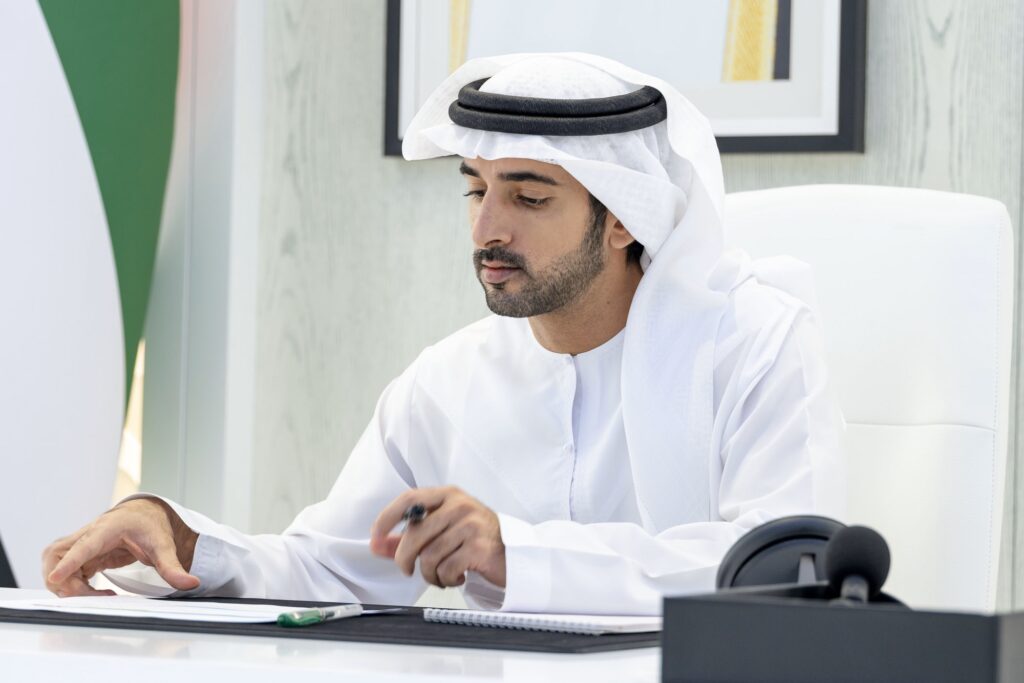
Sheikh Hamdan bin Mohammed bin Rashid Al Maktoum, Crown Prince of Dubai, announced the launch of the Dubai Real Estate Technology Centre (Dubai PropTech Hub), which aims to more than double Dubai’s real estate technology market to more than AED 4.5 billion over the next five years. The initiative is aligned with the Dubai Economic Agenda D33 and the Dubai Real Estate Sector Strategy 2033 and seeks to position Dubai as a global leader in real estate innovation. The centre will support more than 200 real estate technology companies and will attract more than 20 investment funds by 2030. It offers a comprehensive ecosystem for start-ups, including advanced incubators, interactive workspaces and infrastructure for developing AI-based business models. Sheikh Hamdan stressed that adopting the latest technologies is essential to creating a business environment ready for future challenges and growth in a rapidly changing world.
Abu Dhabi intends to establish the world’s first fully AI-based city, Aion Sentia, by 2027. This ambitious project aims to integrate artificial intelligence into all aspects of urban life, including smart homes, autonomous transport and real-time energy optimisation. The city has been designed with seamless connectivity and advanced AI services to enhance residents’ quality of life. Aion Sentia marks an important step in urban development, placing Abu Dhabi at the forefront of smart city innovation.
Dubai’s Real Estate Regulatory Agency (RERA) has introduced a new rental index system that assigns buildings star ratings from one to five to determine permitted rent increases. This initiative has been implemented with the aim of increasing transparency and fairness in the rental market. Tenants and owners can view their building’s rating through Dubai Land Department channels. In the event of a dispute or a belief that the assigned rating is incorrect, they have the right to challenge it by submitting a formal request and supporting documents to Dubai Land Department. This process ensures that all stakeholders have a mechanism to address concerns and maintain fair rental practices.

Dubai Real Estate Market Report 2026

How has Dubai's property market changed in the eight months following the start of regional tensions?

Explore transaction activity, resale prices, rental trends and economic developments in Hamed Ghelichkhani's latest report.